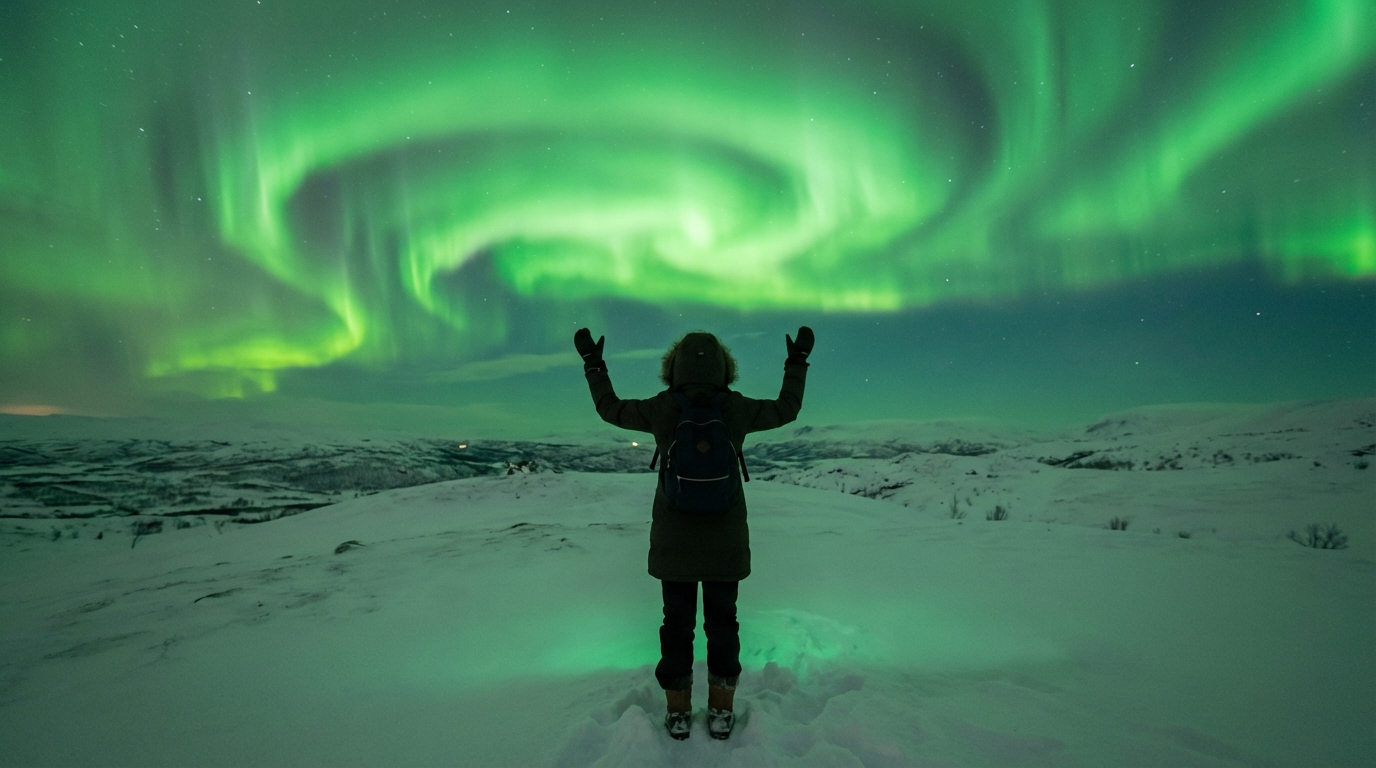
Best Month to See the Northern Lights: Honest 2026–2027 Planning Guide
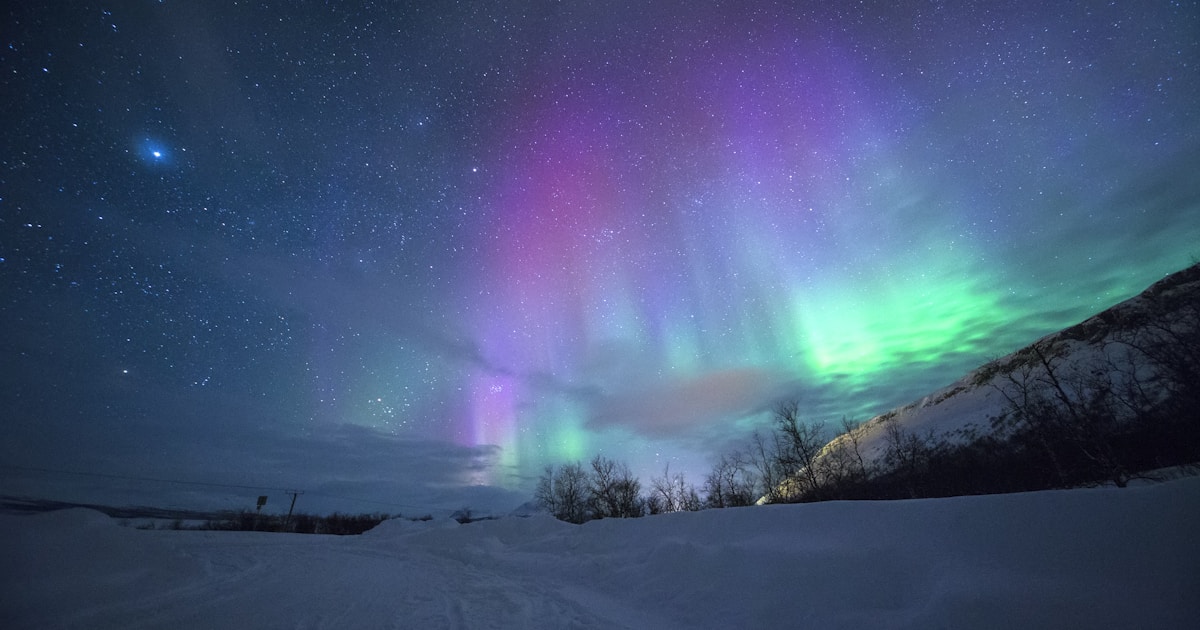
Quick answer: for most travellers, the best northern lights months are September, October, February and March. September and March get the equinox advantage, October has useful darkness without deep-winter cold, and February gives long nights with slightly easier travel than January. December and January can be excellent if you want maximum darkness and winter scenery. May, June and July are usually the wrong months for an aurora-first Arctic trip.
There is no single perfect month everywhere. The right choice depends on where you are going, how cold you can tolerate, whether you want snow activities, how many nights you can stay, and whether clouds or daylight are the bigger risk. Use this guide as the decision layer above the individual month guides.
Best Northern Lights Months at a Glance
| Month | Aurora travel verdict | Best for | Main caveat |
|---|---|---|---|
| January | Strong | Maximum darkness, snow trips, Arctic lodges | Cold, short days, holiday pricing can linger |
| February | Strong | Late-winter darkness with better daylight balance | Still very cold inland |
| March | Strong | Equinox activity, longer days, photography trips | Late March loses darkness in the far north |
| April | Limited | Early-April late-season trips | Bright nights return quickly |
| May | Poor in the Arctic | Shoulder-season Arctic travel, not aurora | Too bright for reliable viewing |
| June | Poor | Midnight sun, road trips, hiking | No useful Arctic darkness |
| July | Poor | Summer Arctic travel | No useful Arctic darkness |
| August | Limited late-month | First hints of darkness, Alaska/Iceland shoulder trips | Too early for most Arctic trips |
| September | Strong | Autumn equinox, milder weather, first-season trips | Coastal cloud and rain risk |
| October | Strong | Balanced darkness, lower pre-winter friction | Snow cover is not guaranteed |
| November | Good | Quieter early winter, snow arriving | Weather can be unstable |
| December | Good to strong | Darkest nights, winter atmosphere | Higher holiday demand, severe cold inland |
If You Want the Highest Chance, Choose a Window Rather Than a Date
A northern lights trip is not like booking a one-night concert. You are stacking probabilities: geomagnetic activity, darkness, cloud, local horizon, moonlight and your willingness to go outside at the right time.
NOAA's Space Weather Prediction Center says viewing depends on geomagnetic activity, location, darkness and timing, with the best aurora usually within an hour or two of midnight, roughly 10 p.m. to 2 a.m. local time (NOAA SWPC aurora viewing tips). NOAA NCEI also highlights September to April as the broad northern-lights travel season, while noting that local weather, city lights and the moon all affect what you can actually see (NOAA NCEI aurora guide).
That means the best practical move is to book at least three nights, and preferably four to seven, in a place with dark skies and backup activities. Travel Alaska gives similar advice for Alaska aurora trips: spend at least three nights in the Arctic or Interior regions and check forecasts each night (Travel Alaska northern lights tips).
The Best Month Depends on the Kind of Aurora Trip You Want
Best all-round months: September, October, February and March
Choose these if you want a sensible mix of darkness, trip comfort and aurora odds. September and March sit near the equinoxes, when geomagnetic storms are often more favourable. October and February are less extreme than midwinter but still dark enough in the main aurora belt.
Start with these month guides:
- Northern lights in September — first broadly useful month, milder, good for autumn trips.
- Northern lights in October — stronger darkness without the deepest winter conditions.
- Northern lights in February — a strong late-winter month across the aurora belt.
- Northern lights in March — one of the best mixes of activity, daylight and winter scenery.
Best deep-winter months: December, January and February
Choose deep winter if you want snowy landscapes, long nights, glass igloos, dog sledding, ice hotels, frozen lakes and the classic Arctic winter feel. December, January and February all work for aurora viewing in destinations such as Tromsø, Abisko, Fairbanks, Rovaniemi, Yellowknife and Iceland.
The tradeoff is comfort. Fairbanks, Yellowknife and inland Lapland can be brutally cold. Coastal Norway and Iceland are milder, but clouds can be the bigger problem. If you are travelling with children, older relatives or anyone cold-sensitive, February or March is often easier than January.
Best shoulder-season months: late August, September, March and early April
Shoulder season is for travellers who want to avoid the harshest cold or combine aurora viewing with road trips and autumn/spring scenery. Late August can work in some places, especially Alaska and Iceland, but it is still early. September is the safer autumn choice. March is the safer spring choice.
April is a late-season gamble. Early April can still work in some northern destinations, but each week gets brighter. By May, most Arctic aurora trips should be reframed as spring or midnight-sun travel instead.
Month-by-Month Northern Lights Decision Guide
January
January has long nights, snow cover and strong winter atmosphere. It is a serious aurora month, especially in high-latitude destinations. Choose it if you want the deepest winter version of the trip and can handle the cold. Read the January northern lights guide.
February
February keeps the winter darkness but starts to feel more usable than January in many places because daylight slowly returns for daytime activities. It is one of the safest all-round winter choices. Read the February northern lights guide.
March
March is one of the strongest months for many travellers. You still get real darkness in the aurora belt, but the days are longer and temperatures can be less punishing. Around the equinox, geomagnetic conditions can also be favourable. Read the March northern lights guide.
April
April is not a normal peak-season choice. Early April can work, especially at lower Arctic latitudes or during strong geomagnetic activity, but the useful night window shrinks quickly. Read the April northern lights guide.
May, June and July
These are not aurora-first months in the Arctic. The lights can still happen above Earth, but the sky is too bright across most northern destinations. Book these months for midnight sun, fjords, hiking, wildlife, road trips and long daylight instead. Read the May, June and July aurora guides if your dates are fixed.
August
August is a transition month. Early August is still too bright in much of the Arctic. Late August can bring the first practical aurora windows in places such as Fairbanks, Iceland and parts of northern Scandinavia. Read the August northern lights guide.
September
September is a strong choice if you want aurora potential without the full winter trip. It suits travellers who prefer milder temperatures, open roads and autumn landscapes. The main risk is cloud and rain in coastal regions. Read the September northern lights guide.
October
October is one of the best balance months. Nights are long enough, winter travel friction is lower than January, and many destinations are still easier to move around. Snow is not guaranteed, so choose October for aurora-first planning rather than a guaranteed winter postcard. Read the October northern lights guide.
November
November is a good early-winter option with quieter travel demand than Christmas or February school-holiday periods. It can be beautiful, but weather transitions can be messy. Read the November northern lights guide.
December
December has the longest nights and a strong winter atmosphere. It can be a great month if you want Christmas markets, snowy activities and Arctic darkness. It can also be expensive or busy around holidays. Read the December northern lights guide.
Best Month by Destination Type
| Destination type | Best months | Why |
|---|---|---|
| Coastal Norway, Iceland, Faroe Islands | September, October, February, March | Good darkness, but weather is the main variable. Build in flexible nights. |
| Swedish/Finnish Lapland | December to March | Snow activities and darker inland skies, with February/March often easier than January. |
| Alaska Interior / Fairbanks | Late August to March, strongest September to March | Long season, strong inland aurora positioning; check local cloud and cold. |
| Arctic Canada / Yellowknife | December to March | Strong aurora geography, but serious cold and logistics. |
| Svalbard | February to March for balanced trips | Polar night is dramatic, but ordinary travellers usually get a better mix once daylight starts returning. |
| Scotland / northern UK / lower latitudes | Around strong storms, often autumn/spring | Do not book a whole trip around guaranteed aurora here; treat it as opportunistic. |
How to Choose Your Month
Use this simple decision rule:
- If aurora is the main goal and you want the safest planning window: choose September, October, February or March.
- If you want winter scenery as much as aurora: choose December, January or February.
- If you hate severe cold: choose September, October or March.
- If your trip is in May, June or July: stop calling it an aurora trip and plan a midnight-sun or Arctic nature trip instead.
- If you can travel only one or two nights: choose a destination with good backup activities and use live alerts rather than betting everything on historical averages.
Sources and Freshness
Last updated: 19 September 2026. This guide uses public aurora-viewing guidance from NOAA SWPC, NOAA NCEI, Travel Alaska, plus PolarTourist's month-by-month aurora guides. It is planning guidance, not a guarantee: local cloud, moonlight, light pollution and real-time geomagnetic activity can override any monthly ranking.