GuidePublished 5 September 2026· Updated 12 September 2026·10 min read
Can You See the Northern Lights in April? Late-Season Aurora Guide
April is the end of the practical northern lights season in many Arctic destinations. Early April can still work in the right places, but fast-returning daylight makes it a risky month for aurora-first trips.
Find a tour for your trip
Affiliate disclosure: PolarTourist may earn a commission if you book through these links. We select tours independently for their itinerary fit, not as firsthand reviews. Read our affiliate policy.
A dedicated, long-distance aurora chase with professional photos and hotel transfers. This is a long overnight outing, not a short evening tour.
Operator:
Arctic Night Tours
Duration:
8–12 hours; varies with the search route
Meet:
Fairbanks hotel pickup; confirm coverage and changing start time
Drop-off:
Fairbanks hotel drop-off included
Allow 8–12 hours; route, start time and duration can change. Sightings are never guaranteed; no formal no-sighting refund or retry is stated. Age limits and accessibility eligibility are not specified, so confirm with the operator rather than assuming suitability. Check date availability and terms.
A minibus option for a Tromsø aurora evening, with photos included and city-centre hotel drop-off. Consider it if those logistics fit your itinerary.
Operator:
Arctic Breeze AS
Duration:
6 hours
Meet:
Outside Dock Hotel, Tromsø
Drop-off:
Hotels in Tromsø city centre
Not suitable for children under 10. Northern lights sightings are never guaranteed, and the trip may run in poor weather. Check current availability, meeting instructions and booking terms before paying.
A local Abisko photography option with up to eight guests and a DSLR camera. Walking, van or sleigh transport depends on conditions; it is not a Kiruna departure.
Operator:
Lights Over Lapland
Duration:
4 hours
Meet:
Hotel pickup in Abisko or Björkliden only — not Kiruna
Drop-off:
Listed local hotels in Abisko or Björkliden; confirm your property
Sightings are never guaranteed; no no-sighting refund or retry policy is stated. Not suitable for under-10s. Walking in snow and cold is common; discuss physical limitations with the operator and wear warm boots. Confirm dates and pickup.
A minibus search with up to 19 guests, hot cocoa and photos when the lights appear. Fits travellers who can use a designated Reykjavík pickup point.
Operator:
EastWest
Duration:
4 hours
Meet:
Designated Reykjavík hotels or official bus stops; pickup starts 30 minutes before departure
Drop-off:
Designated hotels or bus stops; confirm your location
Sightings are never guaranteed. An unsuccessful attended tour allows a free retry subject to availability, not a refund; no photos are delivered without a sighting. Not suitable for under-5s, mobility impairments or wheelchair users. Confirm dates and current terms.
Listing details checked ; details can change.
Update note: This article was materially updated on 12 September 2026. Check dated source links and current operator details before booking.
Can You See the Northern Lights in April? Late-Season Aurora Guide
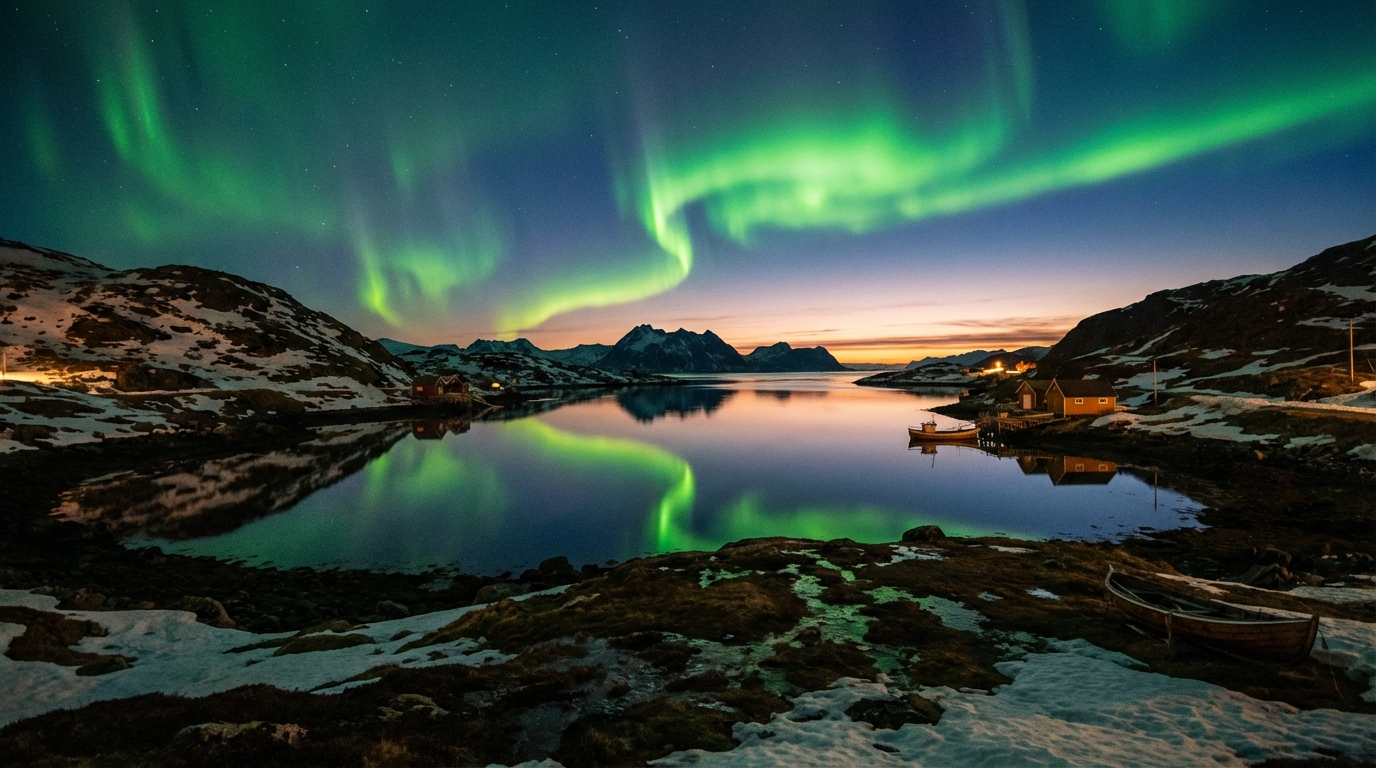
Tromsø, Norway: aurora-focused scenery from one of the destinations covered in this guide. Source: Jonatan Pie
Quick answer: sometimes, but April is a late-season gamble. The aurora still happens above Earth in April, and early April can still be dark enough in places such as Tromsø, Abisko, Fairbanks, Iceland and parts of Finnish Lapland. The problem is not whether the aurora exists. The problem is darkness: by mid to late April, high-latitude nights shrink quickly and many Arctic destinations become too bright for reliable aurora viewing.
April is best if you want an Arctic spring trip where the northern lights are a possible bonus, not the whole reason for travelling. If your main goal is aurora hunting, choose February or March instead; May is usually too bright for an aurora-first trip. If you already have an April trip, aim for the first half of the month, stay several nights, and check live Kp, darkness and cloud-cover signals with PolarTourist aurora alerts before deciding which nights are worth staying out late.
April Northern Lights Verdict
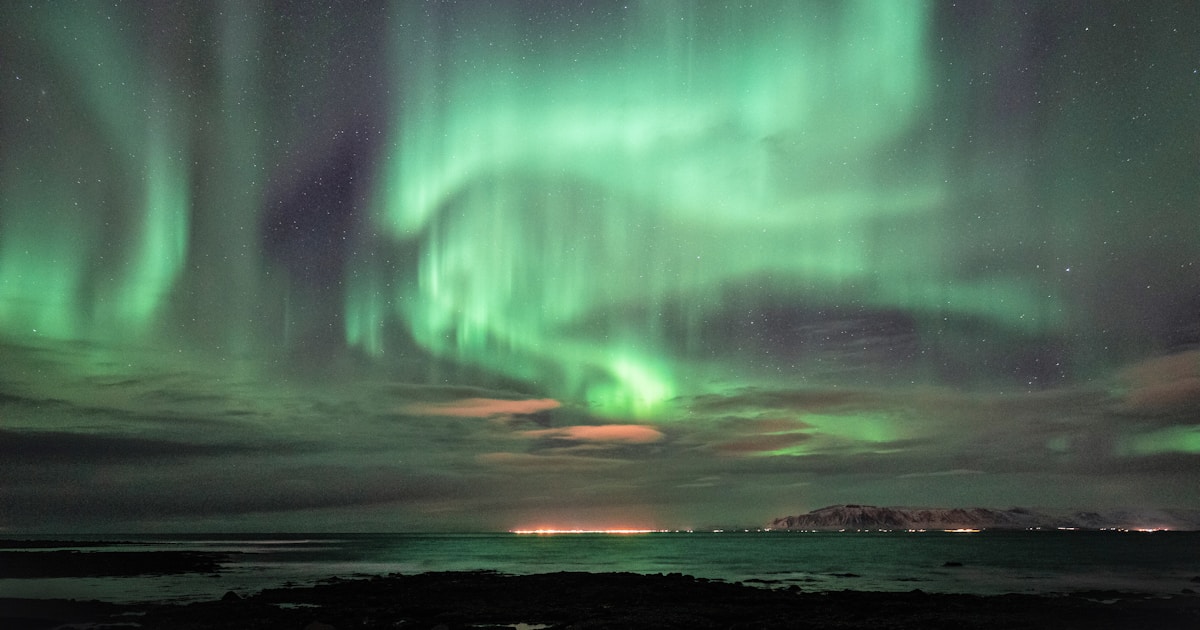
Fairbanks, Alaska (USA): aurora-focused scenery from one of the destinations covered in this guide. Source: Unsplash
Question
Practical answer
Can you see the northern lights in April?
Yes, sometimes, especially in early April and farther north.
Is April a good aurora month?
It is a shoulder-season month, not a prime aurora month. Darkness drops quickly.
Is April better than March?
No for aurora-first trips. March has better darkness and the spring equinox pattern.
Best April strategy?
Travel early in the month, stay flexible, pick destinations with clear northern horizons, and treat aurora as a bonus.
Worst April mistake?
Booking a late-April Arctic trip and expecting deep-winter aurora conditions.
Why April Is Different
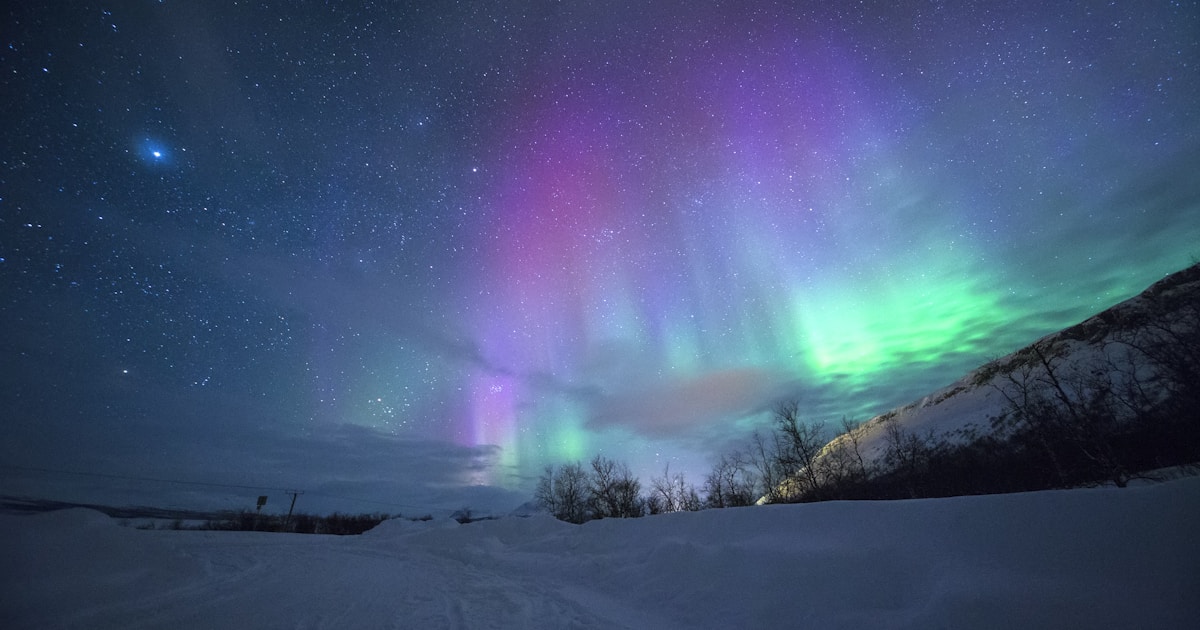
Rovaniemi, Finland: aurora-focused scenery from one of the destinations covered in this guide. Source: Unsplash
April sits at the edge of the aurora season. NOAA's northern lights guidance describes September to April as the broad dark-season window, but it also notes that aurora viewing needs darkness, clear skies, geomagnetic activity and the right location. That darkness caveat matters more in April than almost any other month.
NOAA SWPC also points out that the best aurora hours are usually around 10 PM to 2 AM local time, but by April those hours are no longer equally useful everywhere. In the far north, sunset is later, twilight lasts longer, and astronomical darkness may be short or absent by the end of the month. A Kp forecast that would be exciting in February can be disappointing if the sky is still too bright.
That makes April a practical planning question rather than a simple yes/no answer. Early April can work. Late April is usually better for snow, photography, wildlife, city breaks and spring scenery than for classic aurora chasing.
Where April Can Still Work
Fairbanks and Interior Alaska
Fairbanks is one of the stronger April options because it sits under the auroral oval and still has usable night darkness early in the month. The National Park Service describes Alaska aurora viewing as a fall, winter and early-spring activity and notes that Denali skies are dark enough roughly from mid-August to mid-April.
For travellers, that means early April can still be realistic if the weather cooperates. Late April becomes more marginal. You also need to plan around road conditions, cold nights, and the fact that spring daylight returns fast in Alaska.
Tromsø and Northern Norway
Tromsø is viable in early April, but it is clearly the tail end of the season. Visit Tromsø describes the region's northern lights window as late August to early April, whenever the sky is dark and clear enough. That wording is useful: April is not excluded, but the season is closing.
Choose Tromsø in April if you also want fjords, restaurants, spring snow, whale-free winter scenery, and easier daylight logistics. Do not choose it if you want maximum darkness and a classic deep-winter aurora chase. For that, December to March is safer.
Abisko and Swedish Lapland
Abisko can still be a good early-April choice because its dry microclimate often gives it an advantage over coastal destinations. The tradeoff is the same: the nights are getting shorter.
If you go, build the trip around several nights rather than one expensive chase. Use daytime for trains, snow landscapes and the Kiruna/Abisko corridor; keep aurora plans flexible until the short-range cloud and Kp forecasts are clearer.
Iceland
Iceland can produce April aurora displays, but it is a weaker bet than February or March. The country sits farther south than many Arctic aurora destinations, so you normally want stronger geomagnetic activity and clear dark skies. In April, both the darkness window and the weather margin are tighter.
April still works well as a broader Iceland trip: waterfalls, black-sand beaches, shoulder-season roads, and lower-pressure itineraries than peak summer. Treat the aurora as a possible night bonus, not the main trip promise.
Finnish Lapland
Finnish Lapland destinations such as Rovaniemi, Levi and Saariselkä can still have late-season aurora possibilities in early April, especially away from town lights. They are also strong for snow activities and family-friendly winter infrastructure.
By later April, the trip increasingly becomes an Arctic spring holiday: bright evenings, melting edges, easier days and less reliable night darkness. That can still be a good trip. It is just not the same product as a midwinter northern lights holiday.
Aurora-first trips with better daylight than January
April
Mixed
Arctic spring shoulder season
Travellers who want scenery, snow and a possible aurora bonus
May
Very weak in most Arctic destinations
Spring / early summer
Fjords, wildlife, road trips and midnight-sun build-up, not aurora
If your travel dates are flexible, March is the cleaner aurora decision. It has more darkness, better alignment with the spring equinox period, and a stronger balance between night viewing and daytime activities. April is better when your priorities are broader: easier daylight, softer weather, fewer peak-season crowds and spring landscapes.
How to Plan an April Aurora Trip
1. Go as early as possible
The first week of April is meaningfully different from the last week. If you care about the northern lights, move your trip earlier rather than later. A few days can matter at high latitudes because daylight length changes quickly in spring.
2. Stay several nights
April gives you fewer dark hours per night, so you need more nights in the destination. One clear, active night can be enough, but you cannot schedule it months in advance. Build a trip that still works if the aurora does not show.
3. Prioritise cloud flexibility
Cloud is often the deciding factor. A strong Kp forecast is not useful if your valley, fjord or city is under low cloud. Destinations with mobile tour routes, interior weather options or multiple nearby microclimates are safer than places where you are stuck under one coastal sky.
4. Check the right live signals
Before going out, look at three things together:
Kp / geomagnetic activity: Kp is a 0–9 index, not a guarantee. Higher values generally push aurora farther from the poles.
Darkness: You need an actually dark sky, not just sunset. In April this can be the limiting factor.
PolarTourist aurora alerts are built around that combined problem: not just whether space weather is active, but whether a real city has darkness and usable cloud conditions.
5. Avoid full-moon and city-light problems
The moon does not stop the aurora, but bright moonlight can make faint displays less visible. City lights have the same practical effect. In April, when twilight is already a problem, you should be stricter about finding a darker viewing spot with a clear northern horizon.
Who Should Choose April?
Choose April if:
you want a broader Arctic spring trip, not only aurora hunting;
you prefer longer daylight for driving, photography and activities;
you can travel in the first half of the month;
you are comfortable treating the northern lights as a bonus;
you want snow scenery without the harshest deep-winter rhythm.
Avoid April if:
the northern lights are your main once-in-a-lifetime goal;
your dates fall in late April;
you only have one or two nights in an aurora zone;
you need the easiest possible viewing odds;
you would be disappointed if the trip became mostly a daylight Arctic holiday.
Better April Alternatives
If you are already committed to April, lean into what the month does well. The Arctic April travel guide covers the broader shoulder-season case: snow, light, fewer crowds, road conditions and destination choice. If photography is your main reason to go, the Arctic April photography guide is a better fit than a pure aurora plan.
If you are still choosing dates and the northern lights are the priority, use this rule: March for aurora, April for Arctic spring. April can surprise you, but it should not be your safest northern lights bet.
Planning Sources
This guide uses public aurora-viewing guidance from NOAA NCEI, NOAA SWPC, the National Park Service, and Visit Tromsø. Sources were checked on 5 September 2026. The key shared message is consistent: aurora viewing needs geomagnetic activity, location, darkness, clear skies and timing. April can satisfy those conditions early in the month, but the darkness margin shrinks quickly.
Bottom Line
You can see the northern lights in April, but you should plan honestly. Early April in a strong aurora destination can still work. Late April is usually too bright for a trip built around aurora alone, and May is better treated as a shoulder-season daylight trip than a northern-lights trip.
For most travellers, April is best as an Arctic spring trip with a late-season aurora chance. If that sounds exciting, go north, stay flexible and check live conditions. If the northern lights are the non-negotiable reason for the trip, book February or March instead.