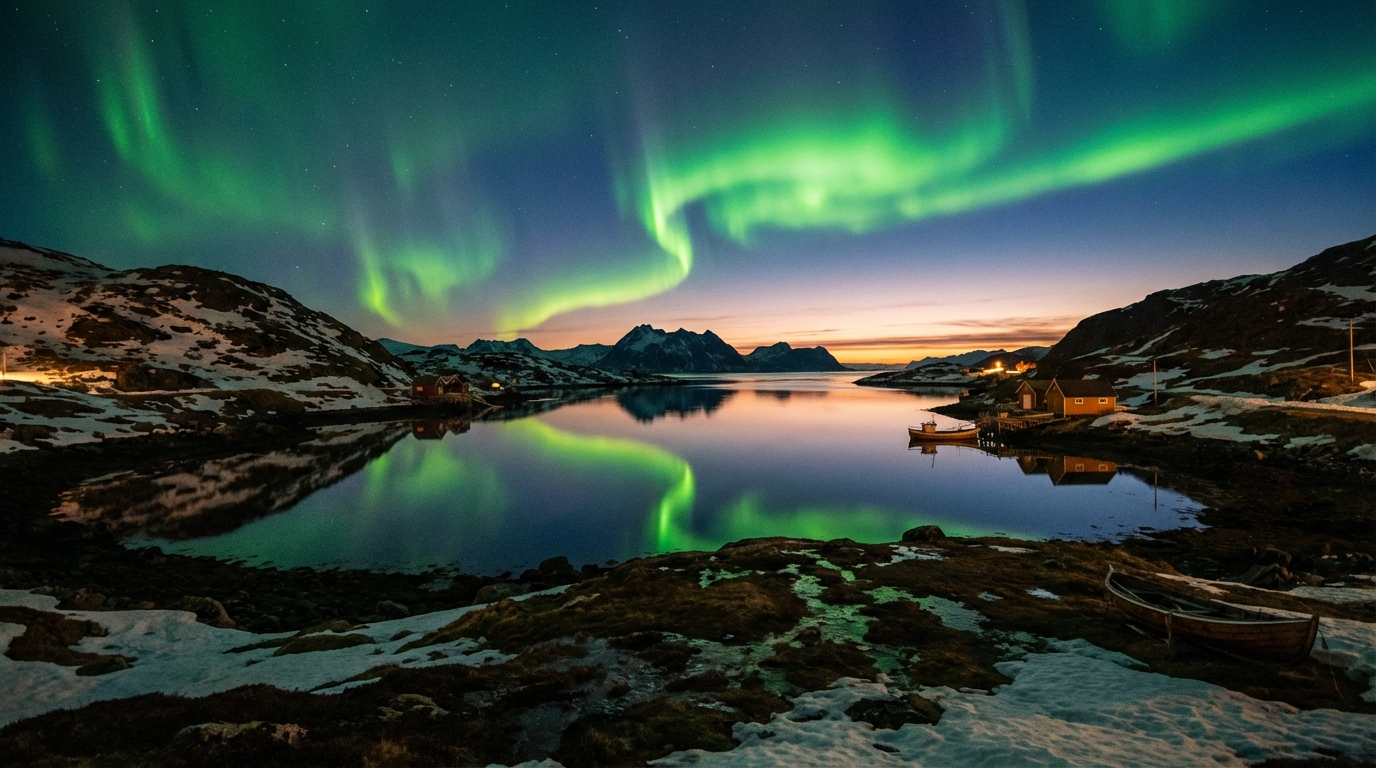
Can You See the Northern Lights in September? Early-Season Aurora Guide
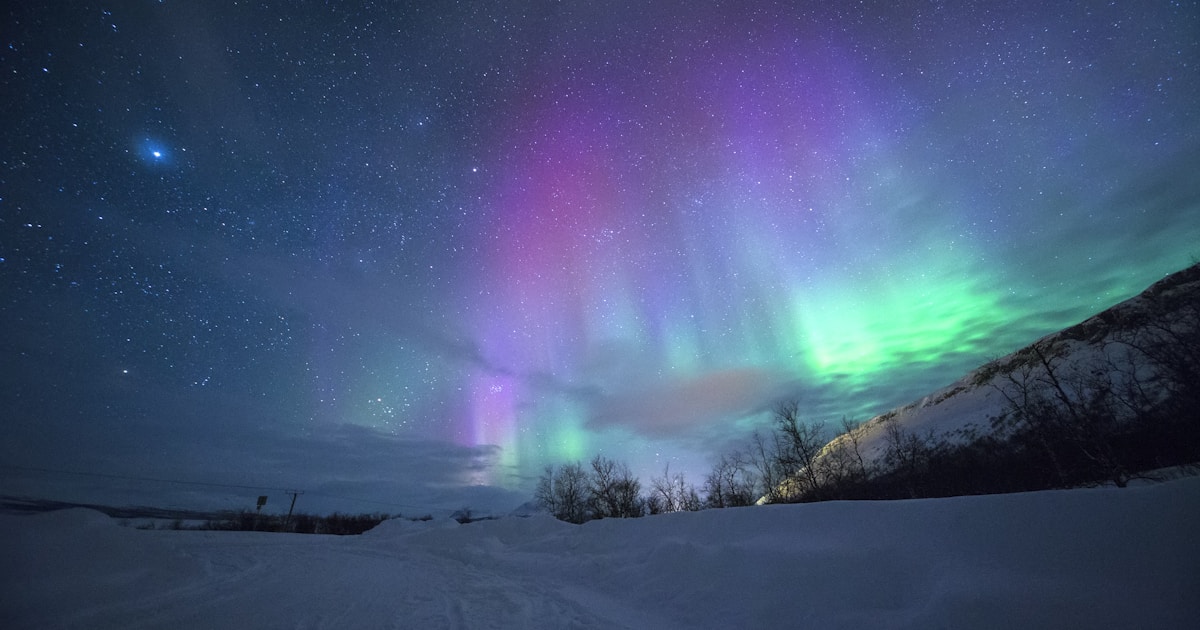
Quick answer: yes. September is the first broadly useful northern lights month across many Arctic and sub-Arctic destinations. It is not as dark as December or January, but by mid to late September there is usually enough night for real aurora viewing in places such as Tromsø, Abisko, Fairbanks, Iceland and Finnish Lapland.
September works because two things happen at once: dark skies return after the midnight sun, and the autumn equinox sits in one of the year’s stronger geomagnetic windows. If you can travel a little later, compare the tradeoffs in the darker October northern lights guide and the early-winter November northern lights guide. It is also milder than deep winter, which makes long nights outside easier.
The tradeoff is weather. September can be wet and changeable in coastal destinations, so the best September aurora trip is not simply the place with the darkest sky. It is the place where you can stay long enough, move away from cloud, and still enjoy the trip if one or two nights are washed out.
September Northern Lights Verdict
| Question | Practical answer |
|---|---|
| Can you see the northern lights in September? | Yes, especially from mid to late September. |
| Best part of the month? | Usually the second half, around the autumn equinox and after more darkness has returned. |
| Best viewing hours? | NOAA says aurora activity is often strongest around 10 pm–2 am local time, with wider windows during stronger storms. |
| Is September better than August? | Usually yes for aurora, because nights are longer and darker. Read the August guide if your trip is fixed before September. |
| Is September better than December? | It can be better for comfort and equinox activity, but December has longer darkness and more winter-trip atmosphere. |
| Main risk? | Cloud, rain and short early-month nights in some regions. |
Why September Can Be Excellent for Aurora Trips
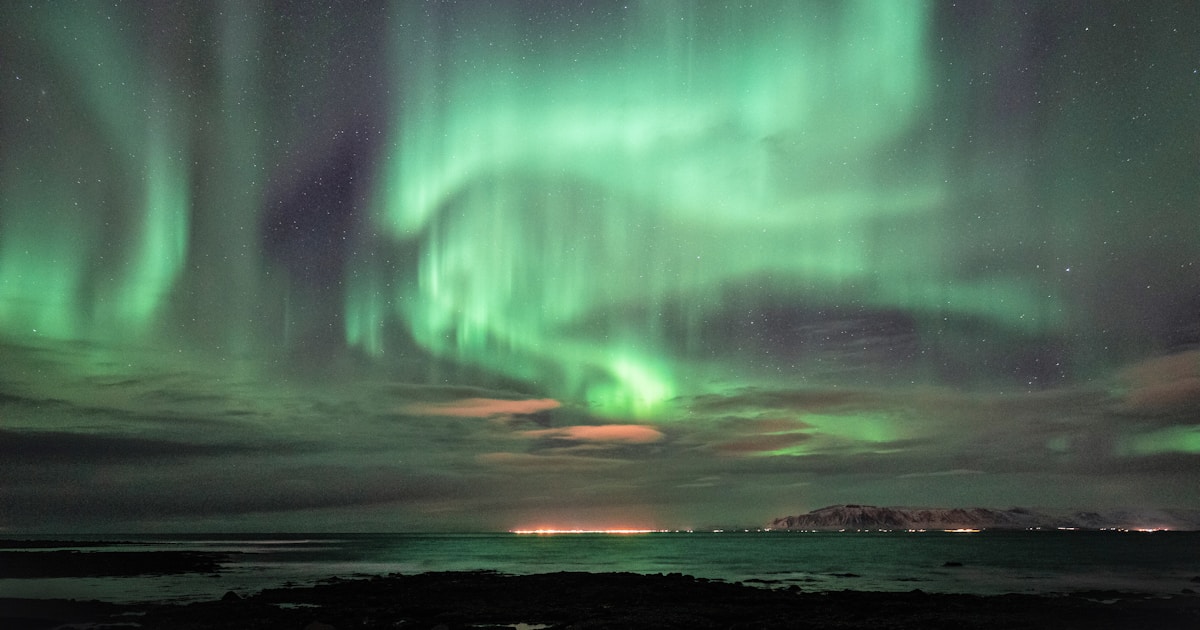
Northern lights visibility needs three ingredients: geomagnetic activity, clear sky and darkness. September is when the third ingredient finally returns across much of the northern aurora zone.
NOAA’s Space Weather Prediction Center notes that the best aurora seasons tend to cluster around the spring and autumn equinoxes, when larger geomagnetic storms are more common. NOAA also explains that the Kp index runs from 0 to 9 and that stronger Kp levels push brighter aurora farther from the poles. That does not make any single September night guaranteed, but it does make September a serious planning month rather than a fringe season.
The practical benefits are just as important:
- Milder nights: you can wait outside without the deep cold of January or February.
- Autumn landscapes: lakes may still be unfrozen, forests turn colour, and photography foregrounds are different from winter snow scenes.
- More flexible days: hiking, road trips, boat trips and city breaks are often easier than in midwinter.
- Earlier evenings: compared with winter, you may not need to stay out as late for the first useful darkness.
Best September Northern Lights Destinations
| Destination | Why it works in September | Watch out for |
|---|---|---|
| Tromsø, Norway | Strong aurora zone, easy tours, fjords and autumn scenery | Coastal cloud can require long chases |
| Abisko, Sweden | Inland microclimate and strong aurora reputation | Fewer city comforts than Tromsø |
| Fairbanks, Alaska | Interior location, dark skies returning, North American access | Big distances; car or lodge logistics help |
| Reykjavik, Iceland | Easy flights, ring-road and south-coast add-ons | Weather can be wet and windy |
| Finnish Lapland | Autumn colour, cabins, lakes and early-season aurora | Some winter activities have not started yet |
Early September vs Late September
Early September
Early September can work during stronger aurora events, especially at higher latitudes. But nights may still be short or twilight-heavy. Treat early September as a bonus-aurora period, not the safest choice for a once-in-a-lifetime trip.
Best fit: flexible travellers already visiting the Arctic for hiking, road trips, wildlife or autumn colour.
Mid to Late September
This is the stronger window. Darkness improves quickly, the equinox arrives around 22 September, and many destinations have enough night for proper viewing. If you are booking primarily for aurora, aim for at least four nights and preferably five to seven. That gives you room for cloud and quiet solar nights.
Best fit: travellers who want aurora chances without deep-winter cold.
September vs March: Which Equinox Is Better?
Both months are strong. The better choice depends on the trip you want.
| Factor | September | March |
|---|---|---|
| Temperature | Usually milder | Cold, but often manageable |
| Landscape | Autumn colour, open water, road access | Snow, ice, winter activities |
| Darkness | Improving quickly through the month | Still strong, but daylight increasing |
| Weather risk | Rain and coastal cloud in many places | Snowstorms possible; some regions clearer |
| Best for | Flexible aurora plus autumn travel | Classic winter aurora plus snow activities |
How to Plan a September Aurora Trip
- Book enough nights. Four nights is the minimum; five to seven is safer.
- Choose mobility over one fixed viewpoint. A guided chase or rental car can help you get around cloud.
- Check both space weather and local cloud. Use NOAA/SWPC for geomagnetic conditions and local weather services for cloud cover.
- Avoid full-moon panic. Moonlight can wash out faint aurora, but strong displays still show. Clouds are usually the bigger problem.
- Bring autumn and winter layers. September can feel mild by Arctic standards, but waiting still means standing still at night.
- Use alerts for the real night. If your destination is supported, set up PolarTourist aurora alerts so you are not guessing from a generic Kp number alone.
What September Is Not Good For
September is not the best month for every Arctic dream. Many deep-winter activities have not started yet. Snow cover is unreliable or absent in many regions. Ice hotels are not open. Reindeer and husky sledding may be unavailable or limited to kennel visits and training-season experiences.
That is not a flaw; it is the definition of shoulder season. September is best when you want aurora plus autumn travel, not a Christmas-card Lapland trip.
Source and Freshness Notes
For same-night planning, use live sources rather than a static article:
- NOAA/SWPC aurora viewing guidance for Kp, timing and equinox-season context.
- NOAA/SWPC 3-day forecast for current geomagnetic conditions.
- Local cloud forecasts from services such as MET Norway, the Icelandic Met Office, FMI in Finland, Environment Canada or the U.S. National Weather Service depending on destination.
Bottom Line
September is one of the best months to start chasing the northern lights again. It gives you real darkness, equinox-season geomagnetic potential and easier travel conditions than deep winter. Choose the second half of the month, stay several nights, and pick a destination where cloud plans are realistic.
If you are still deciding when to travel, compare September with the 2026–2027 solar-cycle aurora outlook, the northern lights trip cost guide, and the live aurora alerts tool.