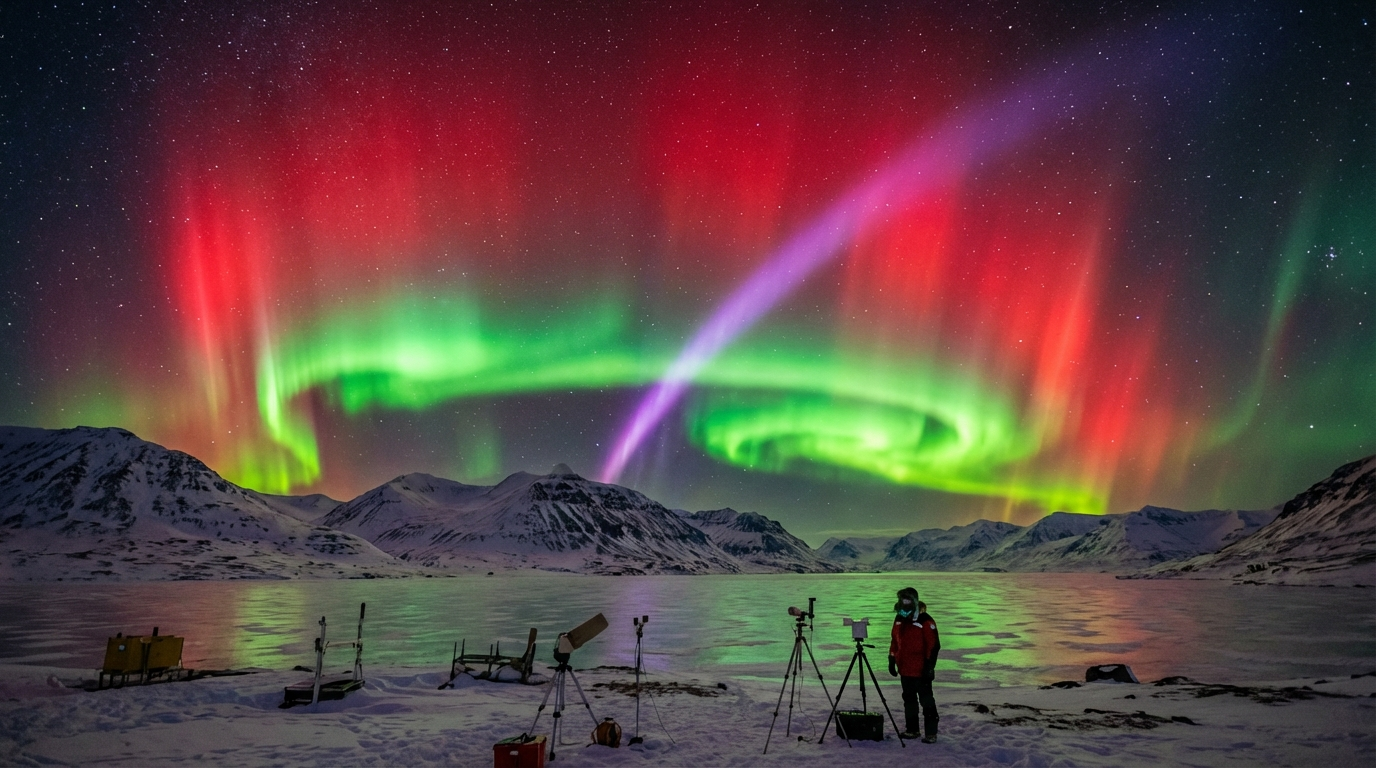
Northern Lights 2026–2027: The Solar Maximum Aftermath Guide
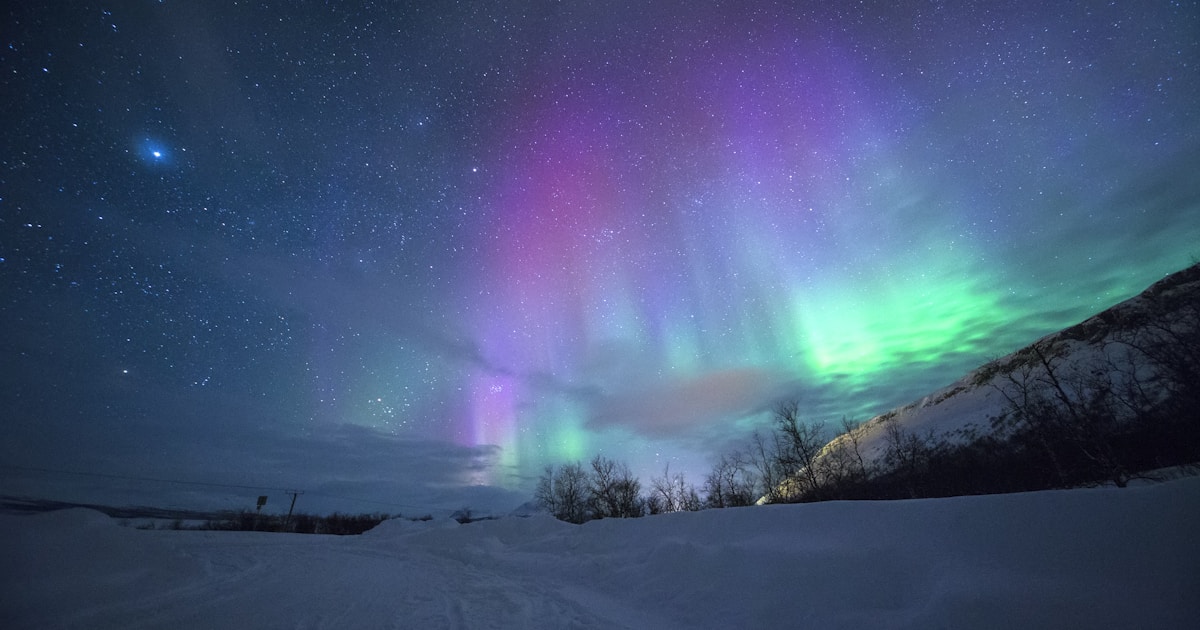
In May 2024, the biggest geomagnetic storm in two decades lit up auroras visible from Texas, southern France, and New Zealand. Social media exploded. Millions of people who'd never considered a polar trip suddenly had aurora on their bucket list. In October 2024, NASA and NOAA announced that Solar Cycle 25 had entered its solar-maximum phase. SILSO has not yet published a final maximum month in its live cycle table, so the exact peak should not be treated as settled.
So what does 2026–2027 look like? Have you missed the window?
The answer is more nuanced than you'd think — and mostly good news.
Understanding the Solar Cycle
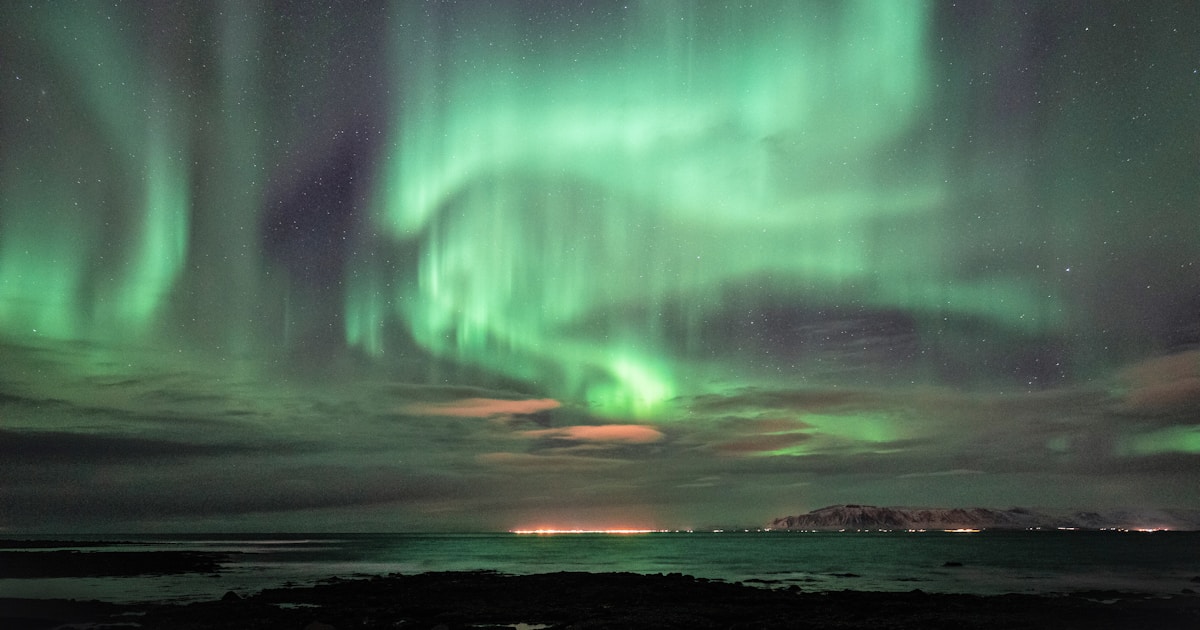
The sun operates on an approximately 11-year cycle of magnetic activity. At solar minimum, the sun's surface is calm: few sunspots, infrequent solar flares, and weak geomagnetic activity at Earth. At solar maximum, the sun's magnetic field is at its most tangled: sunspots cluster, coronal mass ejections (CMEs) hurtle toward Earth, and the magnetosphere responds with spectacular light shows.
Solar Cycle 25 officially began in December 2019 and was expected to be a quiet, below-average cycle. Scientists predicted a maximum of around 115 sunspots. Instead, the cycle has been remarkably strong — the monthly smoothed sunspot number peaked above 200 in late 2024, making it one of the strongest cycles since the 1950s.
The peak was roughly 2024–2025. But "peak" doesn't mean "cliff." For trip timing, pair the solar-cycle context here with the practical best month to see the northern lights guide and the month-specific guides for September, October, November, December, January, February and March. Use PolarTourist aurora alerts close to travel for the night-by-night Kp, darkness and cloud-cover decision rather than treating the solar cycle as a guarantee.
2026–2027: Still Excellent Conditions
Solar cycles don't switch off like a light. The declining phase of a strong cycle typically lasts 5–6 years, and the first 2 years of decline still produce excellent geomagnetic conditions. Here's why:
Sunspot numbers decay gradually. Activity can remain elevated after a cycle maximum, but the decline is uneven and does not provide a fixed percentage for a future date. That's still far above solar minimum baseline.
The declining phase can produce powerful storms. Some of the most intense geomagnetic events in history have occurred not at solar maximum but 1–2 years after, when the sun's magnetic field configuration creates favourable conditions for Earth-directed CMEs. The notorious 2003 "Halloween storms" occurred in the declining phase of Solar Cycle 23.
2026 remains part of the post-maximum planning period. Strong geomagnetic storms can still occur after a maximum phase, but long-range cycle context cannot predict the conditions on one travel date.
For aurora hunters, this means 2026–2027 is emphatically not too late. You might miss the absolute peak auroras visible from mid-latitudes, but for dedicated trips to the auroral zone — above 65°N — the lights will still be excellent.
What Is the Kp Index?
The Kp index is the standard measure of global geomagnetic activity, rated from 0 (completely quiet) to 9 (extreme storm). It's the number you'll see cited in every aurora forecast app.
Here's what the levels mean in practice:
| Kp | Activity Level | Visible From |
|---|---|---|
| 0–1 | Quiet | Only from deep within polar regions |
| 2–3 | Low | Northern Scandinavia, Iceland, Northern Canada |
| 4–5 | Moderate | Southern Norway, central Finland, Scotland (on good nights) |
| 6–7 | Active | UK, Germany, northern USA |
| 8–9 | Severe/Extreme | Mediterranean, southern USA, Australia |
How to Read Aurora Forecasts
Short-term forecasts (0–3 days): These are the reliable ones. NOAA's Space Weather Prediction Center and the University of Alaska Geophysical Institute both publish 3-day forecasts based on actual solar activity observations. Trust these.
Medium-term (3–7 days): Based on solar rotation. Once an active sunspot region has produced a CME, it rotates around the sun for about 27 days. If an active region produces storms now, watch for similar activity in 27 days when it rotates back into Earth-facing position. Semi-reliable.
Long-term (seasonal): Based on the solar cycle. Not useful for specific nights, but accurate for planning which years and months are statistically better.
Best free tools:
- NOAA SWPC (swpc.noaa.gov) — the scientific source
- SpaceWeatherLive.com — best interface for non-scientists
- My Aurora Forecast app — phone notifications when Kp exceeds your threshold
- Yr.no — Norwegian weather service, excellent for cloud cover forecasts in Scandinavia
The Equinox Effect: Why March and September Are Special
Here's a phenomenon that surprises most people: the months around the equinoxes — September and March — statistically produce more intense geomagnetic storms than the darkest months (December–January).
This is called the Russell-McPherron effect, and it's real. The geometry of Earth's magnetic field relative to the solar wind changes around the equinoxes, making it more efficient at capturing energy and channelling it into aurora displays.
The implication for travel: September and March are the best aurora months, combining the equinox effect with sufficient darkness (they're not as dark as December, but there's enough night). September also tends to have better weather than March in much of Scandinavia.
The full aurora season runs September through March. Avoid May–August entirely (midnight sun = no darkness = no visible aurora, regardless of solar activity).
Best Destinations for 2026–2027
For maximum aurora probability this cycle:
Tromsø, Norway — Aurora score 9/10. Easy access, excellent guiding infrastructure, above-average clear-sky frequency for the latitude. Best September–March.
Abisko, Sweden — Home to the Aurora Sky Station. Famous for a local microclimate that produces statistically more clear nights than anywhere else in Scandinavia — important when solar activity is moderate.
Reykjavik, Iceland — Aurora score 7/10. Lower latitude means you need higher Kp, but Iceland's volcanic landscape makes even moderate displays spectacular.
Inari, Finland — Deep in Finnish Lapland, close to the auroral maximum zone. Best for prolonged polar night experiences (late November–January).
The Bottom Line
Solar Cycle 25 has already produced major geomagnetic storms, including the May 2024 event. The peak is behind us — but the 2026–2027 declining phase still offers genuinely excellent viewing conditions, especially in the auroral zone. If you've been thinking about a northern lights trip, the window is still wide open.
Plan for September–March, target 65°N or higher, keep your Kp alerts on, and accept that some nights will be cloudy. That's aurora hunting: part science, part patience, part luck.
Browse our destination guides and monthly guides to start planning your trip.