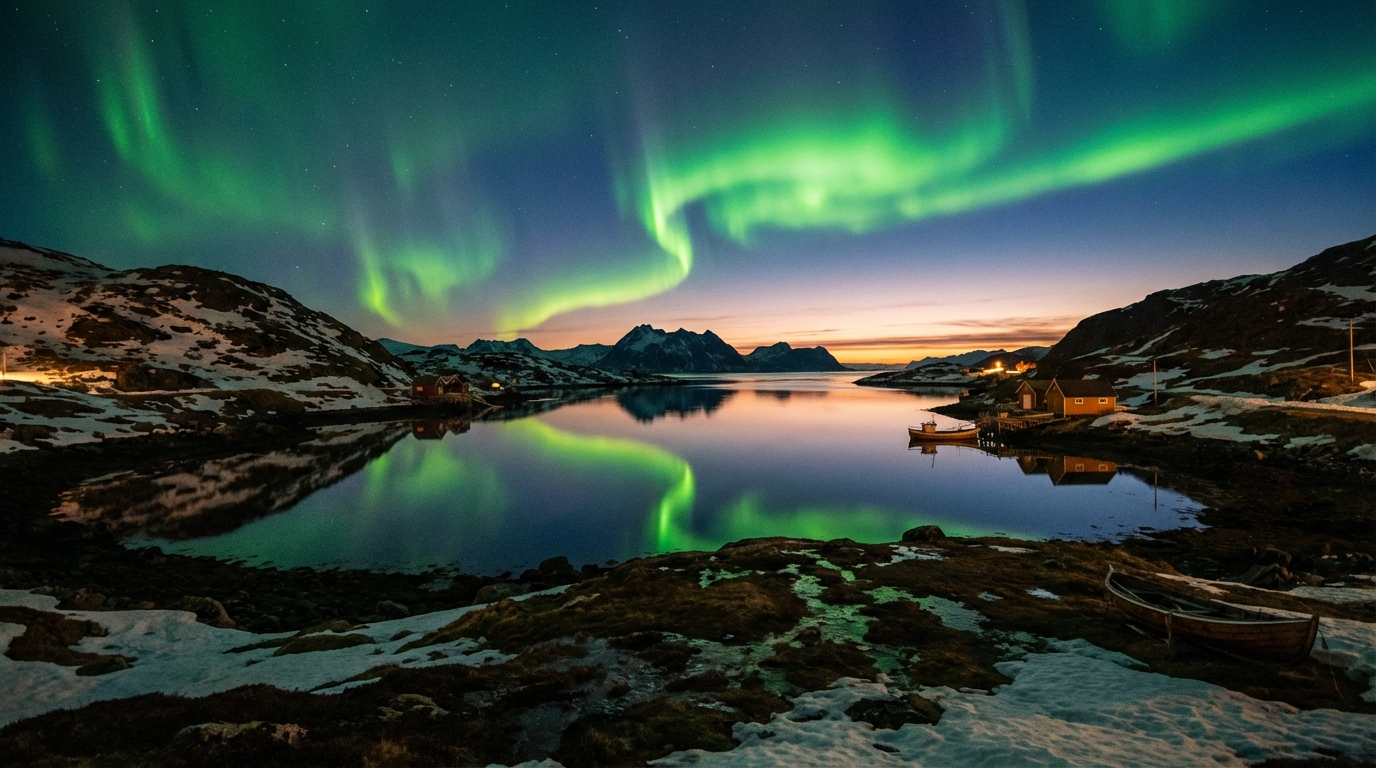
Can You See the Northern Lights in August? Late-Summer Aurora Guide
Quick answer: sometimes, but only late in the month and only in the right places. August is not a reliable northern lights month in most Arctic destinations because the sky is still too bright for much of the night. By late August, darkness starts to return in places such as Fairbanks, Iceland and parts of northern Scandinavia, so a strong aurora can become visible if the sky is clear.
If the aurora is the main reason for your trip, August is still a gamble. Plan for September, October, February or March instead. If you are already travelling in August, treat northern lights as a bonus: build the trip around hiking, fjords, glaciers, late-summer wildlife, road trips and the first darker nights of the season.
August Northern Lights Verdict
| Question | Practical answer |
|---|---|
| Can aurora activity happen in August? | Yes. Geomagnetic activity happens year-round. |
| Can travellers usually see it in early August? | Usually no. Most northern destinations still have too much twilight. |
| Is late August different? | Yes. The last 7–10 days can offer usable darkness in some places. |
| Best August bet? | Fairbanks from about 21 August, then Iceland and some Arctic locations in the final third of the month. |
| Best viewing hours? | Late night, often around local midnight to 2am when the sky is darkest. |
| Best alternative month? | September if you want early-season aurora with much better darkness. |
| Main risk? | Short dark windows, cloud, bright twilight and unrealistic expectations. |
Why August Is Complicated
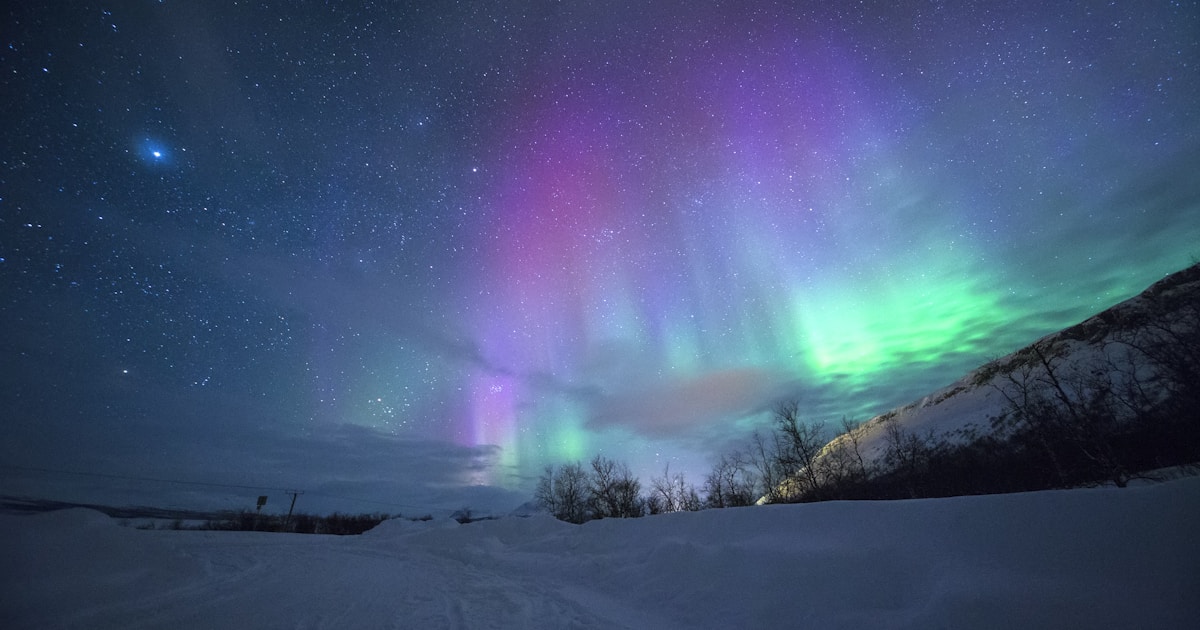
The northern lights need three things to line up: solar activity, clear sky and darkness. August often has the first ingredient and may have the second, but the darkness window is the problem.
NOAA’s Space Weather Prediction Center explains that aurora is not visible during daylight and that the best viewing is usually within an hour or two of local midnight, roughly 10pm–2am. That works well in winter. In August, many Arctic destinations still have long twilight or no true dark sky, especially in the first half of the month.
That is why August advice can sound contradictory. Operators and destination boards may advertise the start of aurora season in late August, while travellers who visit in early August see nothing but bright skies. Both can be true. The month changes quickly.
Early August vs Late August
| Part of August | Aurora outlook | Better trip focus |
|---|---|---|
| 1–10 August | Very poor in most Arctic destinations. Too bright. | Midnight-sun afterglow, hiking, road trips, whales, glaciers, fjords. |
| 11–20 August | Improving, but still marginal for most travellers. | Late-summer travel with a small aurora chance in darker locations. |
| 21–31 August | Possible in selected destinations if skies clear and activity is strong. | Hybrid trip: summer activities by day, aurora watch by night. |
Best Places to Try in August
Fairbanks, Alaska
Fairbanks is the clearest August candidate because its official aurora season begins around 21 August. The city sits under the auroral oval, and Explore Fairbanks notes that the region’s aurora season runs from 21 August to 21 April, with darkness returning enough for viewing in that window.
August in Fairbanks is not deep-winter aurora hunting. It is warmer, greener and more comfortable, with a much shorter dark window. That can be a good tradeoff if you want Alaska summer activities and a chance of early-season lights, but it is not the same as visiting in February or March.
Best fit: travellers who can stay several nights, stay up late, and treat aurora as a bonus to an Alaska late-summer trip.
Iceland
Iceland can produce late-August aurora sightings, especially away from Reykjavik’s city lights and toward the end of the month. The catch is that August is still a summer travel month: long days, busy routes, changeable weather and a short dark window.
If you are already planning an Iceland road trip in late August, it is worth checking the forecast and staying somewhere with darker skies. If the northern lights are your top priority, September or October is a cleaner choice. Use the Iceland vs Norway northern lights comparison if you are still choosing between countries.
Best fit: travellers who want waterfalls, glaciers and road-trip scenery first, with a possible aurora night as a bonus.
Tromsø and Northern Norway
Tromsø, Senja and Lofoten are beautiful in August, but they are not reliable aurora choices early in the month. The late-summer landscape is the main reason to go: hiking, fjords, beaches, road trips and long evening light.
By late August, darkness starts returning, but September is the better first real aurora month for most travellers. If your dates are fixed in August, plan a northern Norway summer itinerary and keep one or two late-night forecast checks as a bonus.
Best fit: travellers who want Arctic Norway scenery first and are happy if the first lights of the season appear.
Swedish and Finnish Lapland
Abisko, Kiruna, Rovaniemi and Finnish Lapland become more interesting as August ends, but the same caution applies: this is a shoulder moment, not peak aurora season.
The advantage is that inland Lapland can be clearer and darker than some coastal locations once night returns. The disadvantage is that many winter-specific products are not operating yet, so your trip needs to work as a hiking, cabin, national-park or road-trip itinerary.
Best fit: flexible travellers who like quieter shoulder seasons and do not need classic snow-and-sleigh winter atmosphere.
Where August Is Usually Not Worth It
Avoid planning an August trip around aurora in places where the sky stays too bright or where the aurora would require unusually strong conditions.
- Svalbard: August is still firmly a high-Arctic summer/light season. Go for wildlife, fjords and expedition scenery, not northern lights.
- Southern Scotland, Denmark or lower-latitude Europe: Even if a major geomagnetic storm happens, August is a low-probability strategy compared with travelling farther north in September–March.
- Early-month Arctic cruises: They can be excellent for scenery and wildlife, but the ship itinerary is unlikely to be built around dark-sky aurora viewing.
How to Plan an August Aurora Attempt
If you are going anyway, make the plan realistic:
- Choose the last third of August. Late August gives you much more darkness than early August.
- Stay at least three nights. One night is a weather gamble; several nights give solar activity and cloud a chance to line up.
- Get away from town lights. Darkness is already limited, so do not waste it under streetlights.
- Check both space weather and cloud cover. NOAA’s aurora tools tell you whether activity is possible; local weather tells you whether you can see the sky.
- Stay up late. The useful viewing window is usually close to the darkest part of the night.
- Have a daytime trip you would enjoy anyway. August is too uncertain to justify a one-purpose aurora trip.
August vs September for Northern Lights
September is usually the smarter early-season aurora month. It has longer nights, stronger equinox timing and more destinations where the dark window is useful.
| Factor | August | September |
|---|---|---|
| Darkness | Short and late, especially early month. | Much better by mid to late month. |
| Weather | Often milder, but still variable. | Cooler, more autumnal, sometimes wet. |
| Activities | Summer hiking, wildlife, road trips. | Autumn colours, early aurora tours, shoulder-season travel. |
| Aurora reliability | Low to moderate in late August only. | Moderate to good in many northern destinations. |
| Best for | Travellers already going north in late summer. | Travellers actively planning an aurora trip. |
What to Do If You Are Already Booked for August
Do not cancel a good August polar trip just because aurora odds are limited. August can be excellent for:
- Iceland road trips, Highlands access and waterfalls
- Alaska hiking, wildlife and interior road trips
- Northern Norway fjords, islands and late-summer hiking
- Greenland boat trips, icebergs and settlement visits
- Lapland cabins, national parks and quieter shoulder-season travel
FAQ
Can you see the northern lights in August?
Sometimes. Early August is usually too bright in northern destinations, but late August can work in places where darkness returns, especially Fairbanks and parts of Iceland or the Arctic.
Is August a good month for northern lights?
Not if the aurora is your main reason for travelling. August is a transition month. September through March is a safer planning window.
When in August do northern lights start?
The useful window is usually the final third of the month. Fairbanks markets its aurora season from about 21 August, while many European Arctic destinations become more practical closer to September.
Can you see northern lights in Iceland in August?
It is possible in late August, especially away from city lights, but it is not reliable. September and October are better choices for aurora-focused Iceland trips.
Can you see northern lights in Tromsø in August?
Late August is possible in unusually good conditions, but Tromsø is much better from September onward. August is stronger for hiking, fjords and late-summer Arctic travel.
Should I book an August aurora tour?
Only if you understand the risk. A late-August tour in Fairbanks or Iceland can make sense, but do not expect winter-level darkness or reliability.