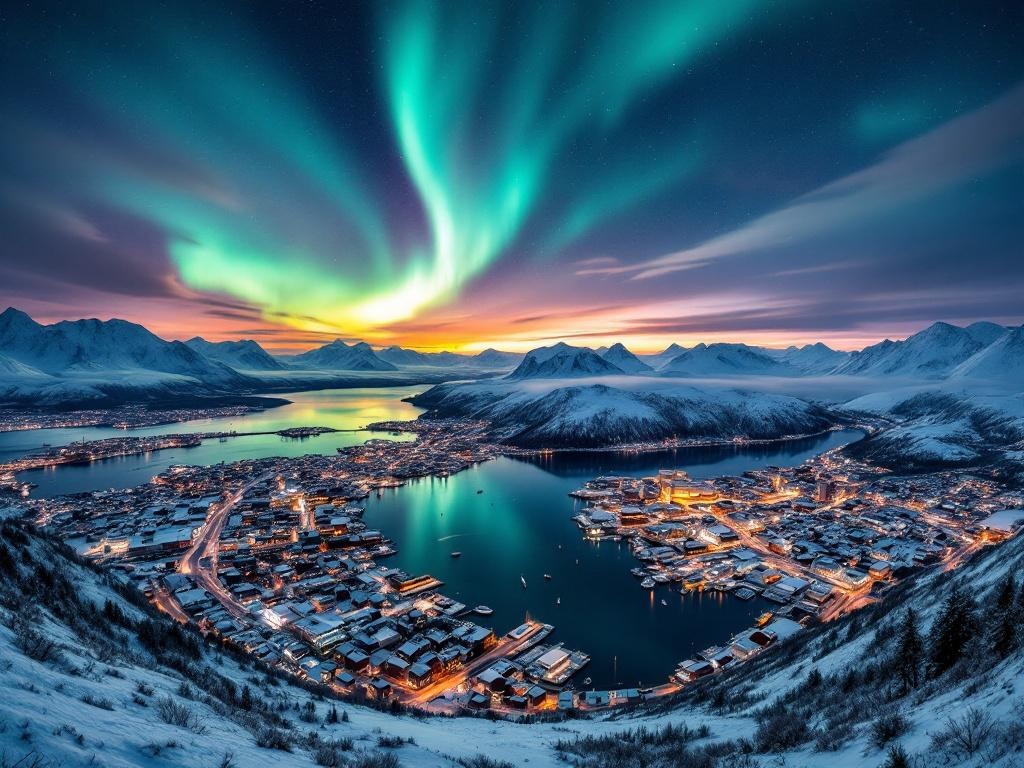
Can You See the Northern Lights in July? Honest Arctic Summer Guide

Quick answer: almost never in the Arctic. The aurora can still happen above Earth in July, but northern destinations are too bright for normal viewing. In places such as Tromso, Svalbard, Fairbanks, Iceland, Swedish Lapland and Finnish Lapland, July is midnight sun or white-night season, not practical aurora season.
If your main goal is the northern lights, plan for late August to early April instead. For the transition month between summer and real aurora season, read the August northern lights guide; for the first broadly reliable early-season window, use the September northern lights guide, then compare it with the darker October northern lights guide. July is better treated as a polar summer trip: 24-hour light, open roads, hiking, wildlife, boat trips, fjords and Arctic Circle road travel. If you are already travelling in July, the smarter question is not "where can I force an aurora trip?" but "which polar summer destination gives me the best July experience?"
July Northern Lights Verdict

| Question | Practical answer |
|---|---|
| Can aurora activity happen in July? | Yes. Geomagnetic activity happens year-round. |
| Can travellers usually see it in Arctic destinations? | No. The sky is too bright across most northern aurora regions. |
| Is late July better than early July? | Slightly in some places, but still too bright for a reliable aurora trip. |
| Best month to book instead? | September for autumn darkness, or March for late-winter darkness and equinox activity. |
| Best July polar alternative? | Midnight sun in Norway, Svalbard, Alaska, Iceland, Greenland or Lapland. |
Why July Does Not Work for Northern Lights Trips

The northern lights need three things to line up: solar activity, clear skies and darkness. July may deliver the first two on some nights, but it usually fails the third.
NOAA's Space Weather Prediction Center notes that aurora viewing requires darkness and that aurora is not visible during daylight hours. That is the key July problem. Above and near the Arctic Circle, the sun either stays above the horizon or never drops far enough below it for a properly dark sky.
That does not mean the aurora has "stopped". It means travellers cannot usually see it. A strong geomagnetic event in July may still be happening overhead, but daylight washes out the display in the same way daylight hides stars.
Destination-by-Destination July Reality Check
| Destination | July aurora outlook | Better July use |
|---|---|---|
| Tromso, Norway | Not a practical aurora month; midnight sun lasts to around 22 July. | Fjords, hiking, whale-free summer boat trips, road trips. |
| Svalbard | No useful darkness; Longyearbyen has midnight sun until late August. | Wildlife cruises, glaciers, polar summer landscapes. |
| Fairbanks, Alaska | Too bright for reliable viewing. | Denali add-ons, Arctic Circle drives, midnight sun events. |
| Reykjavik, Iceland | Long bright nights make aurora chasing unrealistic. | Ring Road, Highlands access, puffins, waterfalls. |
| Rovaniemi, Finland | White nights; not a northern lights trip month. | Lakes, forests, Santa Village, summer Lapland road trips. |
| Abisko/Kiruna, Sweden | Too bright for normal aurora viewing. | Hiking, national parks, Arctic rail routes. |
Is Late July Ever Worth Trying?
Late July is still usually too early for a proper northern lights trip. The first realistic hints of aurora season begin in late August in the highest-latitude places, when darkness starts returning. Even then, August is a shoulder-month gamble: you need a dark enough night, clear weather and enough solar activity.
If you can move dates, this is the practical split:
- July: choose midnight sun, wildlife and road-trip activities.
- Late August: possible first aurora attempts in places with returning darkness, but not peak season.
- September: a much better first-choice month for autumn aurora trips.
- February–March: strong winter-to-spring aurora planning window with long nights and better daylight for daytime activities.
What To Book Instead in July
1. Midnight Sun Norway
Northern Norway is one of the best July polar trips because summer infrastructure is strong and the scenery is dramatic. Tromso's official tourism dates put the midnight sun roughly from 20 May to 22 July, while Visit Norway lists July midnight-sun windows across Lofoten, Vesteralen, Harstad, Tromso and Nordkapp.
Choose Norway in July if you want fjords, mountain roads, islands, coastal ferries, photography and mild Arctic weather. Read the midnight sun complete guide and 7-day midnight sun Norway itinerary for route ideas.
2. Svalbard Polar Summer
Svalbard is a poor July aurora choice but a strong polar summer destination. Visit Svalbard lists midnight sun in Longyearbyen from 19 April to 23 August. That makes July bright all night, which is bad for aurora hunting but excellent for expedition cruises, glacier scenery and wildlife watching.
Use Svalbard if the trip goal is polar landscapes rather than northern lights. For seasonal tradeoffs, see the Svalbard late spring and summer guide and 3 days in Svalbard itinerary.
3. Iceland Summer Road Trip
Iceland in July is about access, not aurora. The long days make it easier to cover waterfalls, beaches, fjords and Highlands routes. The downside is peak-season pricing and crowds. If your dream is northern lights over Iceland, postpone to September through March.
4. Alaska Arctic Circle Trip
Fairbanks and northern Alaska stay too bright for normal aurora viewing in July, but the month works for Arctic Circle drives, Denali add-ons and midnight sun experiences. Book July Alaska for landscapes and long daylight; book late August to March for aurora.
July Aurora Alternatives in the Southern Hemisphere
If you specifically want aurora in July, look south rather than north. July is winter in the southern hemisphere, so places such as Tasmania, Stewart Island/Rakiura and parts of New Zealand's South Island have dark nights and occasional aurora australis potential.
Be careful with expectations. Southern lights trips are weather-dependent, displays are less predictable for travellers than classic northern aurora destinations, and you still need clear southern horizons away from city lights. Treat southern lights as a bonus on a winter nature trip rather than a guaranteed July show.
July vs June vs August
| Month | Arctic darkness | Aurora trip verdict |
|---|---|---|
| June | Almost none in core Arctic destinations. | Do not book for northern lights. |
| July | Still too bright across most northern aurora regions. | Do not book for northern lights. |
| August | Darkness starts returning late in some places. | Possible late-month shoulder season, but September is safer. |
| September | Usable darkness returns. | Strong autumn aurora month. |
Practical Booking Advice
- Do not buy a July "northern lights" trip in the Arctic unless the operator is clearly selling a summer nature trip, not aurora viewing.
- Check daylight first, not only Kp forecasts. A high Kp number cannot overcome a bright sky.
- Use July for scouting. Summer road trips can help you choose winter bases, viewpoints and travel style.
- Book September or March if aurora is the reason for the trip. Those months balance darkness, travel practicality and seasonal interest well.
- Sign up for alerts only when your destination has darkness. Live aurora alerts are most useful once nights have returned.
Sources and Freshness
This guide was reviewed for the 2026–2027 aurora travel seasons. Planning notes are based on NOAA/SWPC aurora-viewing guidance, Visit Norway midnight-sun date ranges, Visit Tromso's Tromso midnight-sun dates and Visit Svalbard's Longyearbyen midnight-sun season. Exact light conditions vary by latitude, cloud cover and local horizon, so verify local sunrise/sunset times before booking a marginal late-August trip.