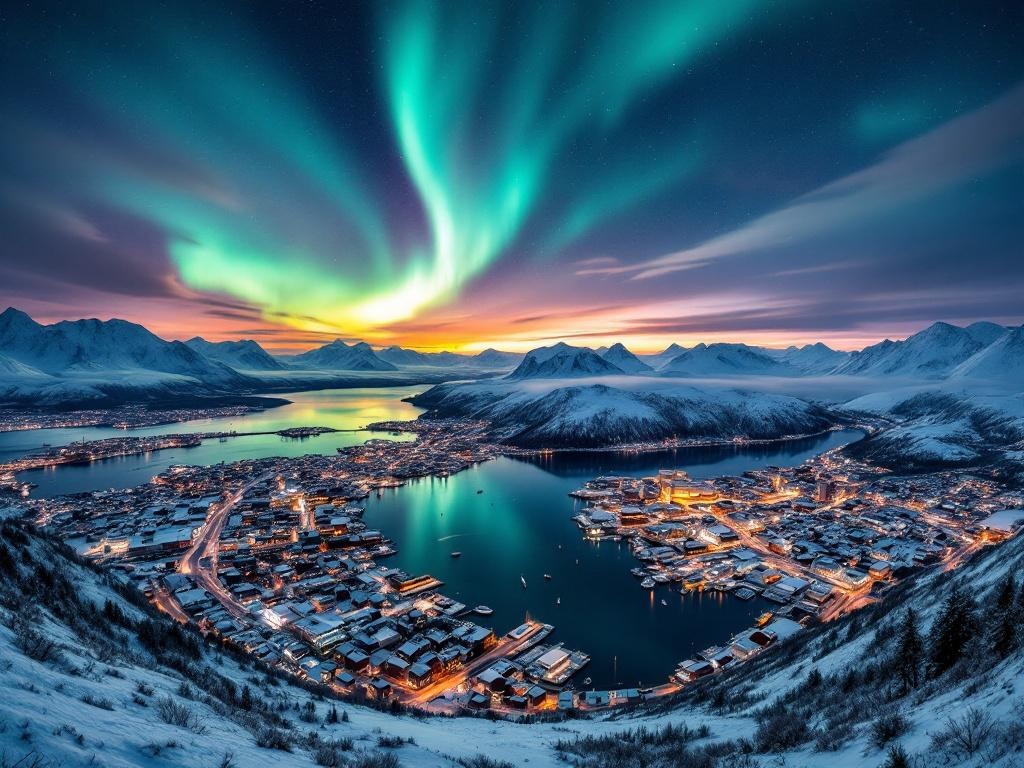
Midnight Sun Complete Guide 2026: Where, When & How to Experience 24-Hour Daylight

If you've chased the northern lights in winter, the Arctic owes you its summer trick: a sun that simply refuses to set. The midnight sun is the aurora's mirror image — instead of dancing lights against darkness, you get endless golden hour, surreal 2 AM hikes, and a strange, beautiful disorientation that makes clocks feel irrelevant.
It's one of the most extraordinary natural phenomena on Earth, and unlike the aurora, it's 100% guaranteed if you're in the right place at the right time.
What Is the Midnight Sun?

The midnight sun occurs when the sun remains visible at midnight. This happens in regions north of the Arctic Circle (66.5°N) during summer and south of the Antarctic Circle during the southern hemisphere's summer.
The science is straightforward: Earth's axis is tilted at 23.5° relative to its orbit around the sun. During the northern summer solstice (around June 20–21), the North Pole is tilted maximally toward the sun, meaning locations above the Arctic Circle receive 24 hours of continuous sunlight.
The further north you go, the longer the midnight sun lasts:
- Arctic Circle (66.5°N): 1 day of midnight sun (around June 21)
- Tromsø (69.6°N): May 20 – July 22 (about 2 months) — useful context if you are wondering whether May or July northern lights trips are realistic
- Nordkapp (71.1°N): May 14 – July 29 (about 2.5 months)
- Svalbard (78°N): April 20 – August 22 (about 4 months)
Best Destinations for the Midnight Sun

Norway — The Classic Choice
Norway is the undisputed midnight sun capital. Its Atlantic coastline keeps temperatures mild, its landscapes are dramatic, and the infrastructure is excellent.
Tromsø experiences midnight sun from May 20 to July 22. The city you might know as the northern lights capital transforms into an outdoor adventure hub — midnight kayaking through fjords, hiking Tromsøya's peaks in perpetual golden light, and outdoor concerts that run until the small hours.
Lofoten is arguably the most photogenic midnight sun destination on Earth. Those iconic red fishing huts (rorbuer) against jagged peaks, all bathed in low-angle golden light at midnight — it's a photographer's fever dream. The midnight sun period runs from late May to mid-July, and the light quality is extraordinary because the sun traces a low arc along the horizon.
Nordkapp (North Cape) markets itself as Europe's northernmost point. Standing at the globe monument at midnight with the sun still blazing is a bucket-list moment, though the plateau itself is windswept and stark. The midnight sun here runs May 14 to July 29.
Svalbard gets the longest midnight sun of any inhabited place — April 20 to August 22. Four months of continuous daylight. Combine it with polar bear spotting, glacier hikes, and some of the most pristine Arctic wilderness anywhere.
Iceland — Land of the Midnight Sun Without the Arctic Circle
Iceland sits just below the Arctic Circle (except for the island of Grímsey), so technically the sun does set — but barely. From mid-June, Reykjavik gets about 21 hours of direct sunlight, and the remaining 3 hours are bright twilight. It never gets dark.
The advantage of Iceland in summer is the sheer variety of what you can do in endless daylight: the Ring Road, whale watching from Húsavík, midnight hikes across lava fields, the Westfjords with virtually no other tourists.
Finland — Nightless Nights in Lapland
The Finns call it "kaamos" in winter and "yötön yö" (nightless night) in summer. Rovaniemi, right on the Arctic Circle, gets its one day of midnight sun around June 21. Head further north to Inari or Utsjoki for weeks of continuous daylight.
Finnish Lapland in summer is all about hiking, fishing, and foraging — cloudberries, blueberries, and lingonberries carpet the forest floor. The famous Lemmenjoki National Park is best explored in the midnight sun period.
Sweden — Midnight Sun and Sami Culture
Kiruna and Abisko swap their winter aurora fame for summer midnight sun. Abisko's microclimate means reliably clear skies, and the Kungsleden (King's Trail) hiking route is at its finest. The midnight sun at Abisko lasts from late May to mid-July.
Jokkmokk, sitting right on the Arctic Circle, offers the midnight sun experience combined with deep Sami cultural immersion — guided hikes with Sami families, traditional food, and stories told under a sun that won't quit.
Alaska — The American Midnight Sun
Fairbanks celebrates the summer solstice with the Midnight Sun Baseball Game — a tradition since 1906 where the Alaska Goldpanners play a full game starting at 10:30 PM with no artificial lighting. It's gloriously weird and uniquely Alaskan.
Denali National Park under the midnight sun is spectacular: grizzlies, caribou, and Denali itself bathed in that impossible low light.
When Exactly Does It Happen?
2026 Key Dates
| Destination | Midnight Sun Starts | Midnight Sun Ends | Total Days |
|---|---|---|---|
| Svalbard (78°N) | April 20 | August 22 | ~125 |
| Nordkapp (71°N) | May 14 | July 29 | ~76 |
| Tromsø (69.6°N) | May 20 | July 22 | ~63 |
| Bodø (67.3°N) | June 4 | July 8 | ~34 |
| Arctic Circle (66.5°N) | June 12 | June 30 | ~18 |
Shoulder season sweet spot: Late May to early June offers midnight sun in northern Norway plus fewer tourists and lower prices than peak July. Late June through early July is busiest.
What Does It Actually Look Like?
Photos and videos don't fully convey it. Here's what to expect:
The light is golden, not harsh. Because the sun stays low on the horizon (even at "noon" it's not directly overhead this far north), you get perpetual golden hour. Photographers call this the "magic hour" — normally it lasts 30–60 minutes around sunrise and sunset. During the midnight sun, it lasts all day.
Shadows are long and dramatic. The low sun angle creates elongated shadows that give landscapes incredible depth and texture.
Colours shift constantly. The sky cycles through shades of gold, amber, pink, and soft blue as the sun traces its low arc. Between 11 PM and 2 AM, when the sun is at its lowest, the colours are most intense.
It's disorienting. Your body clock will rebel. Midnight feels like late afternoon. You'll lose track of time. This is part of the magic — and part of the challenge.
How to Photograph the Midnight Sun
The midnight sun is more forgiving than aurora photography — you have light, so technically any camera works. But to capture it well:
Camera Settings
- Shoot during the "midnight" hours (11 PM – 2 AM) when the sun is lowest and colours most dramatic
- Use a low ISO (100–400) — plenty of light available
- Aperture f/8–f/11 for landscape sharpness
- Graduated ND filter to balance bright sky with darker foreground
- Bracketed exposures for HDR if the dynamic range is extreme
Composition Tips
- Include the sun in frame — use a foreground element (mountain, sea stack, person) for scale
- Reflections work beautifully — still water at midnight creates perfect mirror images
- Silhouettes are striking — people, boats, and buildings against the low sun
- Time-lapse the sun's arc — set up your camera at a fixed position and capture the sun's path as it dips toward the horizon without setting. This creates a mesmerising arc shot.
Smartphone Tips
Modern smartphones handle the midnight sun well since there's abundant light. Use HDR mode, shoot in RAW if available, and focus on capturing the mood — people laughing at 1 AM in full daylight, shadows stretching impossibly long, the surreal normalcy of it all.
How to Sleep When It Never Gets Dark
This is the practical question everyone asks, and it matters more than you'd think. Your circadian rhythm is hardwired to darkness-triggered melatonin production. No darkness = confused brain = poor sleep.
Essential Sleep Strategies
Blackout solutions:
- Book accommodation with blackout curtains (most Arctic hotels and guesthouses have them — confirm when booking)
- Bring a quality sleep mask — not a flimsy airline freebie but a proper contoured mask
- Aluminium foil on windows works in a pinch (common among Arctic locals)
Routine discipline:
- Set firm "bedtime" even when every instinct says it's still afternoon
- Avoid screens for 30 minutes before sleep (the daylight is stimulating enough)
- Keep a consistent wake time
Embrace the shift:
- Many visitors find they naturally shift to a later schedule — sleeping 2 AM to 10 AM
- This actually works well since the best midnight sun light is 11 PM – 2 AM
- Plan your biggest activities for "evening" and sleep through the "morning"
Melatonin supplements can help reset your clock. Start taking them 30 minutes before your target bedtime.
Activities Under the Midnight Sun
The midnight sun transforms what's possible. Activities that would normally end at sunset can continue indefinitely.
Hiking
Midnight hiking is the quintessential midnight sun activity. Popular routes:
- Reinebringen, Lofoten — the famous ridge hike with views over Reine village. Doing it at midnight with zero crowds is transcendent.
- Kungsleden, Sweden — multi-day trekking through alpine valleys under constant light
- Trolltunga, Norway — the iconic rock formation is best photographed in midnight sun light, and starting late evening means fewer people
Kayaking & Paddleboarding
Midnight kayaking through Norwegian fjords is one of those experiences that ruins normal holidays forever. The water is often glassier late at night, reflections are perfect, and the silence is profound.
Fishing
The midnight sun period coincides with peak fishing season across the Arctic. Sea fishing for cod and halibut in Northern Norway, fly fishing for Arctic char in Swedish Lapland, and salmon fishing in Finland are all outstanding.
Golf
Yes, really. Several Arctic courses offer midnight sun golf tournaments. Tromsø Golf Club runs events, and the experience of teeing off at midnight in full sunlight is absurdly fun regardless of your handicap.
Wildlife
Summer brings wildlife in abundance: puffins nesting in Iceland and Northern Norway, whales feeding in nutrient-rich Arctic waters, reindeer calves in Lapland, and seabird colonies on Arctic cliffs.
Budget Tips for Midnight Sun Travel
Summer is high season in the Arctic, but there are ways to manage costs:
- Book early — accommodation in Lofoten and popular Norwegian spots fills months ahead for June–July
- Consider shoulder dates — late May and late July offer midnight sun (in northern locations) with slightly lower demand
- Self-cater — Nordic restaurant prices are brutal. Most accommodation has kitchen facilities; supermarket shopping saves 40–60% on food costs
- Camping — Norway's Right to Roam (allemannsretten) lets you camp wild for free. Bring a tent and a sleep mask.
- Finland and Sweden are cheaper than Norway — same phenomenon, similar landscapes, 20–30% lower costs
- Fly into regional airports — Tromsø, Bodø, Luleå, and Rovaniemi often have good flight deals from Oslo, Stockholm, and Helsinki
Midnight Sun vs Northern Lights: Which Trip to Take?
They're complementary, not competing.
Choose the midnight sun if you:
- Want guaranteed results (the sun WILL be there)
- Love hiking, kayaking, and outdoor adventures
- Prefer milder temperatures (5–15°C vs -15°C)
- Want to see Arctic wildlife (puffins, whales, reindeer calves)
- Enjoy long, relaxed evenings outdoors
Choose the northern lights if you:
- Love the thrill of the chase (aurora is never guaranteed)
- Want snowy, atmospheric winter landscapes
- Enjoy winter activities (dog sledding, snowmobiling, skiing)
- Prefer fewer tourists (winter is quieter except at Christmas/New Year)
- Are a night-sky photography enthusiast
The ideal plan: Do both. Visit in winter for the aurora, then return in summer for the midnight sun. Same destinations, completely different experiences. Many PolarTourist readers become repeat Arctic visitors for exactly this reason.
Planning Your 2026 Midnight Sun Trip
Spring is the time to book. Here's a quick-start plan:
- Pick your dates — aim for early-to-mid June for the best combination of midnight sun and manageable crowds
- Choose your base — Tromsø for easy access and urban amenities, Lofoten for photography, Svalbard for extreme Arctic wilderness
- Book accommodation NOW — Lofoten rorbuer and popular Norwegian lodges book out 3–6 months ahead for summer
- Rent a car — self-drive is the best way to explore the Arctic in summer. Roads are clear, distances are manageable, and you can stop whenever the light is perfect
- Pack layers — Arctic summer temperatures range from 5–15°C, with wind chill. Bring a waterproof jacket, warm fleece, and sun protection (yes, you can sunburn at midnight)
- Bring a sleep mask — non-negotiable
Start planning with our destination guides for Tromsø, Lofoten, Svalbard, and Rovaniemi.