Arctic Spring: Why March Is the Best Month for a Northern Lights Adventure
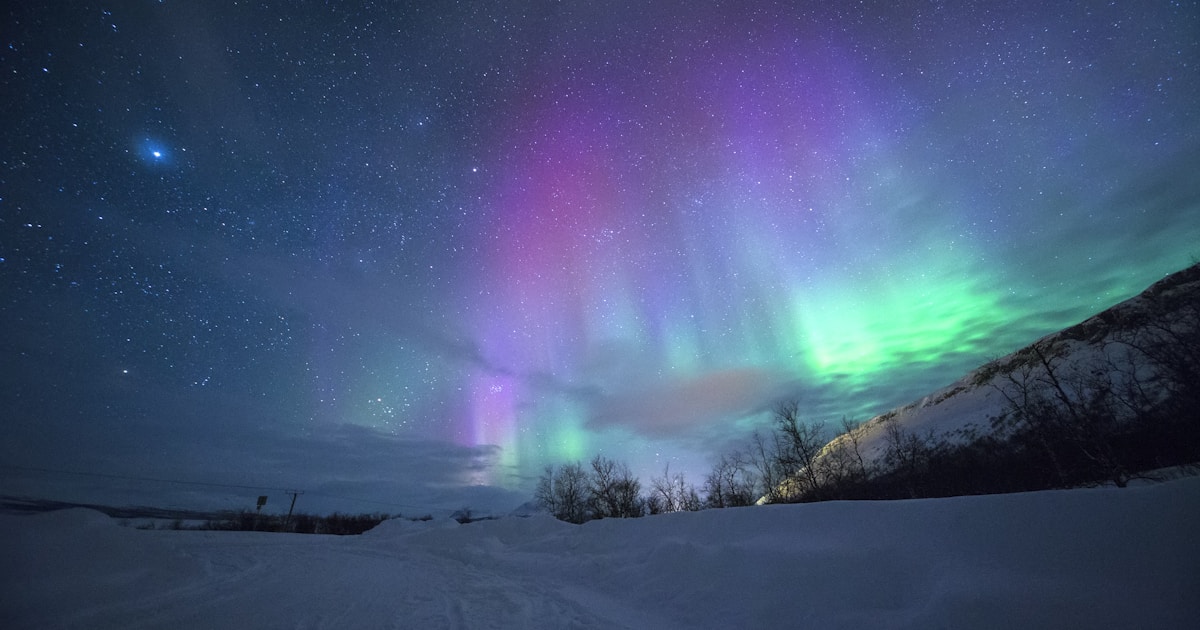
Most people assume January or February are the ideal months for seeing the northern lights. They're not wrong — those months deliver long polar nights and reliable cold. But they're missing the sweet spot.
March is quietly the best month for a northern lights trip, and the reasons go well beyond the aurora itself. You get the equinox geomagnetic boost, enough darkness for solid aurora viewing, drastically warmer temperatures, returning daylight for daytime adventures, lower prices than peak season, and activities like spring skiing and whale watching that simply aren't available in the dead of winter.
Here's why March should be at the top of your list — and how to make the most of it.
The March Equinox Effect
There's a well-documented phenomenon in aurora science: geomagnetic activity spikes around the equinoxes (late March and late September). This is called the Russell-McPherron effect, and it's caused by the orientation of Earth's magnetic field relative to the solar wind.
During the equinoxes, Earth's magnetic field is positioned in a way that allows more solar wind particles to connect with and enter the magnetosphere. The result is statistically higher geomagnetic activity — and stronger, more frequent aurora displays.
Combined with the current Solar Cycle 25 maximum, March 2026 is genuinely one of the best aurora-viewing windows in over a decade. The equinox boost stacks on top of already-elevated solar activity, creating conditions for spectacular displays.
Still Dark Enough to See Aurora
A common worry about March is that the days are getting longer. Won't that kill your chances? Not at all.
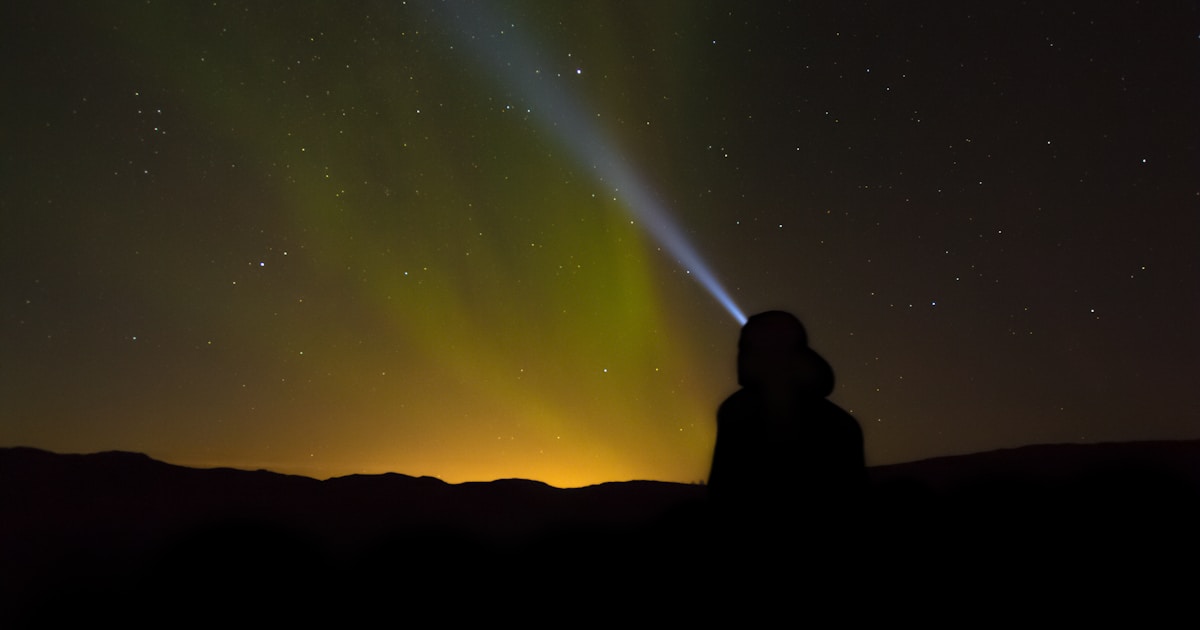
In mid-March at aurora-belt latitudes (65–70°N), you still get 6–10 hours of proper darkness per night. That's more than enough. The aurora's peak hours of 9 PM to 1 AM fall comfortably within the dark window at every major destination.
Here's what the darkness looks like across top destinations in mid-March:
- Tromsø (69.6°N): Dark from roughly 8:30 PM to 4:30 AM — about 8 hours
- Abisko (68.3°N): Dark from 9 PM to 4 AM — about 7 hours
- Rovaniemi (66.5°N): Dark from 9:30 PM to 3:30 AM — about 6 hours
- Reykjavik (64.1°N): Dark from 10 PM to 3 AM — about 5 hours
The Temperature Difference Is Real
This is the factor people underestimate most. Standing outside for 2–3 hours watching the aurora in January means enduring temperatures of -15°C to -30°C depending on the destination. That's genuinely brutal, especially if you're not used to extreme cold.
March is dramatically more comfortable:
| Destination | January Average | March Average | Difference |
|---|---|---|---|
| Tromsø | -4°C | 0°C | +4°C |
| Abisko | -12°C | -5°C | +7°C |
| Rovaniemi | -12°C | -5°C | +7°C |
| Fairbanks | -22°C | -10°C | +12°C |
| Yellowknife | -26°C | -14°C | +12°C |
Daytime Adventures Open Up
In deep winter, most aurora destinations offer limited daytime options. It's dark. The terrain is frozen solid. Many outdoor activities are simply shut down.
March changes everything. Here's what becomes available:
Spring Skiing
March is peak ski season in northern Scandinavia. Not December (too dark) or February (too cold) — March and April are when locals actually ski. The returning sun lights up the mountains, the snow is deep and stable, and conditions are often spring-like with blue skies.
Lyngen is world-famous for ski touring, with routes that descend directly into the fjord. Abisko and the surrounding mountains offer excellent cross-country and backcountry skiing. Even Tromsø has ski resorts within 30 minutes of the city.
The combination of skiing all day and aurora watching at night is one of the great Arctic travel experiences.
Whale Watching Returns
In northern Norway, orca and humpback whales follow the herring along the coast. While the peak season is November–January around Tromsø and Skjervøy, March brings excellent whale watching to western Iceland.
Snæfellsnes and the waters around Ólafsvík see minke whales, humpbacks, and occasionally orca from March onwards as the spring migration begins. Combining a whale-watching boat trip with aurora viewing that same evening is a uniquely Icelandic experience.
Dog Sledding and Snowmobiling
These winter staples are actually more enjoyable in March. Longer daylight means you can see the stunning Arctic landscape during your safari instead of doing everything by headlamp. The dogs are energetic from the warmer temperatures, and trail conditions are often excellent with packed, well-groomed snow.
Photography in Golden Light
For photographers, March in the Arctic is paradise. The sun sits low on the horizon all day, creating golden-hour conditions that last for hours rather than minutes. The pink and orange alpenglow on snow-covered mountains at midday is spectacular — and then you get the aurora at night. A single day can yield completely different genres of stunning images.
Lower Prices, Fewer Crowds
March sits in the shoulder season for most Arctic destinations. Christmas and February half-term (the peak periods) have passed, and Easter hasn't arrived yet. This translates to:
- Flights: 20–30% cheaper than December–February on most routes
- Hotels: Easier availability and often discounted rates. Those glass igloos in Finland that are booked solid in January? March availability is significantly better.
- Tours: Smaller group sizes on guided aurora tours. Some operators offer last-minute discounts to fill remaining spots.
- Overall: A 5-night trip in March can cost €400–600 less than the identical trip in January
Best Destinations for a March Aurora Trip
Tromsø, Norway — The All-Rounder
Tromsø in March is arguably the city at its best. Enough darkness for aurora, enough light for adventures, warming temperatures, and the full slate of activities available. The Tromsø International Film Festival usually falls in mid-March, adding cultural events to the mix. Ski touring on nearby Kvaløya island with the sea stretching below you is hard to beat.
March aurora probability: High — 8+ hours of darkness with equinox boost.
Lofoten, Norway — The Photographer's Dream
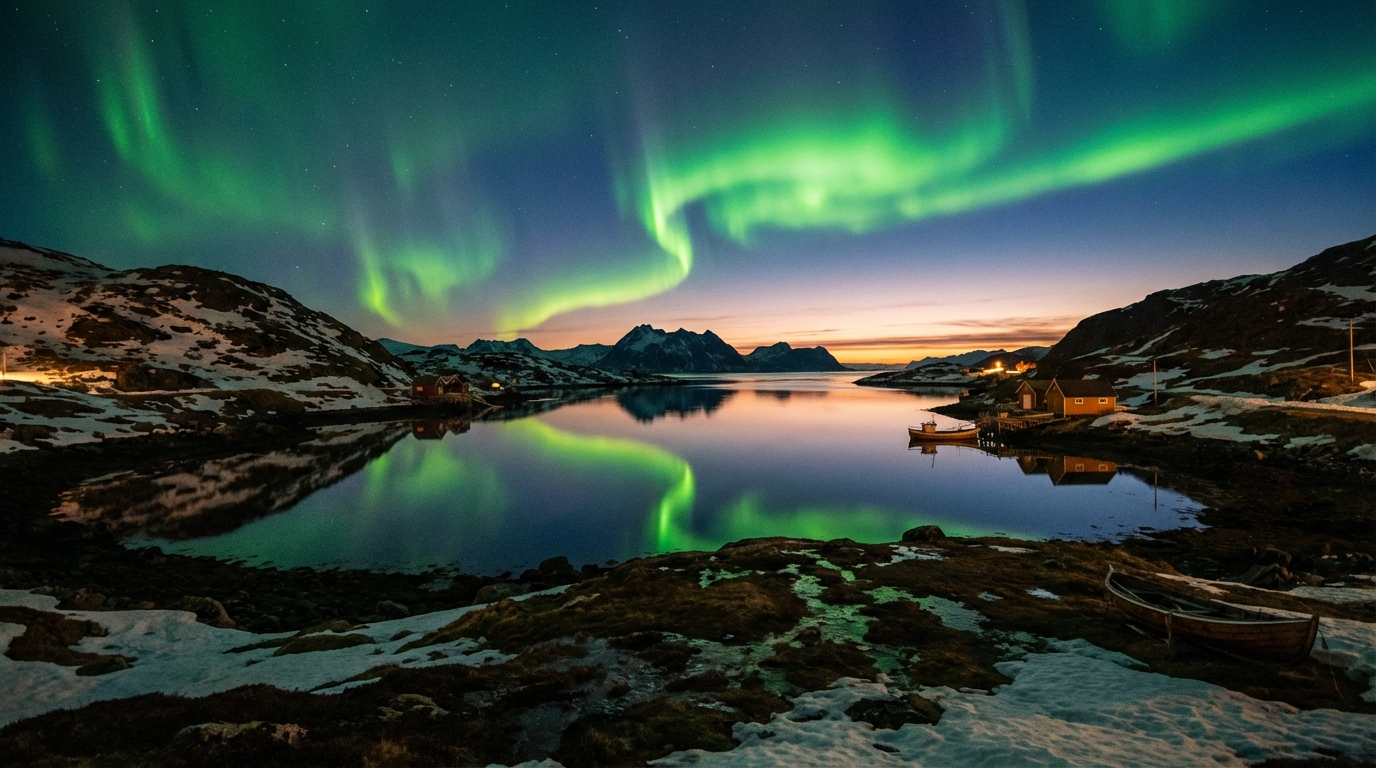
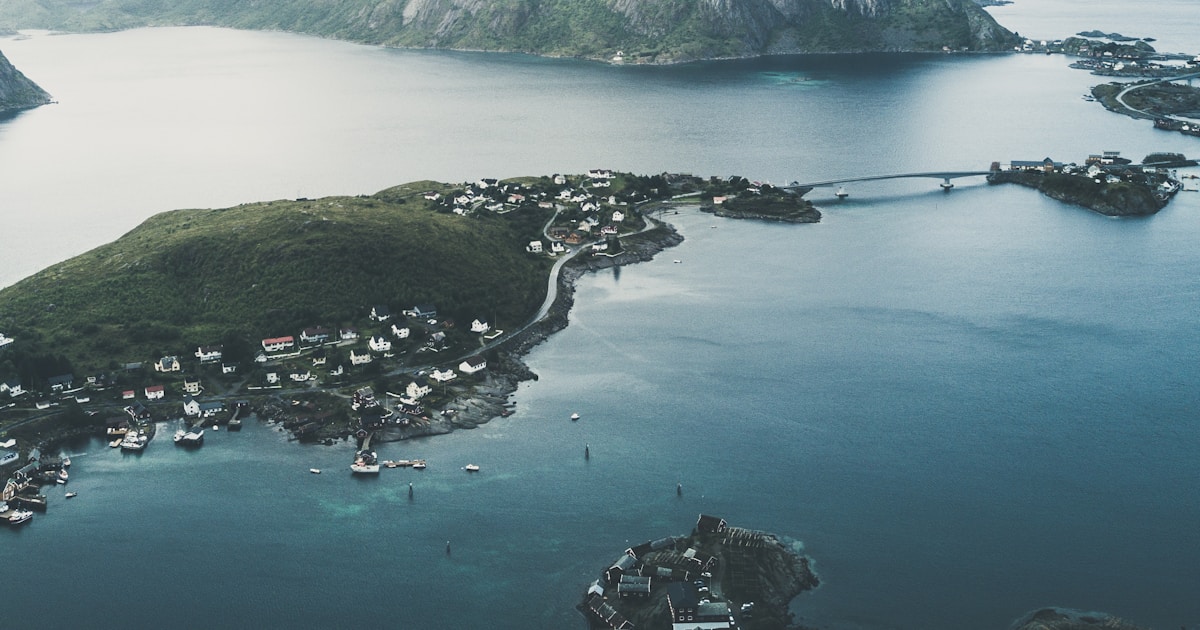
Lofoten in March offers dramatic mountain-and-sea scenery lit by the returning sun. The fishing villages of Reine and Hamnøy are among the most photogenic places on Earth, and aurora reflecting in the sheltered harbours is iconic. March is also the peak of the Lofoten cod fishing season — the traditional stockfish harvest that's been happening here for a thousand years.
March aurora probability: High — spectacular coastal aurora backdrops.
Abisko, Sweden — The Statistical Favourite
With its famous microclimate and position directly under the auroral oval, Abisko has the highest statistical probability of clear skies for aurora viewing in all of Scandinavia. In March, the Aurora Sky Station is still operating, and the combination of ski touring in Abisko National Park by day and aurora viewing by night is exceptional.
March aurora probability: Very high — best clear-sky statistics in the region.
Iceland — The Budget Play
Iceland in March offers some of the cheapest transatlantic flights of the year, and the weather — while still unpredictable — begins to stabilise. The Snæfellsnes peninsula is particularly appealing: Kirkjufell mountain provides the most iconic aurora foreground in Iceland, whale watching restarts around Ólafsvík, and the peninsula is close enough to Reykjavik for a comfortable self-drive circuit.
March aurora probability: Medium-high — cloud cover remains the main challenge.
Finnish Lapland — The Serenity Choice
If you want peace and quiet, Finnish Lapland in March is unbeatable. Saariselkä and Inari offer vast wilderness, excellent cross-country skiing, and far fewer visitors than the Norwegian coast. Many aurora cabins and glass igloos have availability that's impossible to find in peak season.
March aurora probability: Medium-high — cold, dry continental air means fewer clouds than coastal destinations.
Sample 5-Night March Itinerary: Tromsø + Lyngen
Here's a concrete plan that combines the best of March:
Day 1 — Arrive Tromsø. Settle in, explore the city, visit the Arctic Cathedral. Check aurora forecast for the evening. If clear, head to Telegrafbukta beach or Prestvannet lake for city-edge aurora viewing.
Day 2 — Whale watching + aurora tour. Morning whale-watching cruise from Tromsø harbour. Afternoon rest. Evening: guided aurora chase tour (operators drive to clear skies within a 2-hour radius).
Day 3 — Drive to Lyngen (2h). Stop at viewpoints along the fjord. Check into a fjord cabin. Afternoon visit to Aurora Spirit Distillery for a tasting. Evening: aurora viewing from the cabin or the fjord shore with the Lyngen Alps as backdrop.
Day 4 — Ski touring or snowshoeing in Lyngen Alps. Full-day guided tour tailored to ability. Return to cabin. Evening: aurora watch — Lyngen's dark skies and mountain backdrop are among the best in Norway.
Day 5 — Drive back to Tromsø via Kvaløya. Stop at Sommarøy if time allows. Last evening in Tromsø — final aurora chance or explore the city's restaurants.
Estimated cost: €1,200–1,800 per person (flights from London, mid-range accommodation, 2 guided activities, rental car for Lyngen leg).
Packing for March vs Deep Winter
March packing is slightly lighter than January but don't get complacent — it's still the Arctic.
What you can leave behind compared to January:
- Extreme-rated boots (regular warm winter boots work in March)
- Chemical hand warmers (nice to have, but not essential)
- Balaclava (a good beanie and neck gaiter will do)
What you still absolutely need:
- Thermal base layers (merino wool)
- Insulated mid-layer (down or synthetic)
- Windproof outer shell
- Warm gloves + liner gloves for camera work
- Warm hat covering ears
- Sunglasses — the March sun reflecting off snow is genuinely blinding
The sunglasses point is important. In January you barely need them. In March they're essential — snow blindness is a real risk on bright days.
For a complete list, see our Arctic packing guide.
Booking Tips for March
- Book 2–3 months ahead for the best flight prices. March flights to Tromsø, Rovaniemi, and Reykjavik are cheaper than peak season but still sell out on popular weekends.
- Target mid-week departures — Monday–Thursday flights are consistently cheaper.
- Consider the spring equinox week (March 19–25) for the statistical aurora boost. It's not guaranteed, but the odds genuinely improve.
- Book aurora tours with cancellation policies. Reputable operators offer free rebooking if weather cancels your tour.
- Rent a car if visiting Norway or Iceland. March roads are well-maintained and having flexibility to chase clear skies is worth the cost.
The Bottom Line
March isn't the compromise month — it's the optimised one. You get strong aurora activity (boosted by the equinox), comfortable temperatures, real daylight for adventures, lower prices, and fewer crowds. The only thing you give up compared to deep winter is a few hours of total darkness — and unless you plan to watch the sky from 4 PM to 10 AM, you won't miss them.
If you've been waiting for the right time to book a northern lights trip, March 2026 — during solar maximum — is about as good as it gets.
Start planning with our destination guides for Tromsø, Lofoten, Abisko, and Reykjavik.