Where to Stay in Fairbanks for Northern Lights 2026
Fairbanks is one of the easiest northern lights destinations in North America, but the best place to stay depends on how you want your trip to work. Some travelers want a warm, reliable city base with easy tour pickups and restaurant options. Others want darker skies, cabin-style atmosphere, and the chance to step outside without first driving away from town.
The main decision is not luxury versus budget. It is convenience versus darkness.
The short answer

- Stay downtown or near the airport if this is your first winter trip to Alaska, you do not want to drive icy roads at night, or you plan to join guided aurora tours.
- Stay in the hills north of town if seeing aurora from your accommodation matters more than nightlife and restaurant choice.
- Stay at Chena Hot Springs or another remote property if you want a self-contained winter experience and are comfortable with higher prices and fewer backup options.
Best areas to stay in Fairbanks

Downtown Fairbanks and the riverfront
Best for: first-timers, no-car trips, short stays, guided tours Typical price: roughly $120 to $250 per night in winter Aurora viewing from hotel: limited to poor, unless activity is strong and skies are exceptionally clearDowntown gives you the simplest trip. You are close to restaurants, supermarkets, coffee shops, museums, and most of the practical errands that matter in deep winter. Many aurora operators use central pickup points, so staying here reduces friction.
The tradeoff is obvious: you are in the brightest part of the city. Fairbanks is not a huge metropolis, but local light pollution is still enough to reduce weak displays. If you stay downtown, assume that your real aurora viewing will happen on a tour or on a self-drive outing away from town.
Good fit if you want: easy logistics, flexible dining, and a lower-stress arrival after a long flight.
Near the airport and west Fairbanks
Best for: overnight stopovers, car renters, chain hotel reliability Typical price: roughly $110 to $220 per night Aurora viewing from hotel: similar to downtown, sometimes slightly better depending on exact locationThis area is practical rather than romantic. If you land late, leave early, or value predictable hotel standards, staying near the airport can make sense. It is also handy if you plan day trips and want fast access to the road network.
Choose this area for efficiency, not for atmosphere.
Hillside lodges north of town
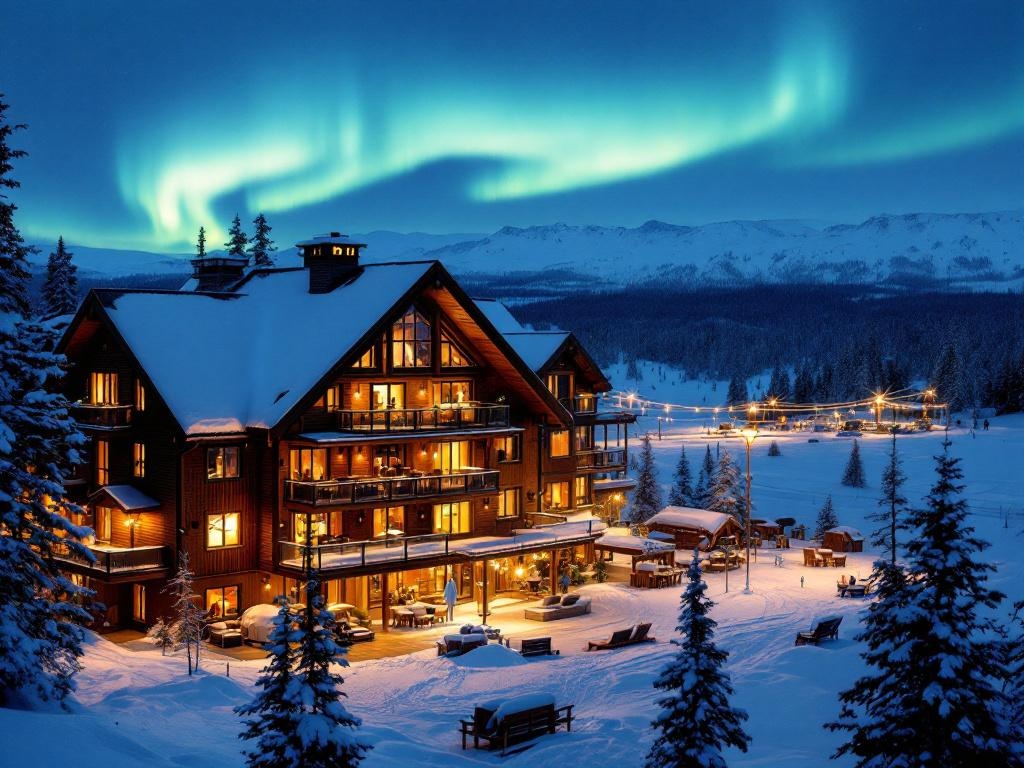
Best for: travelers who want darker skies without being too remote Typical price: roughly $180 to $400 per night Aurora viewing from property: often much better than downtown, though still weather-dependentThis is where Fairbanks starts to feel like an aurora destination rather than just a winter city. Lodges in elevated or more rural settings can offer darker skies, fewer nearby lights, and sometimes wake-up calls or dedicated viewing areas.
The practical advantage is balance. You can still reach town, but you may have a realistic chance of seeing aurora without joining a long chase each night.
The downside is that you are more dependent on a rental car or on the property's transfer arrangements. Dining options also narrow quickly once you leave central Fairbanks.
Chena Hot Springs area
Best for: travelers who want a memorable winter resort experience Typical price: often higher once room cost, transfers, and meals are factored in Aurora viewing from property: generally strong, thanks to darker skies than townChena Hot Springs is the most famous out-of-town option because it bundles a classic Alaska winter image, hot water, snow, and dark skies into one trip. That makes it appealing, but it is not automatically the best base for everyone.
It is a long way from town by local standards, so you give up flexibility. Food choices are limited, spontaneous restaurant hopping is gone, and weather or transport hiccups can matter more. If you stay here, treat it as a resort stay rather than as a normal city hotel.
Property types and who they suit
Standard city hotels
Choose these if your priority is value, reliability, and warm indoor comfort. They are usually the easiest option for travelers arriving in extreme cold for the first time.Boutique lodges and cabins
These work best for couples, photographers, and anyone who cares about atmosphere. The premium only makes sense if you genuinely plan to spend time on-site at night.Glass-roof or aurora-focused stays
These look compelling in photos, but they are rarely the cheapest or most flexible option. Book them for the experience itself, not because you assume they guarantee better sightings. Clouds matter more than architecture.How to decide, realistically
Choose downtown if...
- you are staying 2 to 4 nights
- you will book guided aurora tours anyway
- you do not want to drive on snow and ice after dark
- you care about restaurants, coffee shops, and easier daytime sightseeing
Choose a lodge outside town if...
- seeing aurora from your accommodation is a major priority
- you are comfortable renting a car or arranging transfers in advance
- you value quiet and scenery more than restaurant choice
- you are willing to pay more for a more immersive stay
Split your stay if...
A split stay can work very well in Fairbanks. Spend the first nights in town to recover from flights and do tours, then move to a darker lodge for the final night or two. That reduces cost while still giving you the remote-stay experience.Important winter booking advice
Do not assume you need the darkest possible hotel
Fairbanks has many excellent aurora tours and self-drive viewing spots. A good city hotel plus one or two well-timed excursions is often better value than paying top prices every night for a remote room.Check transfer details before booking remote stays
Some properties are simple if you have a rental car and awkward if you do not. Confirm whether airport pickup, town transfers, and late arrivals are actually supported.Be cautious with package-style marketing
Terms like aurora lodge or northern lights resort can mean anything from a genuinely dark-sky property to a standard hotel that happens to sit a bit outside town. Look for specifics: viewing deck, wake-up service, distance from city lights, and winter access.Build around daylight and road conditions
In midwinter, you will be dealing with limited daylight, cold starts, and potentially slippery roads. If you are not comfortable driving at night in Alaska, staying in town and letting operators handle transport is often the smarter move.Expectations: what changes your experience most
Your accommodation matters, but not as much as these three things:
- Sky clarity
- Willingness to get away from light pollution
- Number of nights you give yourself
Sample stay strategies
Best for first-timers
Stay in central Fairbanks, skip the car if possible, and book one aurora tour early in the trip plus one later backup night if the forecast looks poor.Best for photographers
Stay outside town or split your stay. Prioritize dark-sky access, flexible transport, and enough nights to wait for a clean forecast.Best for a special-occasion trip
Book one memorable lodge or hot-springs night, but keep the rest of your stay in town unless your budget easily supports the premium.Frequently asked questions
Can you see the northern lights from downtown Fairbanks?
Sometimes, especially during stronger displays, but downtown is not the best viewing environment. Most travelers should expect better results away from the brightest areas.Is Chena Hot Springs worth staying at?
It can be, especially if the hot springs experience itself is a major reason for the trip. It is less ideal if you want restaurant variety, easy logistics, or maximum flexibility.Do I need a car in Fairbanks?
Not necessarily. If you stay downtown and rely on tours, you can manage without one. A car becomes much more useful once you choose a lodge outside town.How far ahead should I book?
For peak aurora season, book early enough that you still have a real choice of location and cancellation terms. The most distinctive remote stays can tighten up well before winter weekends and holiday periods.Also read our 3-day Fairbanks itinerary and Alaska northern lights guide.