Fairbanks in January
Travellers comparing an Interior Alaska base, northern-lights excursions and hot spring visits. Compare dated light conditions and investigate access for January; this is not a confirmed operating calendar.
What changes in January?
Daylight varies from 4.0 to 6.9 hours per day across the month. The sun drops below −6° on every modelled date. Sun below −6° means civil twilight has ended, not necessarily a fully dark sky. Deeper −12° and −18° windows are listed separately. None is a universal aurora visibility threshold or sighting forecast; bright displays may be seen in twilight.
The destination record lists December, January, February, March as core travel months, not confirmed operating dates. Use the dated solar estimates below alongside transport, weather and provider checks.
Planning limits →Planning guides for Fairbanks in January
Use these guides alongside the dated solar estimates and operating-calendar checks for Fairbanks: seasonal timing, itineraries and packing. Articles are not confirmations of individual departures.
Can You See the Northern Lights in January? Deep-Winter Aurora Guide
Compare early and late January aurora trips, warm-up access and transport. In Rovaniemi, SantaPark’s season ends on 23 January; Santa Claus Office stays open later.
7 min read · Guides
Where to Stay in Fairbanks: Airport Shuttles, Aurora Pickups and Remote Lodges
Choose a Fairbanks hotel or remote stay by verified airport service, aurora-tour pickup boundaries and Chena transfers—not assumed rates or darkness guarantees.
6 min read · Guides
3 Days in Fairbanks: Alaska Aurora Itinerary
A three-day Fairbanks plan with a recovery morning after long aurora chases, verified Chena attraction rules and a realistic no-car transfer option.
7 min read · Experiences
🌡️ Weather in Fairbanks in January
The destination dataset lists -23°C as the January monthly average. Current conditions, wind, precipitation and exposure can differ substantially. Solar durations below are calculated separately from this climate record. Sun below the horizon is not the same as a dark sky; polar night can include hours of twilight.
Dated daylight and darkness windows
Approximate hours per 24-hour solar day at 64.84°, -147.72°. Reference calendar: 2026; not live conditions or clock times. The full-month range uses every date; start, middle and end show the seasonal change. Threshold rows overlap: do not add them together.
| Solar window | January 1 | January 15 | January 31 | Full-month range |
|---|---|---|---|---|
| Daylight (apparent sunrise to sunset) | 4.0h | 5.2h | 6.9h | 4.0–6.9h |
| Sun below apparent horizon (−0.833°) | 20.0h | 18.8h | 17.1h | 17.1–20.0h |
| Civil twilight ended (sun below −6°) | 17.2h | 16.5h | 15.2h | 15.2–17.2h |
| Nautical twilight ended (sun below −12°) | 14.9h | 14.3h | 13.1h | 13.1–14.9h |
| Astronomical darkness (sun below −18°) | 12.9h | 12.3h | 11.2h | 11.2–12.9h |
Usable aurora darkness is not a single fixed hour count: display brightness, twilight, clouds, moonlight, artificial light and the observer all matter. A −6° window can still have nautical twilight; −12° marks a darker planning benchmark; −18° is astronomical night, not a prerequisite for seeing every aurora. Daylight alone gives no sighting probability.
Hours and transition dates are approximate, especially near the poles. Mountains, elevation and atmospheric refraction can change the light at your actual viewpoint; other years can shift the boundaries. Use an exact-date local almanac before scheduling. These estimates are not sunrise or sunset clock times.
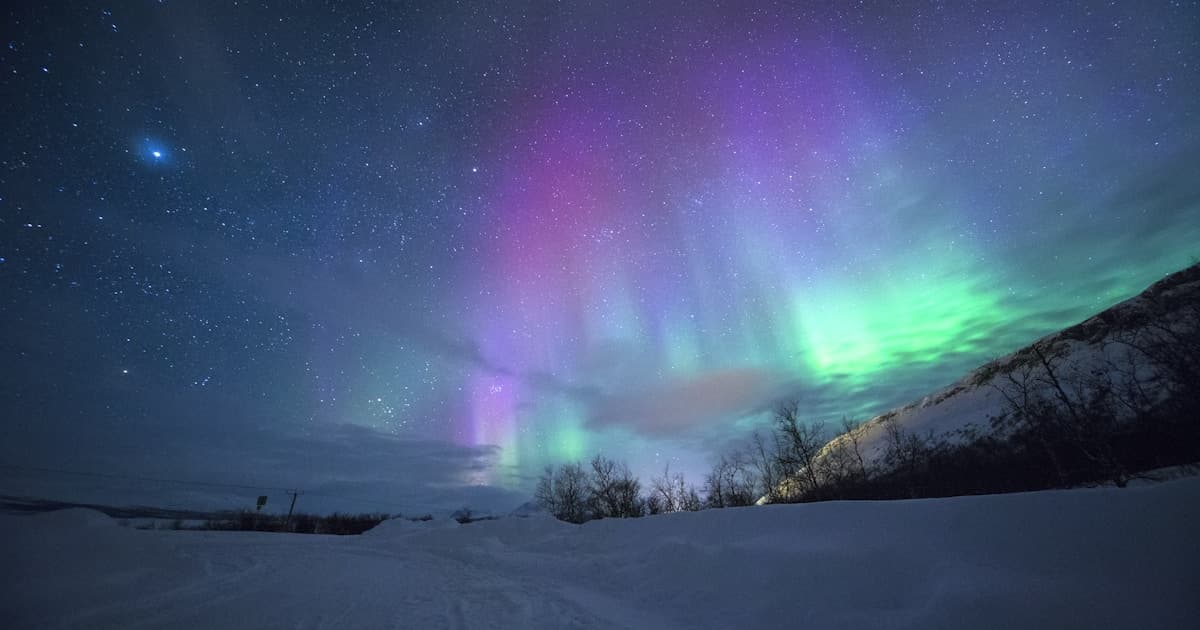
🌌 Northern Lights planning in January
Daylight varies from 4.0 to 6.9 hours per day across the month. The sun drops below −6° on every modelled date. Sun below −6° means civil twilight has ended, not necessarily a fully dark sky. Deeper −12° and −18° windows are listed separately. None is a universal aurora visibility threshold or sighting forecast; bright displays may be seen in twilight.
The stored 9/10 aurora value is a limited editorial planning indicator, not a probability, measured reliability, scientific ranking or live forecast. It cannot predict sightings or replace the dated daylight and darkness guidance.
Find a safe dark-sky location, check cloud cover and current space-weather forecasts, and keep plans flexible. No forecast or trip length guarantees a sighting. Local tours may help with transport, but verify current dates, routes and cancellation terms.
🎯 Activities to check in Fairbanks in January
No individual operating dates are confirmed here. A published destination season can support a lead, but a tag alone cannot establish that a tour runs in January.
Sky context, not confirmed tours
Northern Lights Tours: Some dates have sun below −6°; this only describes twilight/darkness. No local operating calendar or aurora probability is established.
Aurora Viewing Domes: Some dates have sun below −6°; this only describes twilight/darkness. No local operating calendar or aurora probability is established.
Northern Lights Photography: Some dates have sun below −6°; this only describes twilight/darkness. No local operating calendar or aurora probability is established.
Aurora Camp: Some dates have sun below −6°; this only describes twilight/darkness. No local operating calendar or aurora probability is established.
Other destination ideas — month dates unconfirmed
Hot Spring Soaks
Destination-level idea only; no month-specific operating dates confirmed. Check access, conditions and the provider before including it in an itinerary.
Photography Tours
Destination-level idea only; no month-specific operating dates confirmed. Check access, conditions and the provider before including it in an itinerary.
Hot Spring Bathing
Destination-level idea only; no month-specific operating dates confirmed. Check access, conditions and the provider before including it in an itinerary.
Indigenous Cultural Experiences
Destination-level idea only; no month-specific operating dates confirmed. Check access, conditions and the provider before including it in an itinerary.
Season-dependent tags without a supported local calendar, or sky experiences inconsistent with this month's model, are not promoted as monthly choices. This is not proof that no specialist operator runs an alternative.
If no operating dates are confirmed, keep a flexible plan: investigate local cultural sites, photography and short walks where access and conditions permit. Check opening hours, safe routes, daylight and transport; these are alternatives to research, not guaranteed year-round services.
Full destination guide and access planning →🎒 What to Pack for January in Fairbanks
The destination dataset lists -23°C as the monthly average. It is not a daily forecast, exposure limit, or equipment rating.
Check the current forecast, wind, precipitation, planned exposure time, and local guidance before choosing layers and footwear.
Use adaptable layers and carry windproof and waterproof protection; confirm what specialist clothing an activity operator supplies.
For night photography, use stable footing and carry spare batteries; cold can shorten battery life.
🏨 Accommodation considerations in January
This month is in the destination record’s core travel-month list. The record does not establish property availability. Relevant stay types in the destination data include Aurora Viewing Domes, Wilderness Lodges, City Hotels. Check current rates and opening dates directly with the property before booking.
Explore More
🧭 Other destination records for January
These same-hemisphere destinations share the travel task and have published seasonal context overlapping January. Compare their voyage or local-season guidance and exact transport plans; this is not confirmation of a departure, activity space or aurora sighting.
Plan Fairbanks by Month
Highlighted in green = core months listed in the Fairbanks dataset, not confirmed tour dates