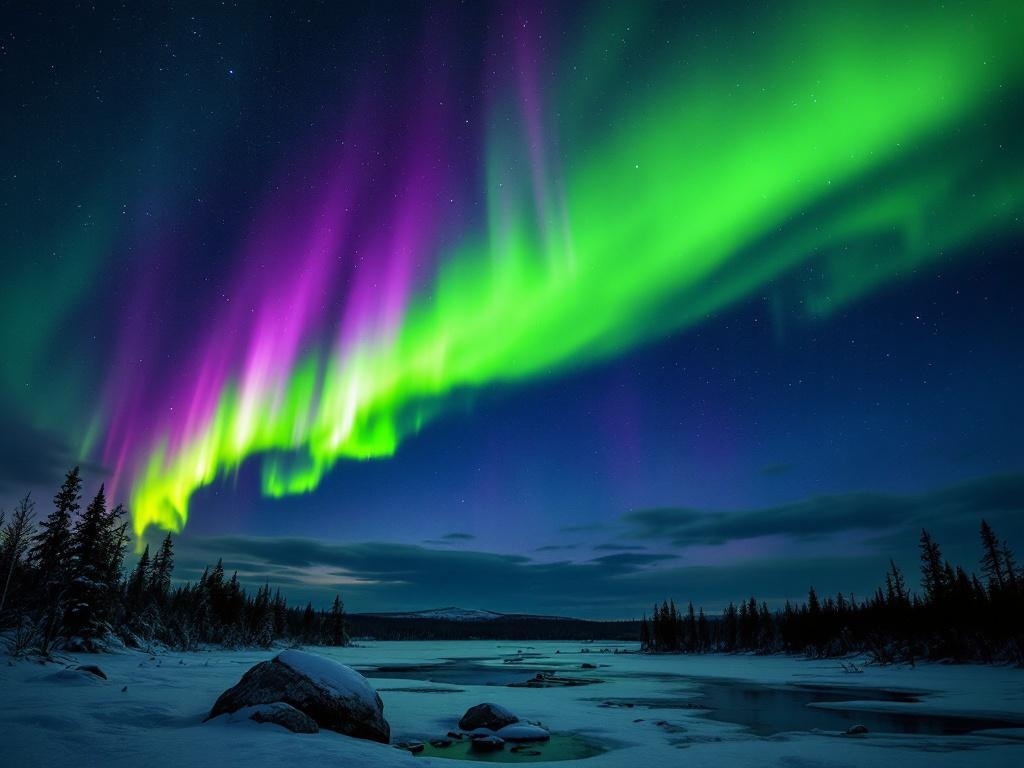
Northern Lights in Sweden: Complete Guide 2026
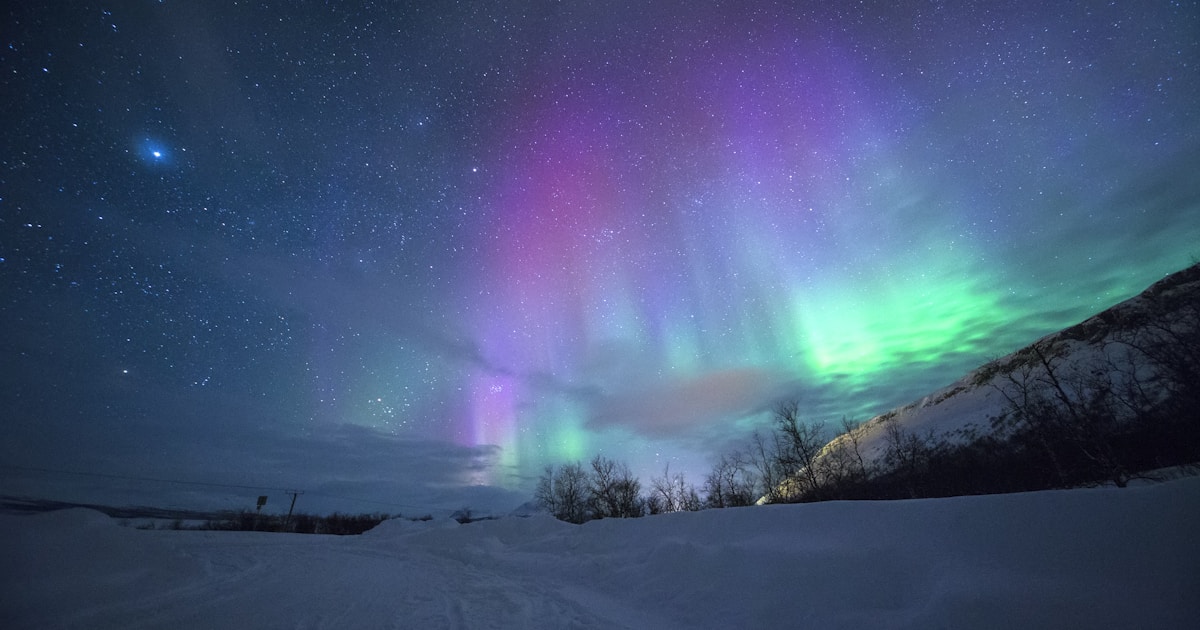
Sweden is home to what many consider the single best aurora-viewing location on Earth: Abisko. This tiny village in Swedish Lapland benefits from a unique microclimate — the "blue hole of Abisko" — that produces clear skies with remarkable consistency, even when surrounding regions are clouded over. Combined with the legendary ICEHOTEL in Jukkasjärvi, Sweden offers some of the most iconic aurora experiences in the world.
With 6 northern lights destinations spread across Swedish Lapland, Sweden may have fewer options than Norway's 11 or Finland's 10, but what it lacks in quantity it makes up for in quality. Abisko's aurora score of 9/10 and its exceptional clear-sky statistics make it a pilgrimage site for serious aurora chasers worldwide.
Why Sweden for Northern Lights?
The Blue Hole of Abisko
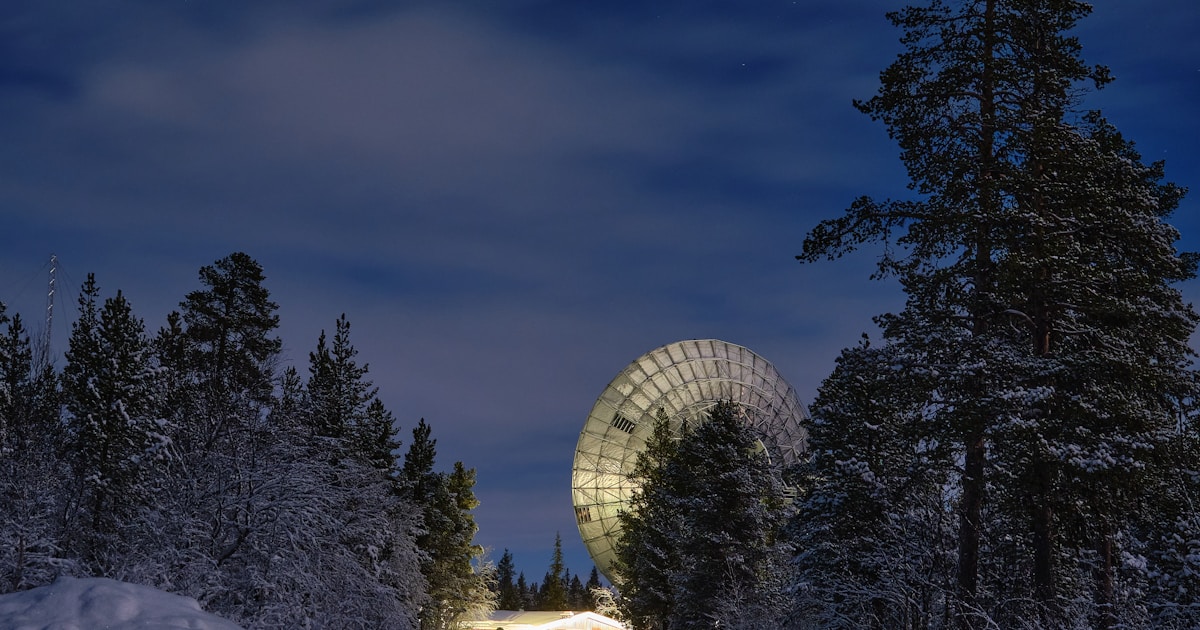
Abisko's location at the eastern end of a deep, narrow lake (Torneträsk) creates a rain shadow effect. Wet weather systems from the Atlantic lose their moisture over the Norwegian mountains, and the lake creates a localised patch of clear sky — the famous "blue hole." The result is a useful local rain-shadow effect that can leave Abisko clearer than nearby areas.
The Aurora Sky Station, perched at 900m on Mount Nuolja above Abisko, capitalises on this microclimate. Accessible by chairlift, it offers panoramic views in all directions and regularly records aurora when every surrounding area is clouded over.
The ICEHOTEL
The ICEHOTEL in Jukkasjärvi (near Kiruna) is rebuilt from scratch every winter using ice from the Torne River. Sleeping in a room carved entirely from ice, at a constant -5°C, under reindeer-skin blankets — and then stepping outside to see the aurora — is one of the world's most unique travel experiences.
Since 2016, ICEHOTEL 365 offers a permanent ice structure open year-round (kept frozen by solar-powered cooling in summer). But the classic experience is the winter-only original, which exists from December to April.
Value and Accessibility
Sweden offers better value than Norway while maintaining excellent infrastructure. The Midnight Sun Arctic Rail from Stockholm to Kiruna is one of Europe's great train journeys, and domestic flights are frequent and affordable.
Sweden's 6 Northern Lights Destinations
Abisko — The World's Best Aurora Viewing (Aurora Score: 9/10)
Abisko is the gold standard for aurora viewing. This tiny village (population ~100) sits at 68.4°N on the shore of Lake Torneträsk, 200km north of the Arctic Circle.
Weather: January averages -13°C with 20 hours of darkness. February -11°C with 15 dark hours. March -7°C with 9 dark hours. The blue hole microclimate means clear skies even when the forecast elsewhere looks grim.
Activities: Aurora Sky Station visits (the main attraction), dog sledding, snowshoeing, cross-country skiing, ice climbing, reindeer sledding, northern lights photography, aurora camps, hiking (Kungsleden trail), wildlife watching, Sámi cultural experiences, sauna experiences, and fat biking.
Best months: November through March.
Why choose Abisko: If maximising your chance of seeing the northern lights is your primary goal, Abisko is the answer. The Aurora Sky Station has recorded aurora on over 200 nights per year. The local clear-sky pattern is a practical advantage, but not a guarantee.
Getting there: Fly to Kiruna (1 hour drive) or take the Arctic train from Stockholm (17 hours, spectacular).
Kiruna — The ICEHOTEL Gateway (Aurora Score: 8/10)
Kiruna is Swedish Lapland's main town and the gateway to both the ICEHOTEL and Abisko. At 67.9°N, it's the northernmost city in Sweden.
Weather: January averages -16°C with 20 hours of darkness. February -14°C with 15 dark hours. Colder than Abisko due to its inland position.
Activities: ICEHOTEL visits and overnight stays, northern lights tours, dog sledding, snowmobile safaris, reindeer sledding, moose safaris, aurora camps, ice fishing, sauna experiences, Sámi cultural experiences, and cross-country skiing.
Best months: November through March.
Why choose Kiruna: The ICEHOTEL is 17km away in Jukkasjärvi. Kiruna itself is being relocated due to mining subsidence — a fascinating story. Good flight connections and the main logistical hub for Swedish Lapland.
Note: Kiruna is currently in the process of moving its city centre 3km east due to iron ore mining. This is one of the largest urban relocations in history and is genuinely interesting to visit.
Jukkasjärvi — The ICEHOTEL (Aurora Score: 8/10)
Jukkasjärvi is a tiny village 17km from Kiruna, famous worldwide as the home of the original ICEHOTEL.
Best months: December through March for the seasonal ICEHOTEL. ICEHOTEL 365 is open year-round.
Why choose Jukkasjärvi: The ICEHOTEL experience — sleeping in an ice room, drinking from ice glasses in the ICEBAR, admiring ice art suites created by international artists. Combine with aurora viewing for the ultimate Swedish Arctic experience.
Jokkmokk — Sámi Winter Market (Aurora Score: 7/10)
Jokkmokk is the cultural centre of the Swedish Sámi people. The Jokkmokk Winter Market, held since 1605, takes place every February and is one of the oldest markets in the world.
Best months: October through March. February for the winter market.
Why choose Jokkmokk: Deep Sámi cultural immersion, the historic winter market, Ájtte Museum (Sweden's premier Sámi museum), and good aurora probability at 66.6°N — right on the Arctic Circle.
Gammelstad — UNESCO Heritage (Aurora Score: 6/10)
Gammelstad (near Luleå) is a UNESCO World Heritage church town with 424 wooden cottages surrounding a 15th-century stone church.
Best months: November through March.
Why choose Gammelstad: The unique heritage setting. Watching the aurora over medieval wooden houses is a special experience.
Luleå — Coastal Lapland (Aurora Score: 6/10)
Luleå is the largest city in Swedish Lapland, located on the Gulf of Bothnia coast.
Best months: November through March.
Why choose Luleå: Good infrastructure, the frozen archipelago offers unique ice activities, and the proximity to Gammelstad provides cultural depth.
When to Go
November: Early winter. Dark from 3 PM. Cold (-6 to -8°C in Abisko). Low tourist numbers. Good aurora probability.
December: Polar night in Abisko and Kiruna. 24-hour darkness. ICEHOTEL opens. Christmas atmosphere. Expensive during holidays.
January: Coldest month (-13 to -16°C). Maximum darkness. Prices drop after New Year. Excellent aurora viewing.
February: The recommended month. Returning light. Jokkmokk Winter Market (first weekend). Excellent aurora probability. Good activity conditions.
March: Spring equinox aurora boost. Longer days — good for combining daytime activities with evening aurora. Improving temperatures. Last reliable aurora month.
Costs
Sweden is cheaper than Norway, comparable to Finland.
Budget (SEK 800–1,200/day | £60–90)
- Hostels or STF mountain lodges: SEK 300–500/night
- Self-catering: SEK 150–250/day
- Aurora Sky Station guided tour: SEK 800–1,200
Mid-Range (SEK 1,500–3,000/day | £110–220)
- Hotels: SEK 800–1,500/night
- Restaurants: SEK 400–600/day
- Activities: SEK 800–2,000/activity
- Car rental: SEK 500–800/day
Luxury (SEK 4,000+/day | £300+)
- ICEHOTEL Art Suite: SEK 4,000–8,000/night
- Private tours: SEK 3,000–6,000
- Premium lodges: SEK 2,000–4,000/night
Flights
- London to Kiruna: £150–350 return (via Stockholm)
- Stockholm to Kiruna: SEK 800–2,000 return (1.5 hours)
- Arctic train Stockholm to Kiruna: SEK 500–1,500 (17 hours, sleeper recommended)
Practical Tips
The Arctic Train
The overnight train from Stockholm to Kiruna/Abisko is one of Europe's great rail journeys. Book a sleeper berth, watch the landscape transition from southern Swedish forests to Arctic tundra, and arrive refreshed in the morning. Book at sj.se.Combining Abisko and ICEHOTEL
The classic Swedish Lapland itinerary: 2–3 nights in Abisko for aurora + 1–2 nights at the ICEHOTEL in Jukkasjärvi. They're about 1.5 hours apart by road. Many operators offer combined packages.Aurora Sky Station Tips
- Book well in advance (limited capacity)
- The chairlift ride up is part of the experience — dress warm
- Hot drinks available at the station
- Guided tours include aurora photography tips
- Some nights you can stay late for extended viewing
Frequently Asked Questions
Is Abisko really the best place to see northern lights?
Statistically, yes. Abisko combines a position beneath the auroral oval with a local rain-shadow effect, making it a strong aurora base when regional cloud patterns cooperate. The Aurora Sky Station has logged aurora on over 200 nights per year.Is the ICEHOTEL cold?
Yes — the ice rooms are maintained at -5°C. You sleep in a thermal sleeping bag on a bed of ice covered with reindeer skins. It's an experience, not luxury comfort. The warm rooms at ICEHOTEL 365 have heated bathrooms as a modern alternative.Can I combine Sweden with Norway?
Absolutely. Abisko is just 1.5 hours from the Norwegian border, and 4 hours from Tromsø. A combined Sweden-Norway itinerary (Tromsø + Abisko + ICEHOTEL) is one of the best northern lights trips possible.How do I get to Abisko?
Fly to Kiruna, then drive or take the train (1 hour). Or take the Arctic train directly from Stockholm to Abisko Turiststation (the train stops right at the village).What's the temperature in Abisko in winter?
January averages -13°C, but overnight temperatures of -25 to -30°C are common. On still, clear nights (the best for aurora), radiative cooling can push temperatures even lower. Dress in serious Arctic layers.Explore all our Sweden destinations for detailed guides to each location.