This is a curated travel-planning resource, not an original space-weather forecast. PolarTourist has transcribed a bounded set of final values from SILSO and operational thresholds from NOAA, with the primary source beside each table and download.
What Solar Cycle 25 data can—and cannot—tell a traveller
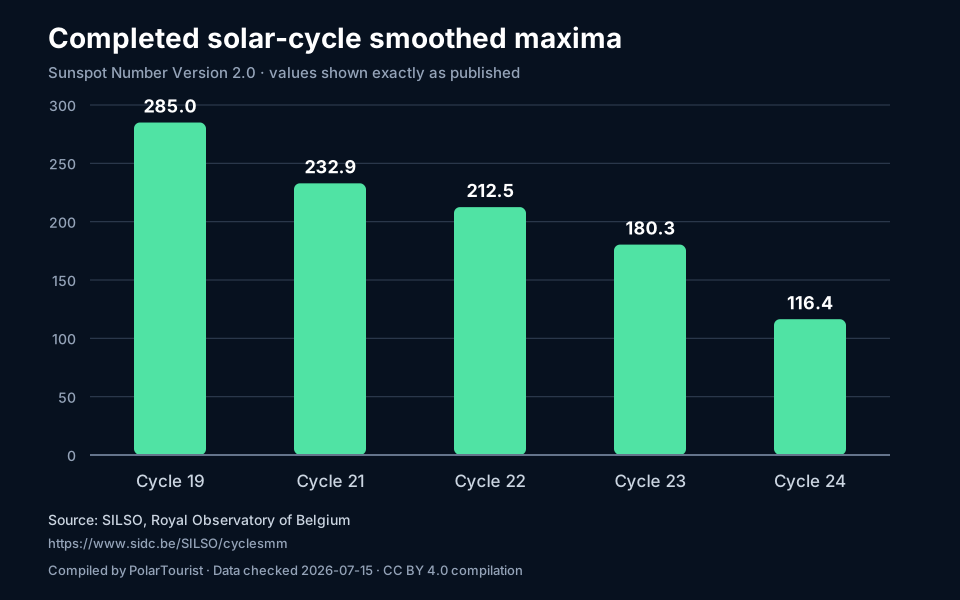
SILSO dates the start of Solar Cycle 25 to December 2019, at a 13-month smoothed monthly mean sunspot number of 1.8 (SILSO cycle table). NASA and NOAA announced on 15 October 2024 that the Sun had entered its solar-maximum period and said at that time that the period could continue for the following year (NASA announcement).
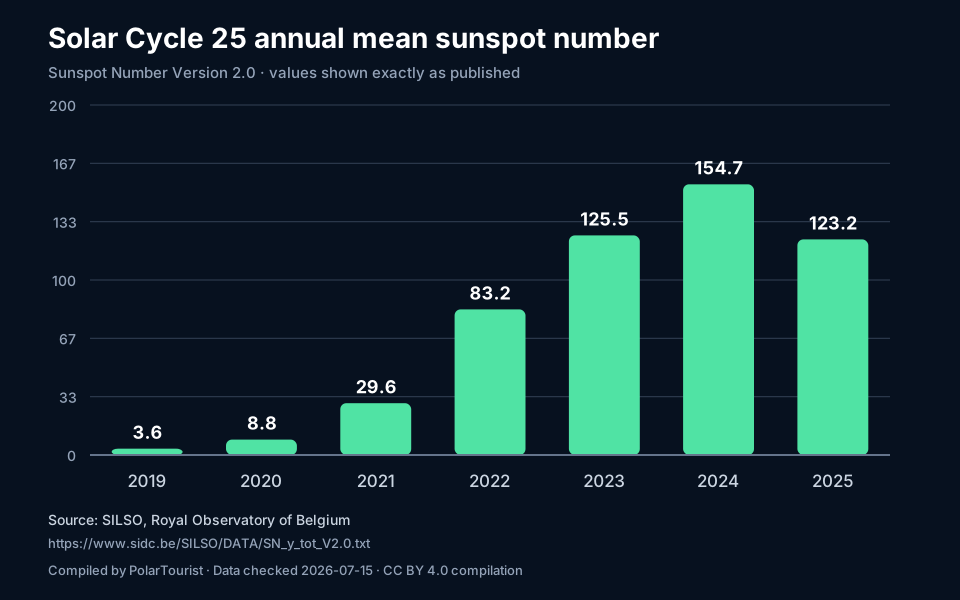
SILSO now dates the final 13-month smoothed maximum of Solar Cycle 25 to October 2024, at 160.9 (SILSO cycle table). The final annual mean total sunspot number rose from 3.6 in 2019 to 154.7 in 2024, then measured 123.2 in 2025 (SILSO annual data). These values show that solar activity increased strongly during the cycle. They do not establish a location-specific chance of seeing aurora on a booked night or make 2026 automatically “the best year in a decade.”
How to read Kp for aurora planning
NOAA describes Kp as an indicator of disturbances in Earth's magnetic field and uses it when issuing geomagnetic alerts and warnings. Its operational storm scale begins at Kp 5 (G1) and rises through Kp 9 (G5) (NOAA Planetary K-index; NOAA Space Weather Scales).
Kp is not a percentage chance of seeing the northern lights. The same Kp can produce different viewing outcomes because geomagnetic latitude, local darkness, cloud, light pollution, horizon visibility and the timing of the display all matter. This is why the previous unsourced latitude-by-latitude probability table has been removed.
Forecast horizon and trip decisions
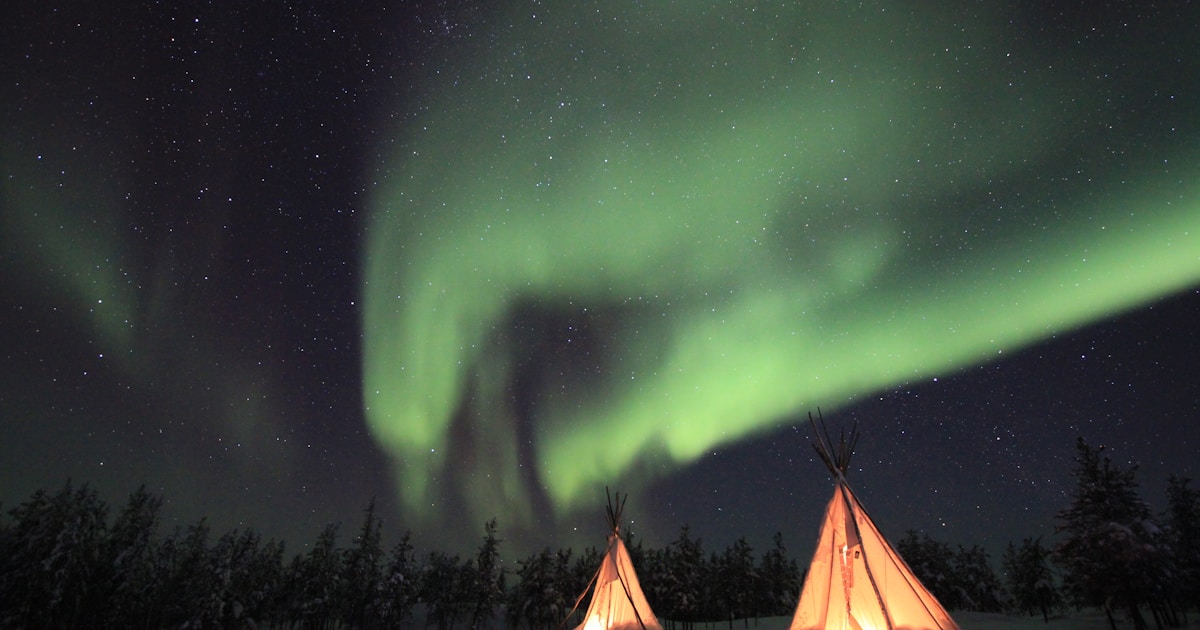
NOAA's public aurora product visualises the forecast for roughly the next 30 minutes (NOAA Aurora). The University of Alaska Fairbanks Geophysical Institute labels its 3-day forecast as more reliable and its 27-day forecast as less reliable (UAF Aurora Forecast).
Use long-range solar-cycle data to understand broad activity context, not to select one guaranteed date months ahead. Close to travel, combine short-range space-weather forecasts with a local cloud forecast and an actually dark viewing window.
Why this dataset excludes monthly and latitude probabilities
The reviewed primary sources support solar-cycle values, the operational Kp scale and forecast horizons. They do not support one universal table assigning a nightly sighting percentage to every geographic latitude or month. Such a table would mix incompatible variables and create false precision.
For trip planning, a more defensible sequence is:
- Choose a destination with a reliably dark season and suitable geomagnetic latitude.
- Allow several nights rather than treating one forecast as a guarantee.
- Check cloud and local visibility alongside NOAA/UAF space-weather information.
- Treat Kp as geomagnetic context, not as a probability score.
Primary sources and provenance
- SILSO completed solar-cycle minima and maxima — final 13-month smoothed monthly mean Sunspot Number Version 2.0.
- SILSO yearly mean total sunspot numbers — final annual means used in the Cycle 25 table and chart.
- NOAA Planetary K-index — operational Kp definition and thresholds.
- NOAA Space Weather Scales — Kp-to-G-scale mapping.
- NASA/NOAA solar-maximum announcement — dated cycle-status context.
- University of Alaska Fairbanks Aurora Forecast — forecast-horizon context and planning limitations.
Frequently asked questions
Is 2026 guaranteed to be a good year for the northern lights?
No year, destination or night is guaranteed. Final SILSO data show an annual mean sunspot number of 123.2 in 2025, compared with 3.6 in 2019, but a traveller still needs darkness, clear sky and favourable geomagnetic activity at the right time (SILSO annual data).
Has the final Solar Cycle 25 peak been published?
Yes. As checked on 25 August 2026, SILSO's completed-cycle table dates the final 13-month smoothed maximum to October 2024, at 160.9 (SILSO cycle table).
What Kp marks a NOAA geomagnetic storm?
NOAA's G scale begins at Kp 5 (G1). Higher thresholds map to G2 through G5, as shown in the verified table above (NOAA Space Weather Scales).
Can aurora be predicted months ahead?
Not for a specific viewing place and hour with dependable certainty. UAF distinguishes a more reliable 3-day forecast from a less reliable 27-day forecast, while NOAA publishes a short-term aurora view for roughly the next 30 minutes. Use seasonal darkness for advance planning and short-range space-weather plus cloud forecasts near the date.