5 Days in Yellowknife: Canada's Aurora Capital
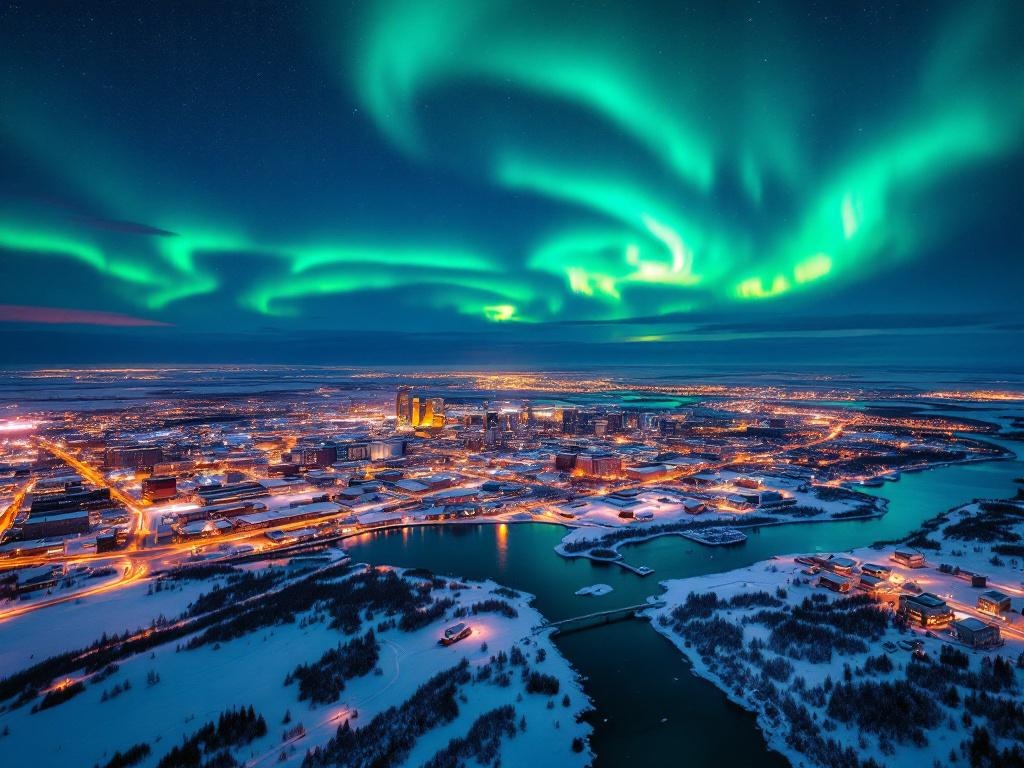
Yellowknife, capital of Canada's Northwest Territories, sits directly beneath the auroral oval at 62.4°N and earns an aurora score of 9/10. Local operators market strong multi-night sighting records, but results depend on cloud and geomagnetic activity; even five nights cannot guarantee a display. Flat terrain, dry climate, and minimal light pollution make Yellowknife North America's undisputed aurora capital.
Best months: December through March. January and February are coldest but offer the darkest skies. March has longer daylight for activities with good aurora viewing.
Average daily budget: CAD $290/£165 (mid-range).
Day 1: Arrival & First Aurora Night

Afternoon: Arrive in Yellowknife
Fly into Yellowknife Airport (YZF) — direct flights from Calgary (2.5h), Edmonton (2h), and Vancouver (3h) with Canadian North, WestJet, and Air Canada. International travellers connect through these hubs.
The airport is just 5km from downtown. Most hotels offer shuttle service, or taxis cost about CAD $20.
Check into your hotel and grab a late lunch. Try Bullock's Bistro on Wilfrid Laurier Street — a legendary Yellowknife institution serving fresh Great Slave Lake fish in a shack plastered with decades of customer graffiti.
Late Afternoon: Old Town Walking Tour
Explore Yellowknife's Old Town, the original settlement on the shores of Great Slave Lake. Walk along the Ingraham Trail past houseboats frozen into the ice, colourful wooden houses, and the iconic Pilots Monument — climb the rock to the top for panoramic views over the frozen lake and city.
In winter, the lake is frozen solid and dotted with ice fishing shacks and snowmobile trails. The scale is incredible — Great Slave Lake is the 10th largest lake in the world.
Evening: Aurora Village — First Night
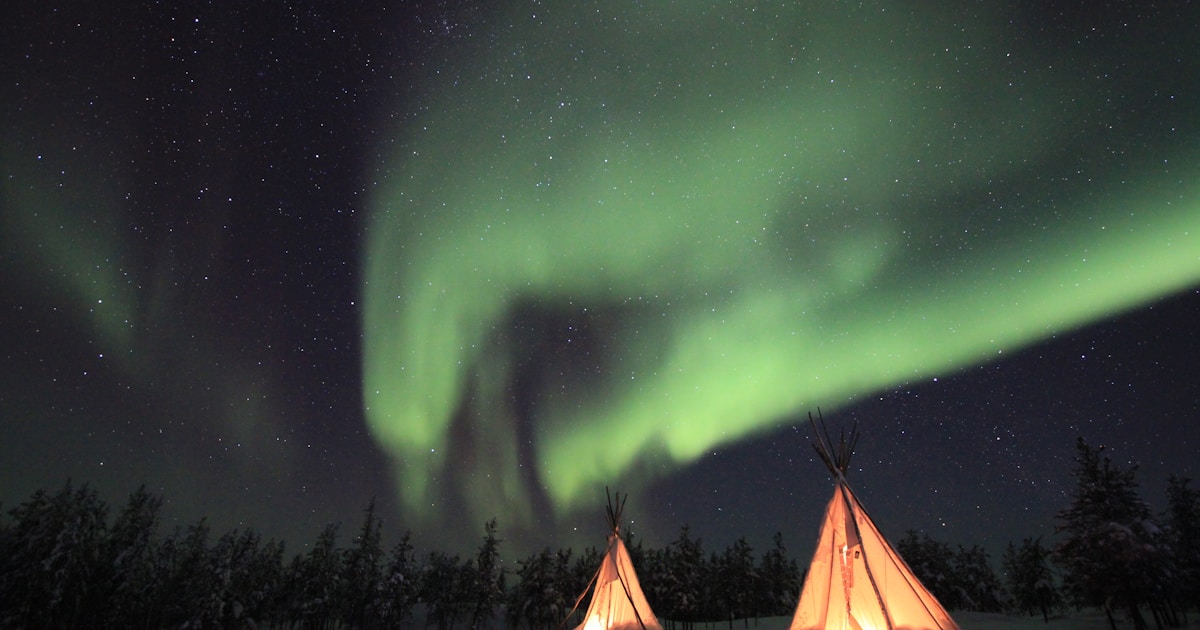
Head to Aurora Village, Yellowknife's most famous aurora-viewing facility. Located on the shores of Great Slave Lake, 25 minutes from downtown, it features heated Indigenous-style teepees arranged in a circle facing the open sky.
Guides monitor the aurora forecast and call you out of the warm teepees when activity picks up. Hot drinks, snacks, and photography assistance are included.
Cost: CAD $120–160/£68–91 per person. Tours run from approximately 9:30 PM to 1:30 AM. Hotel pickup included.
Day 2: Dog Sledding & Indigenous Culture
Morning: Dog Sledding on Great Slave Lake
Book a half-day dog sledding experience on the frozen lake. Yellowknife's flat, open terrain makes for exhilarating mushing with vast Arctic panoramas in every direction.
You'll drive your own team of Canadian Inuit dogs through the subarctic wilderness. Most tours include a warming break with hot chocolate and bannock (traditional Indigenous bread) by a campfire.
Cost: CAD $200–300/£114–170 per person (3–4 hours including transport).
Afternoon: Indigenous Cultural Experience
Yellowknife offers some of Canada's most authentic Indigenous cultural experiences:
- Dené cultural tour — Learn about the traditions of the Yellowknives Dené First Nation, who have lived in this region for thousands of years. Includes traditional drumming, storytelling, and craft demonstrations.
- Hand games — Watch or participate in traditional Dené hand games, a centuries-old guessing game accompanied by drumming and singing.
- Traditional craft workshop — Learn to make moccasins, dream catchers, or beadwork with Indigenous artisans.
Evening: Self-Guided Aurora Viewing
Tonight, try self-guided aurora viewing. Drive (or take a taxi) along the Ingraham Trail — a road heading northeast of town that passes frozen lakes and wilderness areas with zero light pollution.
Popular stops:
- Prelude Lake (30 min from town) — Large frozen lake with unobstructed sky views
- Tibbitt Lake (45 min) — Even darker skies and fewer people
- Cameron Falls (20 min) — Frozen waterfall with aurora backdrop
Tips for self-viewing:
- Bring a thermos of hot drinks, hand warmers, and a camp chair
- Check aurora forecast at AuroraWatch.ca
- Dress for -25°C to -35°C (see packing list below)
- Car running with heat = essential warming station
Day 3: Ice Road Adventures & Snowmobiling
Morning: Drive the Ice Road
If visiting January through March, drive (or be driven on a tour) along an ice road on Great Slave Lake. These seasonal roads are built on frozen lake ice thick enough to support heavy trucks — it's an only-in-Canada experience.
The most famous is the Dettah Ice Road, connecting Yellowknife to the community of Dettah (a 7km drive across the frozen lake). Driving across a vast, frozen white expanse with mountain views is surreal.
Cost: Free if self-driving (rental car). Guided ice road tours from CAD $80/£45.
Afternoon: Snowmobile Safari
Rev up for a snowmobile safari across Great Slave Lake and through the boreal forest. Yellowknife's flat terrain is ideal for snowmobiling, with trails running along frozen lakes, through sparse spruce forests, and across open tundra.
Half-day tours cover 40–80km and include a wilderness break with campfire lunch.
Cost: CAD $250–350/£142–200 per person (driver). Valid driving licence required.
Evening: Aurora Viewing — Night 3
Return to an aurora-viewing camp for your third night. Consider a different operator for a fresh experience:
- North Star Adventures — Small-group tours with heated cabin, campfire, and Indigenous cultural elements
- Beck's Kennels — Combines dog sledding with aurora viewing in a wilderness camp
- Joe's Aurora — Budget-friendly option with solid guides
By night three, you have had several viewing windows, but the aurora may still not have appeared. Several nights are better than one because they provide more independent weather and activity windows.
Day 4: Ice Fishing & City Exploration
Morning: Ice Fishing on Great Slave Lake
Experience traditional ice fishing on the frozen lake. A guide will drill holes through the thick ice, set up your lines, and teach you techniques for catching lake trout, northern pike, and Arctic grayling.
The experience is as much about the setting as the fishing — sitting on a frozen lake under vast Arctic skies, wrapped in silence, with hot drinks and a warm cabin nearby.
Cost: CAD $150–250/£85–142 per person (4 hours including equipment, guide, and hot drinks). Catch-and-cook options available.
Afternoon: Prince of Wales Northern Heritage Centre
Visit the Prince of Wales Northern Heritage Centre — Yellowknife's excellent museum covering the natural history, Indigenous cultures, and human history of the Northwest Territories. The aviation exhibit documents the bush pilots who opened up the North. Free admission.
Afterwards, browse the shops on Franklin Avenue for Indigenous art, diamond jewellery (Yellowknife is Canada's diamond capital), and northern crafts.
Evening: Northern Lights Photography Tour
For your fourth aurora night, invest in a dedicated photography tour. Small-group tours with professional photographers who set up your camera, find the best compositions, and help you capture publication-worthy aurora images.
Cost: CAD $180–280/£102–160 per person. Includes tripod use if needed.
Day 5: Final Experiences & Departure
Morning: Snowshoeing or Bush Plane Tour
Choose your final morning activity:
Snowshoeing — A guided snowshoe hike through the boreal forest along the Frame Lake Trail or Ingraham Trail. Spot ptarmigan, ravens, and possibly foxes in the snow-covered wilderness. From CAD $80/£45.
Bush plane tour (weather permitting) — Yellowknife is Canada's bush plane capital. Take a scenic flight over the frozen landscape in a classic de Havilland floatplane (on skis in winter). Views of the tundra, frozen lakes, and diamond mines from above are extraordinary. From CAD $250/£142 per person.
Late Morning: Farewell & Shopping
Pick up last-minute souvenirs:
- Gallery of the Midnight Sun — Indigenous art, prints, and carvings
- Down to Earth Gallery — Northern photography and crafts
- NWT Diamond Centre — Yellowknife-mined diamonds with certificate of origin
Afternoon: Departure
Head to the airport for your departure flight. The small airport is quick to navigate.
Budget Breakdown: 5 Days in Yellowknife
| Category | Budget | Mid-Range | Luxury |
|---|---|---|---|
| Accommodation (5 nights) | CAD $500–750 (B&B/hostel) | CAD $800–1,500 (hotel) | CAD $1,500–3,000 (premium lodge) |
| Food (5 days) | CAD $200–350 | CAD $400–650 | CAD $700–1,200 |
| Activities | CAD $400–700 | CAD $800–1,400 | CAD $1,500–2,500 |
| Transport | CAD $100–200 | CAD $200–400 | CAD $400–800 |
| Total | CAD $1,200–2,000 | CAD $2,200–3,950 | CAD $4,100–7,500 |
| Per day (GBP) | £137–228 | £251–451 | £468–857 |
Where to Stay
Budget: Bayside B&B
Cosy bed and breakfast in Old Town with Great Slave Lake views. Friendly hosts who know the aurora scene. From CAD $100/£57/night.Mid-Range: Explorer Hotel
The city's main hotel, centrally located with northern lights wake-up service. Restaurant, lounge, and aurora viewing from the upper floors. From CAD $180/£103/night.Mid-Range: Chateau Nova Yellowknife
Modern hotel with comfortable rooms, good restaurant, and aurora alerts. From CAD $160/£91/night.Luxury: Blachford Lake Lodge
Accessible only by bush plane (30 min flight), this wilderness lodge offers the ultimate aurora experience — zero light pollution, heated outdoor viewing platforms, and gourmet meals. All-inclusive packages from CAD $2,000/£1,143 for 3 nights.Getting There
- By air: Direct flights from Edmonton (2h), Calgary (2.5h), Vancouver (3h), Ottawa (4h). Airlines: Canadian North, WestJet, Air Canada. International travellers connect through Calgary, Edmonton, or Vancouver.
- Airport transfer: Most hotels offer shuttle service. Taxi to downtown: CAD $20/£11.
- Car rental: Useful but not essential. Most tours include hotel pickup. If renting, book a vehicle with winter tyres and a block heater (essential at -30°C).
What to Pack — Yellowknife Winter Essentials
Yellowknife is COLD. January averages -26°C, and temperatures can drop below -40°C. This is serious Arctic cold — dress accordingly:
- Extreme cold parka rated to -40°C (Canada Goose, Fjällräven Expedition)
- Insulated snow pants
- Heavy-duty winter boots rated to -40°C (Baffin, Sorel, Kamik)
- Balaclava or full face covering — exposed skin freezes in minutes at -35°C
- Thick insulated mittens (better than gloves) + liner gloves for camera use
- Multiple thermal base layers — merino wool is best
- Chemical hand and toe warmers — essential, buy in bulk
- Camera with fully charged batteries — carry spares inside your jacket (cold kills batteries in minutes)
FAQ
Why is Yellowknife so good for northern lights?
Yellowknife sits directly beneath the auroral oval — the ring around the geomagnetic North Pole where aurora occurs most frequently. Its flat terrain provides unobstructed horizon-to-horizon viewing, and its dry continental climate means less cloud cover than coastal alternatives. Its dry inland climate can provide useful clear-sky windows, but visibility still depends on geomagnetic activity.
How cold is it really?
January averages -26°C, with occasional dips to -40°C or colder. February is similar. March begins warming but can still hit -20°C. The cold is dry, which makes it more bearable than you'd expect — but proper gear is absolutely essential. Tour operators know the conditions and will help you stay warm.
Can I see the northern lights from downtown?
Yes, on strong nights the aurora is visible from downtown Yellowknife. However, streetlights reduce the experience. Even a 10-minute drive along the Ingraham Trail dramatically improves viewing.
Is Yellowknife worth the trip from outside Canada?
Absolutely. Yellowknife consistently ranks among the top 3 aurora destinations worldwide alongside Tromsø and Abisko. The unique combination of flat terrain, dry climate, Indigenous culture, and accessible viewing infrastructure makes it exceptional. Many visitors come from Japan, China, and Korea — the aurora tourism industry in Yellowknife is well-developed.
What else is there besides northern lights?
The northern lights are the main draw, but Yellowknife offers exceptional dog sledding, snowmobiling, ice fishing, and Indigenous cultural experiences. It's also Canada's diamond capital — mine tours and diamond shopping are popular. The Old Town and Great Slave Lake are fascinating in their own right.
Explore the full Yellowknife destination guide for more activities, accommodation, and planning tips.