
3 Days in Abisko: Sweden's Aurora Capital
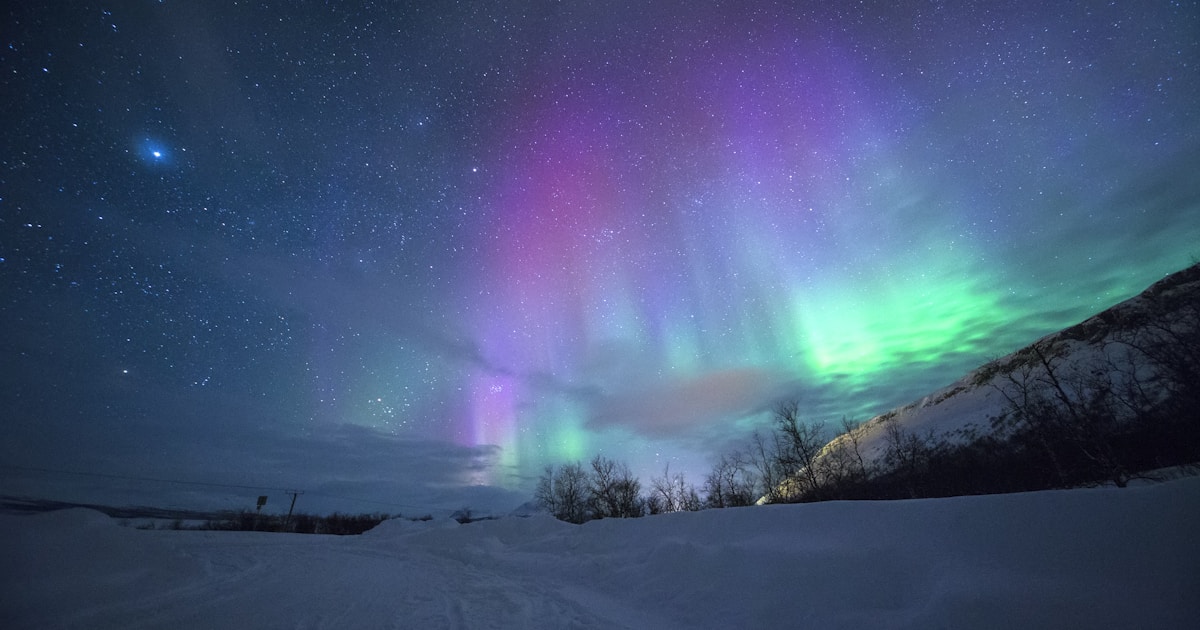
Abisko is one of Swedish Lapland's strongest northern-lights bases. A unique microclimate created by surrounding mountains channelling dry air gives this tiny Swedish Lapland village a local rain-shadow effect that can leave a clearer patch over the Abisko area when nearby locations are cloudier. With an aurora score of 9/10 and the famous Aurora Sky Station at 900m, Abisko delivers on its promise.
Best months: November through March, with January and February offering peak darkness and the best aurora statistics.
What makes it special: Abisko is for aurora purists. There are few urban distractions, and the local rain shadow, a dedicated viewing station and Arctic setting make it a focused aurora base. If seeing the northern lights is your number one priority, come here.
Day 1: Arrival & Aurora Sky Station

Afternoon: Arrive in Abisko
Getting to Abisko is part of the adventure. The most scenic option is the train from Narvik (Norway) — one of Europe's great railway journeys through snow-covered mountains and frozen lakes (1.5 hours). Alternatively, fly to Kiruna Airport (KRN) and take the 1-hour transfer.
Check in at STF Abisko Mountain Station (Abisko Turiststation), the main accommodation hub — a surprisingly comfortable research-station-turned-guesthouse with restaurant, sauna, and equipment rental.
Late Afternoon: Explore the Village & Lake
Take a short walk along the Torneträsk lakeside trail. The frozen lake stretches 70km and is the centrepiece of Abisko's unique microclimate — the mountains surrounding this valley funnel dry Norwegian air, keeping clouds away. In winter, the landscape is pure Arctic: snow, ice, silence.
Evening: Aurora Sky Station
This is why you came. Take the chairlift up to the Aurora Sky Station at 900m elevation for a 3-hour guided aurora experience. The station has heated viewing rooms with panoramic windows and an outdoor observation deck. Expert guides explain the science behind the lights while you watch.
The elevation and local rain-shadow pattern can make the Sky Station useful when lower areas are cloudier, but it does not sit above every cloud layer. Displays can be absolutely spectacular — vivid greens, purples, and reds dancing directly overhead.
Cost: ~£85 per person including chairlift and guided tour. Book well in advance — sessions are limited to small groups.
Tip: Dress for -15 to -25°C. The chairlift ride is cold and exposed.
Day 2: Arctic Adventure Day

Morning: Dog Sledding Through the Wilderness
Book a half-day dog sledding expedition through the Abisko National Park. Mush your own team of Alaskan huskies through snow-laden forests and along frozen rivers. The silence — broken only by the dogs' breathing and sled runners on snow — is extraordinary.
Most operators include a trailside lunch cooked over an open fire in a traditional Sámi kåta (tent).
Cost: SEK 2,000–3,000 (~£150–225) per person.
Afternoon: Snowshoeing or Cross-Country Skiing
Abisko is the starting point of the Kungsleden (King's Trail), Sweden's most famous long-distance hiking path. In winter, take a guided snowshoe hike along the first section for stunning views of the Lapporten (Sámi: Čuonjávággi) — the iconic U-shaped valley that is the symbol of Swedish Lapland.
Alternatively, Abisko has excellent cross-country skiing trails maintained through the national park. Equipment rental is available at STF Abisko.
Evening: Sauna & Second Aurora Viewing
Warm up in the STF Mountain Station sauna — a traditional Swedish wood-fired sauna with snow-rolling opportunities outside. Afterwards, step outside to look for the aurora. Abisko's location means you don't need a tour — simply walk 5 minutes from the station to find dark skies.
For a different perspective, book a guided aurora photography walk along the frozen lakeside trails. Guides help with camera settings and finding the best compositions.
Day 3: Final Experiences & Departure
Morning: Ice Climbing or Sámi Cultural Experience
Ice climbing on the frozen waterfalls near Abisko is an unforgettable (and uniquely available) winter activity. Beginners are welcome — guided sessions include all equipment and instruction. (SEK 1,500–2,000 / £110–150)
Alternatively, visit a Sámi community for a cultural experience. Learn about reindeer herding traditions, taste traditional food (dried reindeer meat, coffee cheese), and gain insight into the indigenous culture of Swedish Lapland.
Late Morning/Afternoon: Departure
Take the scenic train back to Narvik (for flights to Oslo/European cities) or the transfer to Kiruna Airport. The Kiruna–Stockholm flight takes 1.5 hours.
Tip: If departing via Kiruna, allow time to visit the ICEHOTEL in Jukkasjärvi (20 minutes from Kiruna) — rebuilt from ice each winter with individually designed art suites.
Budget Breakdown
| Category | Budget | Mid-Range | Luxury |
|---|---|---|---|
| Accommodation | £40–70/night (STF hostel dorm) | £100–160/night (STF private room) | £200–400/night (wilderness lodge) |
| Food | £20–35/day | £45–70/day | £80–140/day |
| Activities | £85–120/tour | £150–225/tour | £250–400/private tour |
| Transport | £20–30/day (train) | £50–80/day | £100+/day (private transfer) |
| Daily Total | £165–255 | £345–535 | £630–1,040 |
Where to Stay
Budget: STF Abisko Mountain Station (Dorm)
The classic Abisko base. Dorm beds from SEK 500 (~£38)/night. Good restaurant, sauna, and equipment rental.Mid-Range: STF Abisko Mountain Station (Private Room)
Private rooms in the same complex with en-suite bathrooms. From SEK 1,400 (~£105)/night.Luxury: Abisko Mountain Lodge
Small wilderness lodge with aurora-view rooms and guided experiences included. From SEK 3,000 (~£225)/night.Getting There
- By train: From Narvik, Norway (1.5h) or Kiruna, Sweden (1h). The Arctic train is scenic and reliable.
- By air: Fly to Kiruna Airport (KRN) from Stockholm (1.5h). Transfer to Abisko by bus or pre-booked shuttle (1h).
- Via Narvik: Fly to Narvik/Harstad Airport (EVE) from Oslo, then train to Abisko.
What to Pack
- Heavy thermal base layers (temperatures regularly hit -20°C and below)
- Insulated down jacket rated to -30°C
- Windproof shell layer
- Arctic-rated boots (-30°C minimum)
- Full face protection (balaclava) for the chairlift and outdoor activities
- Multiple glove layers (thin liner + heavy insulated)
- Hand/toe warmers — bring plenty
- Camera with fully charged spare batteries (stored warm inside jacket)
- Headlamp with red-light mode
FAQ
Why is Abisko so good for northern lights?
The surrounding mountains create a "blue hole" — a microclimate effect that channels dry air from Norway across Lake Torneträsk, dispersing clouds. This can leave a clearer patch over Abisko when nearby areas are cloudier, although the effect is not a nightly guarantee.Is Abisko too remote?
It's small (around 100 permanent residents) but well set up for visitors. STF Mountain Station has a good restaurant, bar, shop, and sauna. You won't find nightlife or shopping — that's the point. Come for the aurora and wilderness.How does Abisko compare to Tromsø?
Abisko is known for its local rain-shadow effect, while Tromsø has a larger tour network that can chase clearer sky over a wider area. Tromsø has more activities, restaurants, and urban amenities. Abisko is for focused aurora chasers; Tromsø for a broader Arctic trip.Can I see the aurora without the Sky Station tour?
Absolutely. The aurora is visible from ground level anywhere around Abisko on clear nights. The Sky Station's advantage is elevation above potential low cloud and expert guidance. Walking 5 minutes from the village gives excellent dark-sky viewing.Is it safe to walk around at night?
Yes. No polar bears (unlike Svalbard), no dangerous wildlife. The main hazard is extreme cold — always dress properly and tell someone your plans if walking away from the village.Explore the full Abisko destination guide for more activities and planning tips.