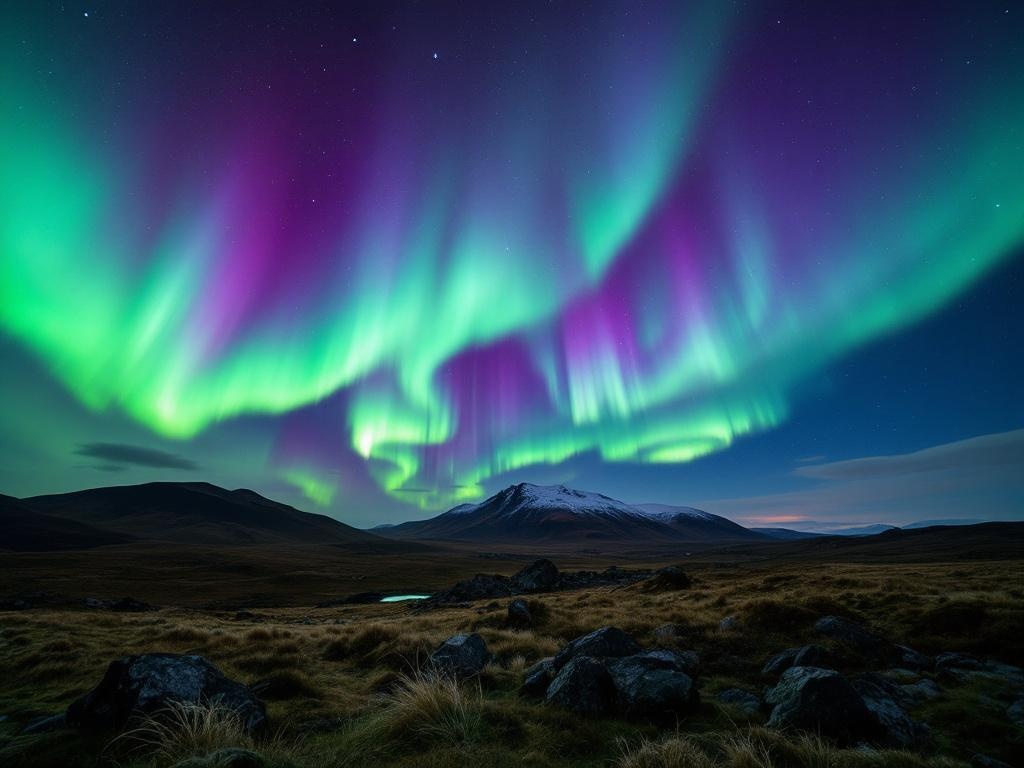
Northern Lights in Scotland: Complete Guide 2026

Scotland is the most accessible northern-lights option in this guide for many UK travellers, but it remains a lower-confidence choice than the main aurora belt. A sighting needs a sufficiently strong geomagnetic event, darkness, a clear view north and favourable local cloud.
Let's be honest: Scotland will never match the aurora probability of Tromsø (9/10) or Abisko (9/10). Shetland scores 5/10 for aurora, Orkney 4/10, and Caithness 3/10. Do not increase those destination scores for a calendar year. Solar-cycle context cannot override the night-by-night requirements of geomagnetic activity, darkness and cloud.
Why Scotland for Northern Lights?

Accessibility for UK Residents
No flights required. You can drive to Caithness from Edinburgh in 5 hours, or fly to Shetland in 2 hours from Aberdeen. No passport, no foreign currency, no language barrier. For UK residents testing whether they want to commit to a full Scandinavian aurora trip, Scotland is the perfect trial run.
The 2026 Solar Maximum Advantage
The current solar cycle peak means geomagnetic storms are more frequent and more powerful. During a Kp 5+ storm (which is occurring several times per month in 2025–2026), the aurora is visible across much of Scotland. During exceptional storms (Kp 7+, occurring several times per year), the aurora has been seen as far south as London.
Affordable
A 3-night aurora trip to Shetland from mainland UK costs a fraction of a Scandinavian trip. No expensive Arctic clothing needed (Scottish winter is mild by aurora-destination standards). Affordable accommodation and food.
Stunning Landscapes
Scotland's northern islands offer extraordinary settings for the aurora: ancient standing stones (Orkney's Ring of Brodgar), rugged sea cliffs, sandy beaches, and open moorland. The aurora over Orkney's Neolithic monuments is a photographer's dream.
Scotland's 3 Northern Lights Destinations
Shetland — Scotland's Best Aurora Chance (Aurora Score: 5/10)
Shetland is the UK's northernmost point at 60.4°N — the same latitude as Bergen, Norway, and Helsinki, Finland. This makes it by far the best place in the UK for northern lights.
Weather: January averages 4°C with 14 hours of darkness. February 4°C with 11 dark hours. Mild by aurora standards, but extremely windy. Shetland is one of the windiest inhabited places in Europe.
Activities: Northern lights watching and photography, puffin watching (summer), wildlife watching (seals, otters, seabirds), hiking, kayaking, photography tours, and exploring Norse and Scottish heritage sites. Shetland's Up Helly Aa fire festival (late January) is spectacular.
Best months: October through March. January and February for maximum darkness and medium aurora likelihood.
Aurora reality check: Shetland is Scotland's strongest practical base, but no defensible annual sighting count applies to an individual trip. A three-night visit is still a low-confidence aurora plan because Scotland needs both a sufficiently strong geomagnetic event and clear northern sky.
Why choose Shetland: Best aurora probability in the UK. Extraordinary wildlife and landscapes. Up Helly Aa festival. A unique and underappreciated destination.
Orkney — Ancient Monuments Under the Aurora (Aurora Score: 4/10)
Orkney sits at 59°N — slightly south of Shetland but still well-positioned for aurora viewing during strong geomagnetic activity.
Weather: January averages 4°C with 13 hours of darkness. Windy and wet, but mild.
Activities: Northern lights photography (the Ring of Brodgar and Skara Brae provide extraordinary foregrounds), wildlife watching (seals, puffins, seabirds), kayaking, hiking, and exploring Neolithic archaeology (Orkney has more UNESCO sites per square mile than almost anywhere on Earth).
Best months: October through March.
Why choose Orkney: The combination of 5,000-year-old monuments and the northern lights. Imagine the aurora over the Ring of Brodgar — standing stones older than Stonehenge silhouetted against green and purple curtains of light. Orkney is also easier to reach than Shetland (regular ferries from Caithness, flights from Edinburgh, Glasgow, Aberdeen).
Caithness and the Cairngorms — Mainland Options (Aurora Score: 3/10)
Caithness is the northernmost mainland county of Scotland. Dunnet Head (the true northernmost point of mainland Britain) and John o'Groats provide dark-sky viewing locations.
Weather: January averages 4°C with 13 hours of darkness. Similar conditions to Orkney.
Activities: Northern lights photography, hiking, wildlife watching (seals, puffins in summer), castle exploration, whisky distillery visits, and exploring the rugged north coast (NC500 route).
Best months: October through March.
Note on the Cairngorms: The Cairngorms National Park in the Scottish Highlands (57°N) is Scotland's designated Dark Sky Park and occasionally sees the aurora during strong storms. However, its latitude means aurora is rare — only during Kp 5+ storms. The Cairngorms are included in some Scotland aurora guides but realistically, Caithness and the islands are better options.
When to Go
October–November: Aurora season starts. Good for combining with autumn landscapes. Shorter days but not yet the deepest darkness.
December–January: Maximum darkness (13–14 hours in Shetland). Cold and windy. Up Helly Aa in late January (Shetland). Best statistical chance.
February–March: Spring equinox geomagnetic boost. Improving weather. Still adequate darkness through early March. Good overall month.
Realistic Expectations
Scotland is not Tromsø. Here's what to honestly expect:
On a 3-night trip in peak season (January–February 2026):
- Shetland: ~35–45% chance of seeing the aurora at least once
- Orkney: ~25–35% chance
- Caithness: ~15–25% chance
Factors that help:
- Strong geomagnetic activity (Kp 5+) — check SpaceWeatherLive.com before booking
- Clear skies — Scotland's weather is notoriously changeable
- Minimal light pollution — get away from towns
- Patience — be prepared to stay up late and watch for breaks in cloud
Factors that work against you:
- Scotland's latitude (58–60°N) is at the southern edge of the auroral oval
- Cloud cover is frequent, especially on the west coast
- Atlantic weather systems bring moisture and cloud
Costs
Scotland is significantly cheaper than Scandinavian aurora destinations.
Budget (£60–100/day)
- B&Bs or hostels: £30–60/night
- Self-catering: £15–25/day
- No guided tours needed — self-drive aurora hunting
Mid-Range (£100–180/day)
- Hotels: £60–120/night
- Restaurants: £30–50/day
- Car rental: £30–50/day
Getting There
- Edinburgh to Shetland flights: £80–200 return (Loganair, 2 hours via Aberdeen)
- Aberdeen to Shetland ferry: £50–120 return (12 hours overnight, NorthLink Ferries)
- Edinburgh to Kirkwall (Orkney) flights: £80–180 return
- Caithness: drive from Edinburgh (5 hours) or Inverness (2.5 hours)
Practical Tips
Aurora Alerts
Sign up for AuroraWatch UK (aurorawatch.lancs.ac.uk) — a free service from Lancaster University that sends alerts when aurora is likely to be visible from the UK. Also check the Met Office Space Weather forecast.Dark Sky Locations
- Shetland: Almost anywhere away from Lerwick. The west coast beaches (St Ninian's Isle, Meal Beach) are excellent.
- Orkney: The Ring of Brodgar, Yesnaby cliffs, or anywhere on the west coast of Mainland Orkney.
- Caithness: Dunnet Head, Duncansby Head, or the beaches near Thurso.
What to Wear
Scottish winter is mild (4°C average) compared to Scandinavia, but the wind is brutal. Windproof and waterproof layers are more important than extreme insulation. A warm hat, gloves, and neck gaiter are essential for standing outside at night.Frequently Asked Questions
Can you actually see the northern lights from Scotland?
Yes — especially in 2026. Shetland can see aurora during sufficiently strong events, but annual frequency varies and should not be presented as a fixed range. Even mainland Scotland sees displays several times per year during strong storms. The key variables are geomagnetic activity and clear skies.Is it worth travelling to Scotland specifically for northern lights?
For UK residents, yes — it's cheap and easy, and the worst case is you enjoy Shetland/Orkney's extraordinary landscapes and wildlife. For international visitors, Scandinavia offers much better aurora probability and should be your primary choice.Where exactly should I go in Scotland?
Shetland is the best option. Orkney is a close second with better archaeological sites. Caithness is the easiest to reach from mainland Scotland. All three offer good dark skies — the limiting factor is geomagnetic activity, not light pollution.What Kp index do I need for Scotland?
- Kp 4: Aurora possible from Shetland on the northern horizon
- Kp 5: Aurora visible from Orkney and Caithness
- Kp 6: Aurora visible across the Scottish Highlands
- Kp 7+: Aurora visible across most of Scotland, potentially including central belt
Should I book ahead or wait for a forecast?
Hybrid approach: book flexible accommodation (most B&Bs offer free cancellation). Monitor geomagnetic forecasts a week ahead. The NOAA 27-day forecast gives a rough indication of active periods. If a strong storm is forecast, head north.Explore all our Scotland destinations for detailed guides to each location.