Solo Antarctica Cruises: Shared Berth, Sole Occupancy or Single Cabin?
Travelling without a companion does not require buying two places on every Antarctic expedition. But a shared-cabin fare and a private-cabin fare are not the same purchase, even when both are advertised to solo travellers. Decide how much privacy you need, then compare the route and full trip cost.
Use this guide for the cabin decision. The Antarctica cruise route guide covers sail-across versus fly-cruise journeys, ship size and landing expectations; the cruise cost guide covers the wider budget.
Three ways to book as one traveller

| Arrangement | What you buy | Privacy and price tradeoff |
|---|---|---|
| Shared berth | One place in a twin, triple or quadruple cabin offered for sharing | Lower-cost access to that category, but other guests can occupy the remaining beds |
| Sole occupancy | A multi-person cabin reserved for you alone | Private sleeping space, with a single-occupancy price rather than the advertised per-person sharing fare |
| Purpose-built single cabin | A cabin category designed for one guest | Privacy without needing a roommate; compare its actual fare, location and facilities rather than assuming it is cheapest |
Shared berths: understand the roommate arrangement
Oceanwide Expeditions offers sharing in Twin, Triple and Quadruple categories without an additional solo charge. Its roommate policy pairs guests of the same gender; the remaining berths are available for other guests to book. If you happen to have the cabin to yourself, Oceanwide says it does not charge the single supplement merely because no one else occupies it. That is a possible outcome, not a private-cabin reservation.
On the Oceanwide departure calendar, distinguish a male or female sharing space from a complete cabin. One sharing berth does not mean an entire twin is available. Likewise, an on-request category or waitlist is not a confirmed booking. Filter for Antarctica and the correct season before looking at cabin columns.
Sharing is a reasonable choice if the expedition matters more to you than having a private retreat. Before committing, settle the practical details that affect sleep: separate beds, bathroom arrangement, storage and charging space, and how you will coordinate alarms and early starts. A two-person cabin and a four-person cabin mean different amounts of shared space even when both avoid a solo surcharge.
If you need a particular roommate arrangement, make it a condition of the booking rather than assuming every operator follows Oceanwide's policy. Read the selected contract's treatment of an unmatched sharing request; do not carry a no-match guarantee from one operator to another.
Sole occupancy: read the total, not just the supplement
Oceanwide's 2026–27 Antarctic rates distinguish single occupancy from sharing and specify a 1.7-times basis for Twin or Superior cabins. Its individual departure cards make the calculation clearer by displaying a separate price for the complete cabin occupied by one person. Do not extend that general category rule to every suite, ship or special offer.
A concrete example is m/v Hondius, HDS26-27, 6–16 January 2027, an 11-day / 10-night Ushuaia round trip. For Twin Porthole, the departure card displays the following USD figures on 24 November 2026:
| Occupancy on this departure | Displayed voyage price | Booking status at that date |
|---|---|---|
| One sharing berth | $11,900 per person | Waitlist |
| Complete cabin occupied by one person | $20,230 total for one | Waitlist |
Open the HDS26-27 cabin and departure options to compare the exact occupancy cards. Read the total for one person alongside the status: a visible price can remain on a sold-out or waitlisted category.
For another operator, a different season or a discounted sailing, start again with the selected one-person total. Do not assume the same multiplier, eligibility or promotion combination. If privacy is non-negotiable, your reservation needs to say sole occupancy, not simply one passenger in a twin.
Dedicated single cabins: compare the exact ship and category
Quark Expeditions has distinct one-guest categories on these ships:
| Ship | One-guest category | The physical difference to compare |
|---|---|---|
| Ocean Explorer | Studio Single | Deck 3, a double bed and a porthole view; private bathroom |
| Ocean Explorer | Studio Veranda Single | Deck 7, a twin bed and a walkout balcony; private bathroom |
| Ultramarine | Solo Panorama | Deck 6, a single bed and floor-to-ceiling windows; private bathroom |
A dedicated single cabin is worth comparing with sole occupancy of a twin, not just with the cheapest shared berth. A single cabin's window, balcony, deck and bed can differ from the twin you are considering. Choose the room you would actually accept for the crossing and nights aboard, then compare its full one-person fare.
A no-single-supplement headline is not a standing entitlement
Quark's previous solo-traveller offer has ended as of 24 November 2026. Do not build a budget around an old advertisement. Any replacement promotion needs its own eligible departure, ship, cabin, booking deadline and occupancy conditions; a general sale does not automatically waive the solo supplement.
Build a budget for one, including the gateway nights
The extra cost of travelling alone can extend beyond the ship. For a sail-across trip via Ushuaia, price the hotel room and transfers you will use on your own. For a fly-cruise via Punta Arenas, distinguish included programme nights and Antarctic flights from your own positioning travel and extra nights. Do not divide a room or taxi allowance by two when only you will pay it.
| Budget line | Record for your own booking |
|---|---|
| Voyage | Departure code, ship, cabin category, sharing or sole occupancy, currency and total for one |
| Required programme extras | Any separately charged flights, hotel package or transfers; whether hotel occupancy matches your ship cabin |
| Independent travel | Flights from home, baggage, transfers, extra hotel rooms and meals ashore |
| Personal cover and activities | Insurance for Antarctica and your planned activities, plus optional kayaking, camping or other extras you select |
| Payment and onboard spending | Currency/payment charges and the contract's treatment of drinks, internet, laundry and gratuities |
| Contingency reserve | Your separate allowance for disruption, not an operator charge |
Travelling solo aboard: social time without sharing a room
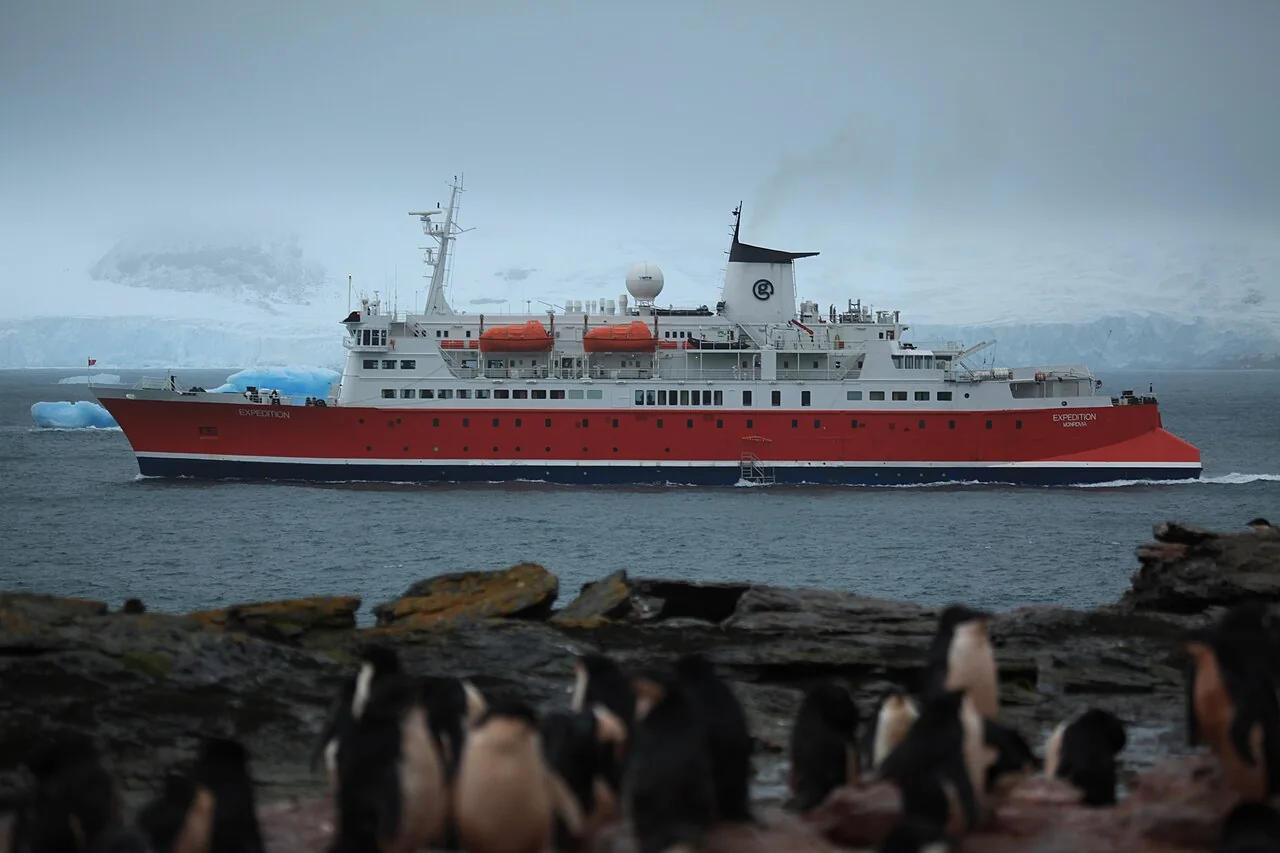
Cabin sharing is not the only way to meet people. On the Hondius example, the programme includes meals aboard, naturalist lectures and Zodiac shore excursions; those provide shared activities even if you sleep alone. A private cabin is somewhere to withdraw between them, not a commitment to spend the voyage alone. Equally, buying a shared berth does not promise a like-minded roommate or a travel companion for every activity.
Keep arrival and return buffers in the plan. Reaching the gateway alone does not change the expedition's check-in deadlines or weather uncertainty. Read the route and preparation guide for medical screening, insurance, packing and small-boat considerations. Landings and wildlife encounters remain conditional whichever cabin you buy.
Before paying the deposit
- Fix the voyage identity: season, dates, route, ship and scheduled Antarctic exploration days. January–March 2027 falls in the 2026–27 Antarctic season; late 2027 is a different season.
- Fix the sleeping arrangement: one shared berth, guaranteed sole occupancy, or the named one-guest category. Keep it on the written reservation.
- Fix the payable total: currency, promotion conditions, required packages, hotel occupancy, deposit and balance deadlines. Compare the final one-person amount, not a twin-sharing headline.
- Read the relevant risks: cancellation penalties, treatment of an unmatched share, medical and evacuation requirements, and weather disruption. Avoid non-refundable onward travel based solely on a provisional itinerary.