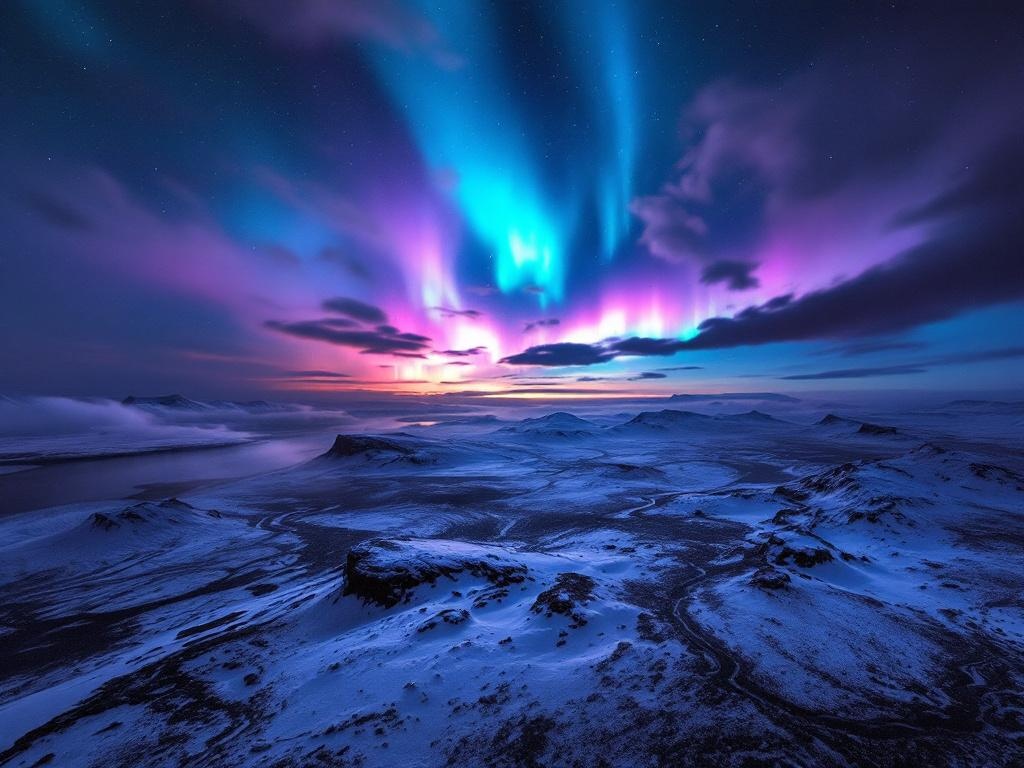
5 Days in Iceland: Northern Lights Road Trip Itinerary
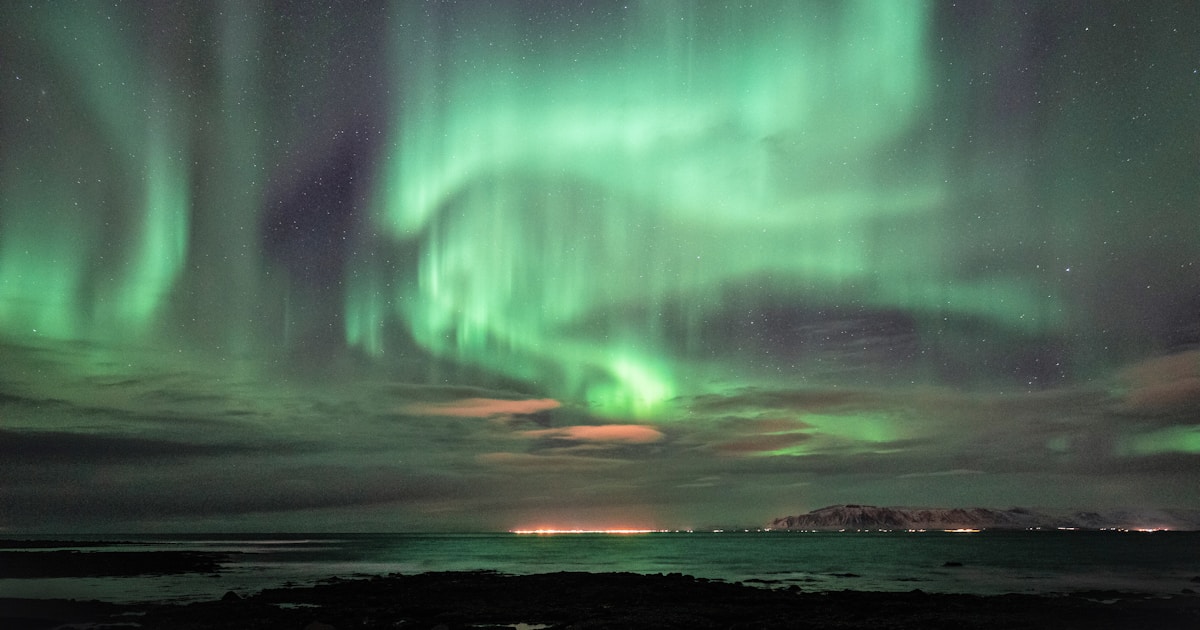
Iceland is unlike anywhere else on Earth — a land of glaciers, volcanoes, geysers, and waterfalls where the northern lights dance over landscapes that look like another planet. With an aurora score of 7/10 and easy accessibility from both North America and Europe, Iceland offers a unique road-trip aurora experience that no other destination can match.
Best months: October through March. The darkest months (November–January) have the most aurora hours, while February–March offer a better balance of darkness and daylight for sightseeing.
Average daily budget: £200 (mid-range). Iceland is expensive — budget travellers can manage on £120–160/day with careful planning; luxury travellers should budget £400–600/day.
The route: Reykjavik → Golden Circle → South Coast → Vík → Snæfellsnes Peninsula → Reykjavik. This loop covers Iceland's greatest hits while keeping drives manageable (2–4 hours per day).
Day 1: Arrival & Reykjavik

Morning: Arrive at Keflavík International Airport
Fly into Keflavík Airport (KEF) — Iceland's main international hub with direct flights from London (3h), New York (5.5h), and cities across Europe and North America. Icelandair, PLAY, and various carriers operate routes.
Pick up your rental car at the airport. A 4WD/AWD vehicle is strongly recommended in winter (essential for F-roads). Pre-book from reputable companies like Blue Car Rental, Lotus, or Arctic Rent a Car. Expect £60–100/day for a capable 4WD.
Important: Check the Icelandic Road and Coastal Administration website (road.is) daily for road conditions. Winter driving in Iceland requires caution — sudden storms, ice, and strong winds are common.
Afternoon: Explore Reykjavik
Drive to Reykjavik (45 minutes) and check into your accommodation.
Explore Iceland's tiny capital on foot:
- Hallgrímskirkja — The iconic church with its columnar basalt-inspired facade. Take the elevator to the top for city panoramas (ISK 1,000/£6).
- Harpa Concert Hall — The shimmering glass building on the waterfront is stunning inside and out. Free to enter the lobby.
- Laugavegur — The main shopping and dining street, lined with boutiques, cafés, and bookshops.
- Sun Voyager sculpture — An iconic stainless-steel sculpture on the waterfront, facing the mountains across the bay.
Evening: Blue Lagoon or Sky Lagoon + Aurora
Option A: If you haven't pre-booked the Blue Lagoon (located near the airport — many people visit on arrival or departure day), head to Sky Lagoon instead. This newer geothermal spa on Reykjavik's outskirts features an infinity-edge pool overlooking the ocean, a cold plunge, sauna, and a ritual steam-scrub experience.
Cost: ISK 6,990–11,990 (£40–70). Book in advance — slots sell out.
After your soak, drive to the Grótta Lighthouse on Reykjavik's western tip — one of the best aurora spots near the city (the lighthouse light is turned off during aurora season). Zero light pollution over the ocean.
Day 2: Golden Circle

Morning: Þingvellir National Park
Depart Reykjavik for the Golden Circle — Iceland's most popular day-trip route.
First stop: Þingvellir National Park, a UNESCO World Heritage Site where the North American and Eurasian tectonic plates are visibly pulling apart. Walk through the Almannagjá rift canyon, visit the Lögberg (Law Rock) where the world's oldest parliament met in 930 AD, and admire Öxarárfoss waterfall.
For an extraordinary experience, book a Silfra snorkelling or diving tour — floating between the tectonic plates in crystal-clear glacial water with 100m visibility. Tours depart from the park. Snorkelling from £130, diving from £250.
Afternoon: Geysir & Gullfoss
Continue to the Geysir geothermal area, where the geyser Strokkur erupts dramatically every 5–10 minutes, shooting boiling water 20–30m into the air. Walk around the steaming hot springs and bubbling mud pots. Free entry.
Lunch at the Geysir Center restaurant or food truck.
Drive on to Gullfoss (Golden Falls) — one of Iceland's most powerful and photogenic waterfalls. Two massive cascades plunge 32m into a narrow canyon. In winter, the surrounding ice formations are spectacular. Free entry.
Evening: Stay Near Geysir or Continue to South Coast
Overnight near Geysir or Selfoss to break the journey. Options:
- Budget: Guesthouses in Selfoss (from £60/night)
- Mid-range: Hotel Geysir (from £130/night)
- Luxury: Boutique Hotel Rangá (from £300/night) — famous for its aurora observatory
Day 3: South Coast Waterfalls & Black Sand Beaches
Morning: Seljalandsfoss & Skógafoss
Drive along the South Coast (Route 1), stopping at Iceland's two most famous waterfalls:
Seljalandsfoss — A 60m waterfall you can walk behind on a path that loops around the rock face. In winter, the path may be icy (bring crampons/spikes). Nearby, don't miss the hidden Gljúfrabúi waterfall, tucked inside a narrow canyon.
Skógafoss — A thundering 60m-wide curtain of water. Climb the 527 steps to the top for sweeping views along the coast and the beginning of the Fimmvörðuháls trail.
Afternoon: Reynisfjara Black Sand Beach & Vík
Continue to Reynisfjara, Iceland's most dramatic black sand beach. Towering basalt columns, sea stacks (Reynisdrangar), and crashing North Atlantic waves create an otherworldly scene.
Warning: The sneaker waves at Reynisfjara are genuinely dangerous. Never turn your back on the ocean and stay well above the waterline.
Arrive in Vík, a charming village at the foot of the Mýrdalsjökull glacier. Check into your accommodation.
Evening: Glacier Walk or Ice Cave + Aurora
If you've pre-booked (essential), join an afternoon/evening ice cave tour inside Mýrdalsjökull or Vatnajökull — walking through tunnels of electric-blue ice. Available November through March only.
Cost: £130–200 per person.
Alternatively, book a glacier walk on Sólheimajökull — a guided hike on the glacier with crampons and ice axes. No experience needed. From £80 per person.
After dark, the area around Vík and Kirkjubæjarklaustur offers some of Iceland's darkest skies for aurora viewing.
Day 4: Snæfellsnes Peninsula
Morning: Drive to Snæfellsnes
Today, drive northwest from Vík back towards Reykjavik and then continue to the Snæfellsnes Peninsula — often called "Iceland in Miniature" for its concentration of diverse landscapes. Total drive: 4–5 hours with stops.
Stop for lunch in Borgarnes at the Settlement Centre restaurant.
Afternoon: Explore Snæfellsnes
The peninsula is spectacular:
- Kirkjufell & Kirkjufellsfoss — Iceland's most photographed mountain, a conical peak with a small waterfall in the foreground. Also famous as an aurora photography location — one of the best in all of Iceland.
- Arnarstapi & Hellnar — Coastal villages connected by a beautiful walking path along dramatic cliffs with basalt formations and crashing waves.
- Djúpalónssandur — A wild black pebble beach with rusted shipwreck remains and four lifting stones that fishermen historically used to test their strength.
- Snæfellsjökull — The glacier-capped volcano that inspired Jules Verne's "Journey to the Centre of the Earth."
Evening: Aurora at Kirkjufell
This is potentially the best aurora night of your trip. Kirkjufell is one of the most famous aurora photography locations in the world — the combination of the mountain's distinctive shape, the waterfall, and the northern lights creates an iconic image.
Set up your tripod at the viewpoint near Kirkjufellsfoss and wait. Even without the aurora, the mountain under starlight is breathtaking.
Overnight in Grundarfjörður or Stykkishólmur:
- Budget: Guesthouses from £70/night
- Mid-range: Hótel Egilsen in Stykkishólmur (from £140/night)
- Luxury: Hotel Búðir (from £280/night) — an iconic hotel in a remote setting
Day 5: Return to Reykjavik & Departure
Morning: Final Snæfellsnes Stops
If you missed anything yesterday, use this morning for final exploration. Stykkishólmur is a charming harbour town worth a stroll, with colourful houses and a small lighthouse.
Alternatively, visit the Shark Museum in Bjarnarhöfn for a taste of hákarl (fermented shark) — Iceland's most infamous food. It's... an experience.
Afternoon: Drive Back to Reykjavik
Drive back to Reykjavik (2 hours). Drop off your car or keep it for a final evening.
Use the afternoon for any Reykjavik experiences you missed on Day 1:
- National Museum of Iceland — Excellent overview of Icelandic history and culture
- Perlan — The revolving glass dome building with a planetarium, ice cave exhibit, and panoramic viewing deck
- Whale watching — If you didn't fit this in, 3-hour tours depart from the Old Harbour year-round (from £60)
Evening: Farewell Dinner
End your trip with a memorable dinner:
- Grillið — Fine dining with panoramic city views from the top of the Saga Hotel
- Dill — Iceland's only Michelin-starred restaurant (book months ahead)
- Messinn — Excellent seafood at more moderate prices
- Bæjarins Beztu — The famous hot dog stand for a classic Icelandic experience (£4)
Budget Breakdown: 5 Days in Iceland
| Category | Budget | Mid-Range | Luxury |
|---|---|---|---|
| Car rental (5 days) | £300–400 (2WD) | £400–550 (AWD) | £550–800 (4WD SUV) |
| Fuel | £60–100 | £80–120 | £80–120 |
| Accommodation (5 nights) | £300–500 (guesthouses) | £600–1,000 (hotels) | £1,200–2,500 (boutique) |
| Food (5 days) | £125–200 | £250–400 | £500–800 |
| Activities | £100–200 | £300–500 | £600–1,000 |
| Total | £885–1,400 | £1,630–2,570 | £2,930–5,220 |
| Per day | £177–280 | £326–514 | £586–1,044 |
Getting There
- By air: Keflavík Airport (KEF) has direct flights from London (3h), New York (5.5h), Boston (5h), and cities across Europe. Icelandair, PLAY, easyJet, Wizz Air operate routes.
- Car rental: Essential for this itinerary. Book well in advance for winter. Ensure full insurance (SCDW + gravel protection + sand & ash). Check safetravel.is daily.
- Domestic flights: If adding the north (Akureyri/Mývatn), Icelandair Connect and PLAY fly Reykjavik–Akureyri (45 min, from £60).
Driving Tips for Winter Iceland
- Always check road.is before departing each morning
- 4WD recommended — many car parks and access roads are unpaved and icy
- Drive slowly — 80km/h max on highways, less in bad weather
- Watch for sudden storms — Iceland's weather changes in minutes
- Fill up often — petrol stations can be 100+ km apart in rural areas
- Park facing the wind — prevents doors being ripped off by gusts
- Crampons/ice grippers — essential for walking at waterfalls and beaches
FAQ
Is a 5-day Iceland road trip doable in winter?
Yes, but you need to be flexible. Winter storms can close roads, so build buffer time into your plans and have backup activities. The route in this itinerary avoids the riskier parts of the Ring Road (East and North), focusing on the more accessible South and West.
Can you self-drive the northern lights in Iceland?
Absolutely — and it's one of Iceland's biggest advantages over other aurora destinations. You don't need a guide. Use the Icelandic Met Office's aurora forecast (en.vedur.is) and drive to dark areas away from town lights. The freedom to chase clear skies is priceless.
What if the weather is terrible?
Iceland's weather is notoriously unpredictable. Have indoor backup plans: geothermal pools, museums, and restaurants. A "bad" weather day in Iceland can turn beautiful within hours. The aurora might also break through between cloud gaps — stay alert.
Is the Blue Lagoon worth it?
It's iconic but crowded and expensive (from £70). Sky Lagoon and Secret Lagoon (Flúðir) are excellent alternatives. If you go, book the earliest or latest time slot for fewer crowds.
Can I extend this to the north?
Yes — add 2–3 days for Akureyri, Mývatn, and Húsavík (whale watching capital). This turns the trip into a proper Ring Road journey. However, northern roads are less reliable in winter — check conditions carefully.
Explore the full Reykjavik destination guide for more activities, accommodation, and planning tips.