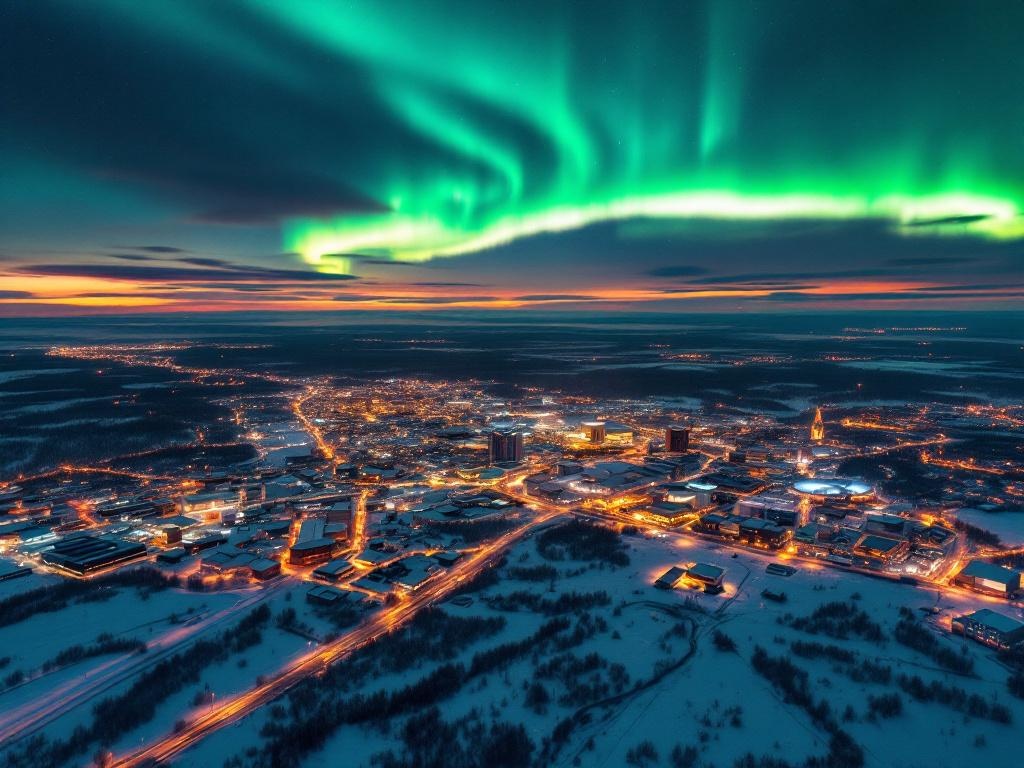
3 Days in Yellowknife: Canada's Northern Lights Hub
Yellowknife has earned the title "Aurora Capital of North America" — and the statistics justify it. Located directly beneath the auroral oval at 62.5°N in Canada's Northwest Territories, the city benefits from a dry continental climate compared with many coastal aurora destinations. With an aurora score of 9/10 and unique Indigenous cultural experiences, Yellowknife offers a distinctly Canadian aurora adventure.
Best months: December through March, with January and February being optimal despite extreme cold.
What makes it special: Yellowknife's combination of the auroral oval position, consistently clear continental skies, and authentic Indigenous cultural experiences creates an aurora trip unlike anything in Scandinavia. The iconic Aurora Village teepees on a frozen lake are a uniquely Canadian experience.
Day 1: Arrival & Aurora Village

Afternoon: Arrive & Explore Old Town
Fly into Yellowknife Airport (YZF) — connected via Edmonton, Calgary, and Ottawa. The city is small and manageable.
Explore Old Town Yellowknife — the original settlement on the shores of Great Slave Lake. Walk along the Ragged Ass Road (yes, that's its real name), see the colourful houseboats frozen into the bay, and visit the Prince of Wales Northern Heritage Centre for an excellent introduction to the region's Indigenous cultures, geology, and northern history.
For lunch, try Bullock's Bistro in Old Town for legendary fish and chips made with Great Slave Lake whitefish and pike.
Evening: Aurora Village Experience
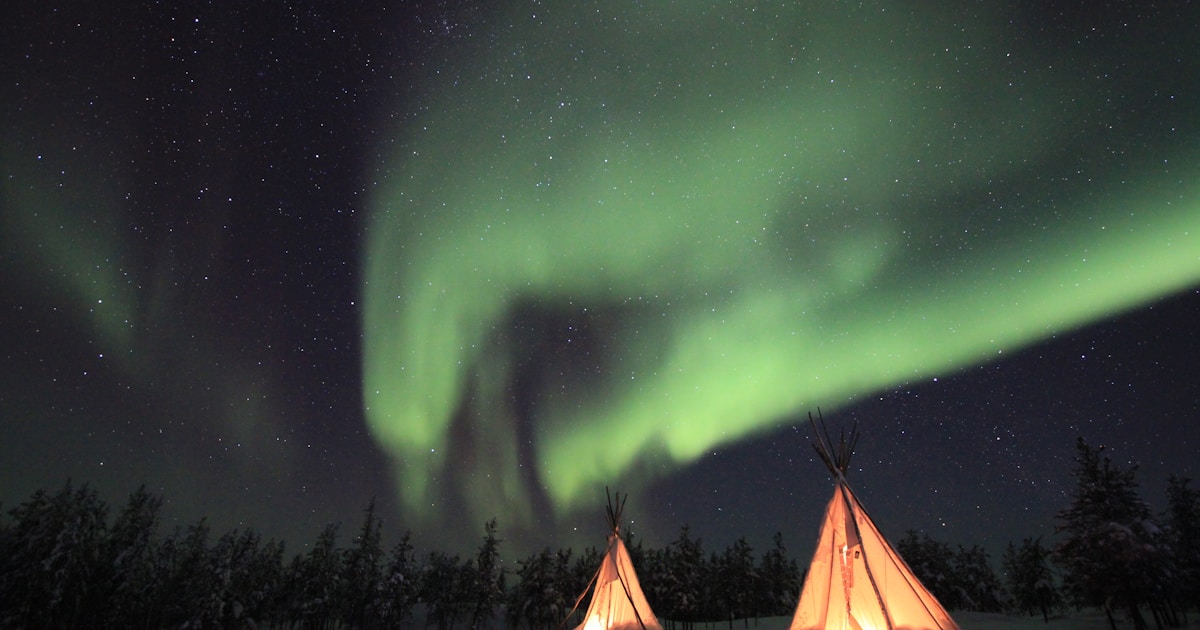
The highlight of Yellowknife arrives after dark. Head to Aurora Village — a purpose-built aurora viewing site on the shores of Vee Lake, 25 minutes from the city. The experience centres around traditional teepees heated by wood stoves, arranged on the frozen lake with 360° horizons.
Guides provide hot drinks and snacks while you watch the skies. On clear nights (which are most nights), the aurora unfurls directly overhead in massive, shimmering curtains. Aurora Village promotes strong results for multi-night guests, but its marketing figure is not a guarantee for an individual trip.
Cost: CAD $100–130 (~£60–75) per person for the standard evening experience (8 PM–1 AM). Premium packages with photography assistance available.
Tip: Temperatures of -30°C to -40°C are common in January. Aurora Village provides Arctic parkas and boots, but bring your own thermal layers underneath.
Day 2: Full Day of Arctic Adventures
Morning: Dog Sledding on the Frozen Lake
Book a morning dog sled tour across the frozen Great Slave Lake. Yellowknife's sled dog operations run teams of Canadian Inuit dogs and Alaskan huskies across the vast white expanse — with the city skyline and ice roads visible in the distance.
The experience lasts 2–3 hours including instruction, mushing, and a warm-up stop with hot chocolate.
Cost: CAD $180–250 (~£105–145) per person.
Afternoon: Ice Road Driving & Snowmobile Safari
In winter, the ice roads on Great Slave Lake are a Yellowknife institution. These are actual highways driven across the frozen lake — a surreal experience. Some tour operators offer guided ice road excursions.
Alternatively, book a snowmobile safari across the lake and into the boreal forest. Speeds can reach 80km/h across the flat, frozen surface — exhilarating.
Cost: Snowmobile safari CAD $200–300 (~£115–175) per person.
Evening: Indigenous Cultural Experience & Aurora Round Two
Join an Indigenous cultural evening — several operators offer experiences that include traditional storytelling, drum ceremonies, bannock making, and tea by the fire. This provides meaningful cultural context for the land you're visiting.
Afterwards, head back to Aurora Village or another viewing spot for your second night of aurora watching. Yellowknife's inland climate can create useful clear-sky windows, but forecasts still matter each night.
Day 3: Final Experiences & Departure
Morning: Ice Fishing on Great Slave Lake
Experience ice fishing on one of the world's largest lakes. A guide drills through the metre-thick ice, sets up a heated tent, and teaches you to jig for lake trout and whitefish. The silence of the frozen lake — broken only by cracking ice — is mesmerizing.
Cost: CAD $120–180 (~£70–105) per person for a half-day experience.
Late Morning: Bush Pilot Museum & Downtown
Visit the Bush Pilot's Monument for panoramic views of Old Town and the frozen lake. Yellowknife's history is tied to bush flying — the small aircraft that opened up Canada's north. The monument viewpoint is the best photo spot in town.
Browse the shops on Franklin Avenue for Indigenous art — soapstone carvings, moosehide tufting, and birchbark work by Dene and Inuit artists.
Afternoon: Departure
Head to the airport for your flight south. Edmonton connections run multiple times daily.
Budget Breakdown
| Category | Budget | Mid-Range | Luxury |
|---|---|---|---|
| Accommodation | £50–80/night (B&B/budget hotel) | £110–180/night (hotel) | £250–450/night (wilderness lodge) |
| Food | £25–40/day | £55–85/day | £100–180/day |
| Activities | £60–75/tour | £105–175/tour | £250–400/private tour |
| Transport | £15–25/day | £45–70/day (car rental) | £100+/day |
| Daily Total | £150–220 | £315–510 | £700–1,130 |
Where to Stay
Budget: Bayside B&B
Welcoming bed and breakfast in Old Town with lake views. From CAD $100 (~£60)/night.Mid-Range: Explorer Hotel
The city's main hotel, central location, with aurora wake-up service. From CAD $200 (~£115)/night.Luxury: Blachford Lake Lodge
Accessible only by bush plane (30 min from Yellowknife), this wilderness lodge sits in total darkness with zero light pollution. The ultimate aurora accommodation. From CAD $600 (~£350)/night all-inclusive.Getting There
- By air: Canadian North and WestJet from Edmonton (2h), Calgary (3h). Air Canada from Ottawa via connecting flights.
- From the US: Connect via Edmonton or Calgary from most major US cities.
- City transport: Yellowknife is small — taxis or hotel shuttles for most needs. Car rental useful but not essential.
What to Pack
- Extreme cold gear — this is the coldest destination on this list (-30 to -40°C)
- Heavy insulated parka rated to -40°C (or rent from Aurora Village)
- Insulated snow pants
- Arctic boots rated to -40°C (Sorel, Baffin, or similar)
- Balaclava and neck gaiter (exposed skin freezes in minutes)
- Heavy-duty mittens over liner gloves
- Chemical hand/toe/body warmers — bring many
- Camera with fully charged spare batteries (stored inside jacket)
- Moisture-wicking base layers (sweating in extreme cold is dangerous)
FAQ
How cold does Yellowknife actually get?
January averages -27°C, with regular dips to -40°C. This is dramatically colder than Scandinavian destinations. The dry cold feels different from humid coastal cold — but it is genuinely dangerous without proper clothing. Aurora Village provides parkas and boots.What are the chances of seeing the aurora in 3 nights?
Aurora Village publishes a high multi-night success claim; treat it as operator marketing rather than a personal probability. Yellowknife's continental climate means far fewer cloudy nights than coastal destinations. On clear, dark nights, visibility still depends on geomagnetic activity and the position of the auroral oval.Is Yellowknife safe?
Yes, Yellowknife is a safe, small city. The main safety concern is extreme cold — always dress appropriately and don't venture onto the frozen lake without a guide.How does Yellowknife compare to Scandinavian destinations?
Pros: Higher clear-sky statistics, unique Indigenous culture, more affordable activities. Cons: Much colder, fewer daytime activities, less varied cuisine and nightlife. Yellowknife is for serious aurora chasers who prioritize viewing success.Do I need to speak French?
No. Yellowknife is in the Northwest Territories, which is English-speaking. The official languages also include Indigenous languages (Dene, Tłı̨chǫ, Inuvialuktun), but English is universal.Explore the full Yellowknife destination guide for more activities and planning tips.