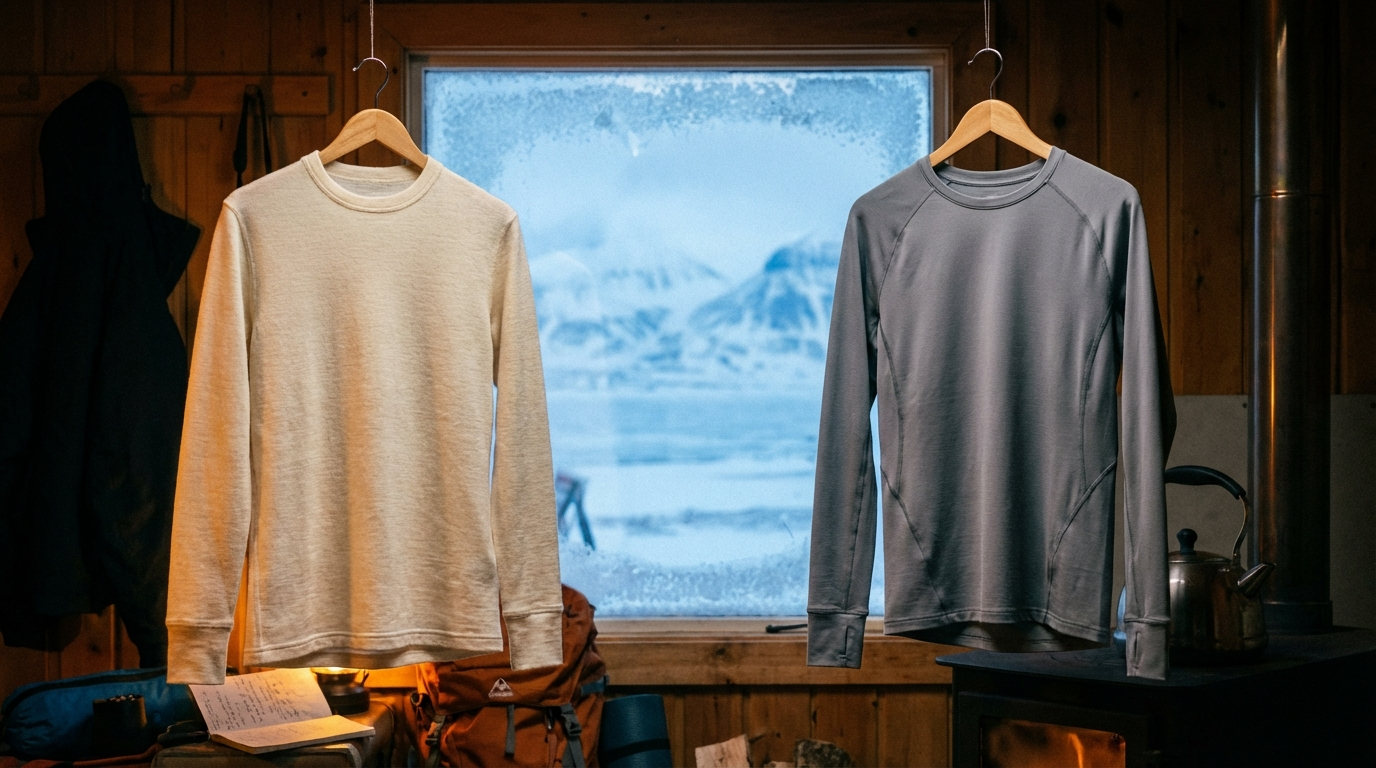
Best Thermal Base Layers for Arctic Travel in 2026: Merino Wool & Synthetics Reviewed
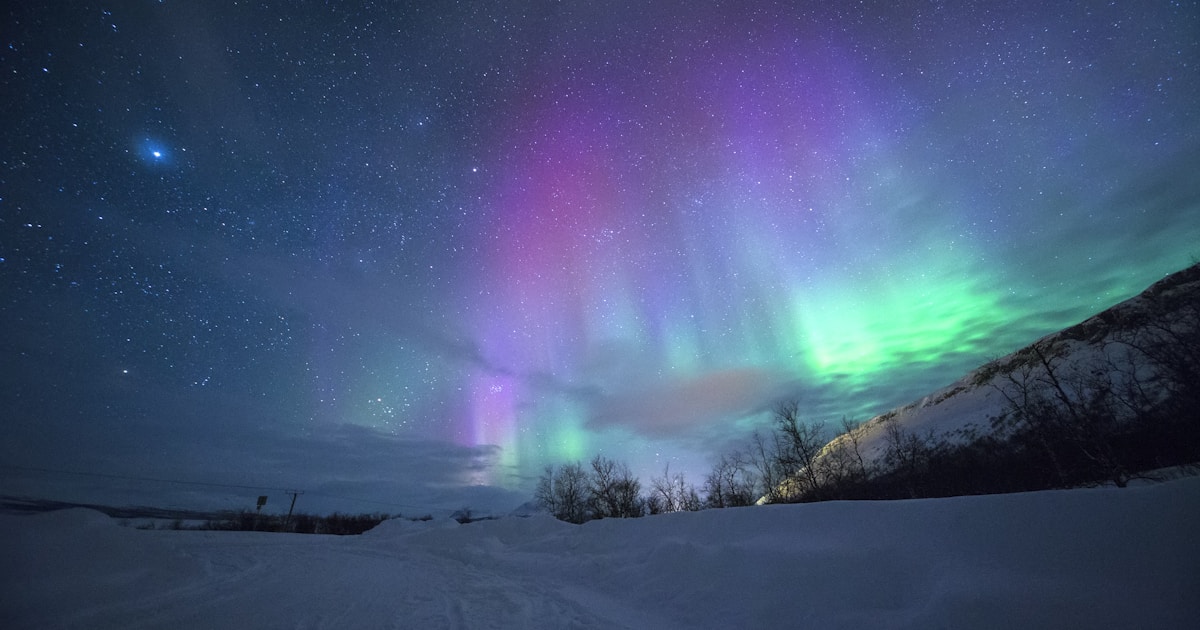
The base layer is the silent hero of Arctic travel. Standing outside at -25°C watching the northern lights, your outer shell keeps the wind out and your mid-layer keeps the heat in — but your base layer is doing the quiet, critical work of keeping your skin dry. Sweat that stays on your skin at sub-zero temperatures becomes a serious cold problem within minutes of stopping activity.
Get it right, and you barely notice it. Get it wrong, and it ruins everything else.
Quick Pick: For most Arctic travellers, the Icebreaker 260 Tech Merino is the best all-round base layer. It's warm enough for static aurora watching, comfortable against skin all day, naturally odour-resistant, and durable enough to last years. Buy on Amazon{data-affiliate="true" data-product="icebreaker-260-tech-merino"}
This guide compares seven thermal base layers — from budget synthetics to premium merino wool — using their stated materials, insulation weight, care requirements and intended use.
Merino Wool vs Synthetic: What's Actually Better?
Before the product reviews, let's settle the debate properly.
Merino wool is the premium choice for good reason:
- Naturally temperature-regulating — warm when cold, less sweaty when warm
- Odour-resistant — you can genuinely wear it multiple days without it smelling
- Soft next to skin, even for people who normally find wool itchy
- Slower to dry than synthetics when fully saturated
- More expensive
Synthetic base layers (polyester, nylon blends) offer:
- Faster drying — critical if you sweat heavily during activity
- Lower cost
- Durable wash after wash
- Tends to retain odour faster than merino
For Arctic travel specifically: We recommend merino for most travellers, because:
- You're rarely doing sustained intense exercise — most Aurora trips involve standing, short walks, snowshoe hikes
- Multiple-day wear without washing is a real advantage when travelling
- Temperature regulation matters more than fast-drying when you're not sweating heavily
For high-exertion activities (ski touring, long snowshoe routes), synthetic wins on moisture management.
Comparison Table
| Product | Material | Weight | Price | Warmth | Drying Speed | Odour Resistance | Best For |
|---|---|---|---|---|---|---|---|
| Icebreaker 260 Tech | 100% Merino | 260 g/m² | ~$95 | ★★★★★ | ★★★ | ★★★★★ | All-round Arctic |
| Smartwool Classic 250 | 100% Merino | 250 g/m² | ~$85 | ★★★★★ | ★★★ | ★★★★★ | Everyday warmth |
| Ortovox 185 Rock'n'Wool | 85% Merino, 15% Wool | 185 g/m² | ~$90 | ★★★★ | ★★★★ | ★★★★★ | Active days |
| Patagonia Capilene MW | 100% Polyester | 166 g/m² | ~$75 | ★★★★ | ★★★★★ | ★★★ | High exertion |
| Rab Merino+ 120 | 100% Merino | 120 g/m² | ~$70 | ★★★ | ★★★★ | ★★★★★ | Layering, mild cold |
| Fjällräven Keb Wool | 65% Merino, 35% Nylon | 200 g/m² | ~$110 | ★★★★ | ★★★★ | ★★★★ | Durability |
| Uniqlo HeatTech Ultra Warm | Polyester/Rayon blend | varies | ~$30 | ★★★★ | ★★★ | ★★ | Budget option |
1. Icebreaker 260 Tech Merino — Best Overall
Price: ~$95 top, ~$90 bottoms | Material: 100% Merino Wool (260 g/m²)
Icebreaker built their reputation on this weight of merino, and for good reason. The 260 g/m² weight sits in the sweet spot: warm enough for static cold-weather activities (aurora watching, reindeer farm visits, ice fishing) and thin enough to layer under a mid-layer without bulk.
Pros:
- Genuinely the softest merino base layer at this weight
- Odour-free for 2–3 days of wear — a real advantage when travelling
- Warm enough for -15°C activities when layered properly
- Available in a full range of fits (classic, slim, women's)
- Transparent supply chain — traceable back to the New Zealand farm
Cons:
- Slower to dry than synthetic options
- Requires gentle washing (cold, no tumble dry high)
- Price is high compared to synthetics
Bottom line: This is what we recommend to most people taking their first serious Arctic trip. It does everything well. Buy on Amazon
2. Smartwool Classic Thermal Merino 250 — Best for Aurora Watching
Price: ~$85 top, ~$80 bottoms | Material: 100% Merino Wool (250 g/m²)
SmartWool's 250-weight Classic Thermal is our top pick for the specific activity of standing outside for 2–3 hours watching the northern lights. The thicker weave traps more air, and the flat-lock seam construction avoids any pressure points when wearing it for hours under outer layers.
Pros:
- Exceptional warmth-to-weight for static activities
- Flat-lock seams don't dig in when worn for extended periods
- Strong reputation for longevity — these last years with proper care
- Machine washable on wool cycle
- Made with Responsible Wool Standard (RWS) certified merino
Cons:
- Bulkier than 150–200g options — more layering challenge
- Not ideal for active days with heavy sweating
Bottom line: If you're primarily buying this for aurora watching — standing still in extreme cold — this is the warmest base layer we recommend that stays comfortable. Buy on Amazon
3. Ortovox 185 Rock'n'Wool — Best for Active Days
Price: ~$90 | Material: 85% Merino, 15% co-polyamide
Ortovox blend merino with a small percentage of nylon to get the best of both worlds. The result is a base layer that dries meaningfully faster than pure merino while retaining most of the odour resistance and comfort. At 185 g/m², it's on the lighter end — better for days with sustained movement (snowshoeing tours, cross-country skiing) than for standing still at -25°C.
Pros:
- Faster drying than pure merino — critical for sweaty activity days
- Durable — the nylon content resists pilling and wear
- Excellent next-to-skin feel for a blended fabric
- Works well as a mid-layer when needed
- Designed for high-output mountain activities
Cons:
- Lighter weight — not the warmest option for static cold weather
- Less softness than pure merino at this price point
Bottom line: Our top pick for active Arctic days — dog sledding, snowmobile tours with stops and starts, winter hiking. Buy on Amazon
4. Patagonia Capilene Midweight — Best Synthetic
Price: ~$75 top, ~$70 bottoms | Material: 100% Recycled Polyester
If you run hot, sweat heavily, or are doing sustained intense activity, merino's slower drying speed becomes a liability. Patagonia's Capilene Midweight is the benchmark synthetic base layer — fast-drying, durable, and treated with Polygiene OdorCrunch to reduce (not eliminate) odour retention.
Pros:
- Fastest drying of any base layer in this review
- Very durable — handles aggressive machine washing
- Made from 100% recycled polyester
- Lightweight and compressible
- Available in a huge range of sizes and fits
Cons:
- Retains odour faster than merino — needs washing more frequently
- Less temperature regulation — can feel colder when wet, hotter when dry
- Not as soft as merino against skin for all-day wear
Bottom line: The right choice for high-output Arctic activities. For a 10-day expedition involving lots of ski touring, pack two synthetics alongside one merino. Buy on Amazon
5. Rab Merino+ 120 — Best Lightweight Merino
Price: ~$70 top | Material: 100% Merino Wool (120 g/m²)
The lightest option in this list, the Rab Merino+ 120 is designed for layering rather than standalone warmth. In Arctic conditions, you'd wear this as the very first layer and add a 250–260g merino or fleece on top. The benefit: maximum versatility across temperature ranges.
Pros:
- Ultra-fine merino — genuinely softer than anything else in this list
- Excellent for travellers who run hot or are visiting in shoulder seasons (November, March)
- Packs incredibly small — the size of a baseball
- Works in warm conditions (airports, restaurants) without overheating
Cons:
- Not warm enough on its own at -15°C+ — requires layering
- Higher care requirements than heavier merino
Bottom line: A great choice for November or March trips, or as a second layer option for versatility. Buy on Amazon
6. Fjällräven Keb Wool Tights/Top — Most Durable
Price: ~$110 | Material: 65% Merino Wool, 35% Nylon
Fjällräven's Keb Wool blend is heavier on the nylon side than the Ortovox, which makes it exceptionally durable. These survive years of rugged use — a consideration if you're investing seriously in cold-weather gear that lasts a decade. The warmth is excellent and the reinforced high-wear zones (knees, seat) extend the life considerably.
Pros:
- Most durable base layer in this review — built to last years
- Excellent warmth for the weight
- Reinforced high-wear zones
- Made in Fjällräven's ethical supply chain
Cons:
- Most expensive option in the list
- Less soft than pure merino options
Bottom line: Worth the premium if you travel Arctic regularly and want gear that outlasts cheaper alternatives. Buy on Amazon
7. Uniqlo HeatTech Ultra Warm — Budget Pick
Price: ~$30 | Material: Polyester/Rayon blend
The elephant in the room. Uniqlo's HeatTech line is worn by millions and the Ultra Warm version is genuinely capable at mild Arctic temperatures. It uses moisture to generate heat (a trick of the fabric chemistry), which works well in light activity. For serious -20°C+ cold or extended outdoor sessions, it can't match proper outdoor brands.
Pros:
- Dramatically cheaper than everything else in this list
- Widely available worldwide
- Good for mild Arctic cold (-5°C to -15°C) with proper layering
- Slim fit goes under everything
Cons:
- Retains odour quickly
- Heat-generation effect diminishes when very wet
- Not designed for sustained outdoor Arctic use
- Durability lower than dedicated outdoor brands
Bottom line: A legitimate option if budget is the priority or for supplementing your kit, not as your only base layer. Buy on Amazon
How Many Base Layers to Pack?
For a 7-night Arctic trip:
- 2 merino tops (wear, wash every other day, hang dry overnight)
- 2 merino or synthetic bottoms
- 1 synthetic as backup for high-exertion days
Merino dries overnight when hung in a warm room. You need fewer than you think.
Cold-Weather Care Tips
- Wash on cold/wool cycle — hot water damages merino fibres and causes shrinkage
- Never tumble dry on high — lay flat or hang dry; high heat destroys merino
- Air between wears — merino naturally airs out; hang it overnight between multi-day wears
- Store uncompressed — don't store merino tightly packed for months; it weakens fibres
- Layer against skin only — never put a cotton layer between merino and your skin; cotton traps moisture
The Complete Arctic Layer System
The base layer only works as part of a system. For a complete guide to dressing for the Arctic — mid-layers, outer shells, hands, and feet — see our full Arctic packing list. For destination-specific advice, see our guides to Tromsø, Finnish Lapland, and Swedish Lapland.
At -30°C, the difference between a good base layer and a bad one isn't a minor comfort difference. It's everything.