Puffins in Iceland: Reykjavík Boats or a Land-Based Colony?
Choose a Reykjavík puffin boat or a land-based viewing stop that fits your Iceland route, with seasonal limits, access rules and comfort checks.
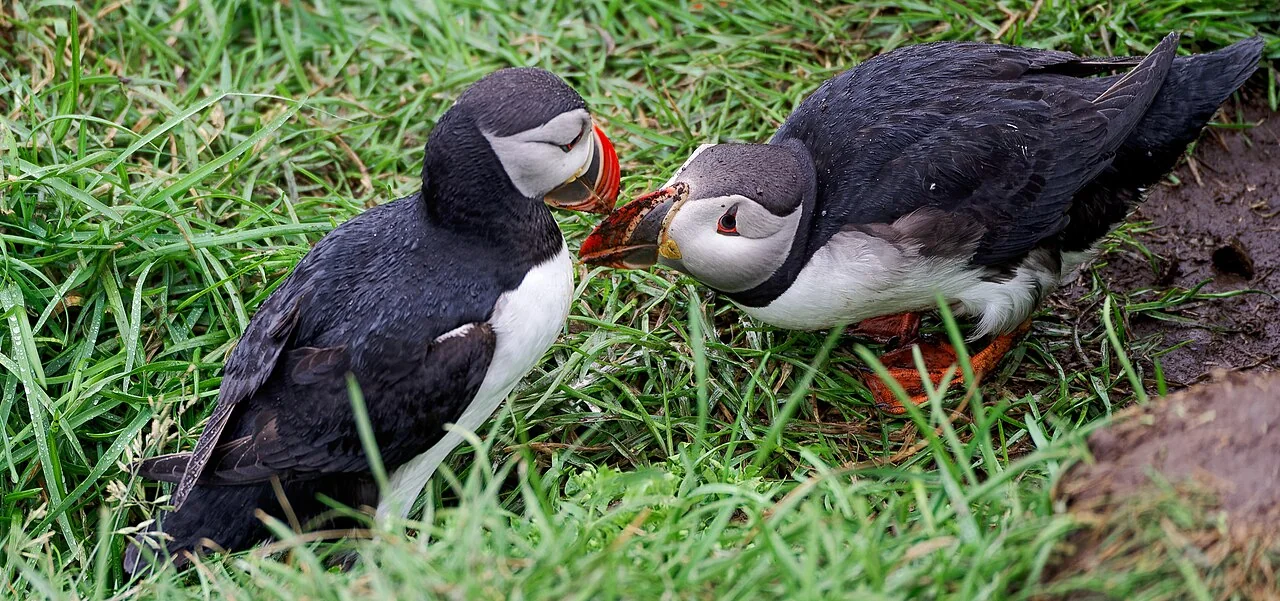
Atlantic puffins at Bakkagerði, Borgarfjörður eystri, Iceland; this land-colony view is not from a Reykjavík boat. Jakub Hałun / CC BY 4.0 · Licence
Find a tour for your trip
For a seasonal Reykjavík harbour outing, compare the conventional Classic boat with the dedicated open RIB. Both view puffins offshore without an island landing; check dates and the RIB’s participation rules before choosing.
Affiliate disclosure: PolarTourist may earn a commission if you book through these links. We select tours independently for their itinerary fit, not as firsthand reviews. Read our affiliate policy.
A dedicated conventional-boat puffin outing with offshore viewing, not an island landing. The Classic format offers an indoor area and toilet; confirm the actual vessel.
Operator:
Elding Adventure at Sea
Duration:
Approximately 1–1.5 hours; confirm ticket
Meet:
Ægisgarður 5, Reykjavík Old Harbour; confirm voucher check-in location
Drop-off:
Reykjavík Old Harbour; hotel transfers are not included
Seasonal: operator lists 20 April–20 August, not confirmed date inventory. GYG excludes wheelchair users. Confirm boarding and child arrangements. Wildlife and close photographs are never guaranteed; check current dates and booking terms.
A dedicated open RIB for up to 12 guests, with flotation coveralls and binoculars. No toilet or island landing; this is a different format within the Elding family, not an independent Classic competitor.
Operator:
Whale Safari (Elding family)
Duration:
Approximately 1 hour
Meet:
Ægisgarður 7, Reykjavík Old Harbour; confirm voucher and early check-in
Drop-off:
Reykjavík Old Harbour; no hotel transfer
Seasonal summer outing; operator lists 20 April–15 August, with edge dates to reconfirm. GYG excludes under-10s, pregnancy, back problems and mobility impairments; notes require over 145 cm, under 140 kg and no back/knee history. Confirm exact age, height and weight boundaries before booking; do not assume suitability. Sightings are not guaranteed.
Listing details checked ; details can change.
Affiliate disclosure: We may earn a commission if you book through these links. Read our affiliate policy.
Puffins in Iceland: Reykjavík Boats or a Land-Based Colony?
Atlantic puffins at Bakkagerði, Borgarfjörður eystri, Iceland; this land-colony view is not from a Reykjavík boat. Source: Jakub Hałun / CC BY 4.0Licence.
For a short summer stay in Reykjavík, investigate a dedicated puffin boat from the Old Harbour ↗ (opens in a new tab) before adding a long road journey. If you are already travelling through East Iceland, Hafnarhólmi at Borgarfjörður eystri offers a different experience: watching from purpose-built land facilities. The right choice depends on your route, comfort on a boat and travel dates—not a national ranking of bird numbers.
Do not plan a winter colony visit.Borgarfjörður eystri's local visitor information describes puffins returning to land from around mid-April to mid-August, then leaving Hafnarhólmi for winter at sea. A whale tour operating in winter does not make puffins a winter inclusion.
Choose the experience that fits the journey
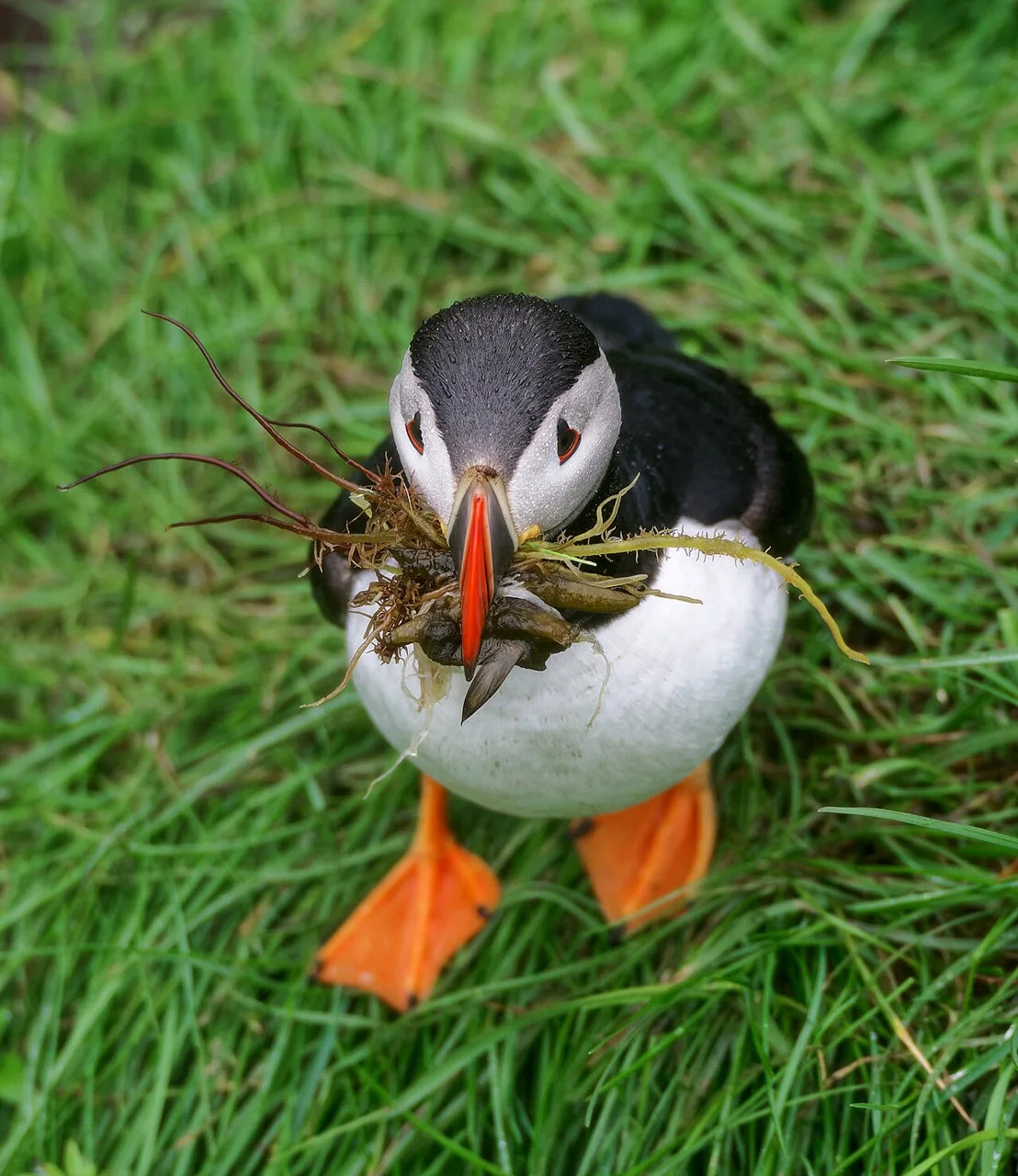
An Atlantic puffin carrying vegetation at Bakkagerði, Borgarfjörður eystri, Iceland. Source: Jakub Hałun / CC BY 4.0Licence.
Your trip
Puffin option to investigate
The limitation to understand
Reykjavík city break without a car
A dedicated Old Harbour puffin boat
Views are from the vessel; do not expect an island landing
A family or a group wanting indoor shelter
A conventional sightseeing boat
Confirm the actual vessel, toilet, boarding and child arrangements
When to go: nesting season is not a fixed appointment
Hafnarhólmi's local guide gives mid-April to mid-August as its main land-based season and describes May to mid-August as the peak window. Those are local seasonal patterns, not guaranteed arrival and departure dates for every bird in Iceland.
An operator's sailing calendar is another piece of evidence. Elding's puffin-tour listing, checked on 22 October 2026, advertises Classic departures for 20 April–20 August and Premium departures for 20 April–15 August. The dates differ even within one operator. They do not prove that a particular future departure is on sale or that birds remain in equal numbers until the last listed day.
For an April or late-August booking, ask about recent local observations and the actual calendar before paying. If puffins are the central reason for the holiday, do not choose a boundary date merely because it is cheaper and a seasonal page still lists a tour. Equally, avoid an unsupported “best hour”: Mr. Puffin's FAQ says feeding behaviour, weather, tides and stage of the nesting season affect what visitors see.
Reykjavík: watch from the boat, not on the islands
Mr. Puffin names Engey, Lundey and Akurey as the islands visited from Reykjavík, with the captain choosing according to conditions and recent sightings. Its FAQ explicitly says passengers cannot go onto the islands, which are nature reserves. Book for offshore viewing rather than a walk among burrows.
Bring binoculars or ask whether they are supplied. For photographs, expect small birds and a moving platform; a phone may record the outing without producing the close-up portrait used in advertising. Do not lean out, move into another passenger's space or ask the crew to approach more closely for a photograph.
If you are staying centrally, plan the journey to the Old Harbour and the required check-in time separately from time on the water. A hotel transfer may be optional rather than included. The Reykjavík stay guide can help choose a practical city base, but confirm the exact meeting point on your ticket.
Classic boat or RIB?
Mr. Puffin's published comparison describes its Classic product as a conventional boat with an indoor area and toilet, and its Premium product as an open RIB. These are differences that can matter more than saving a few minutes in transit.
Ask which vessel will actually operate. The same FAQ lists several possible Classic boats, so a single passenger-capacity figure would be misleading. For mobility needs, the operator says Premium is not wheelchair accessible and asks Classic passengers to discuss the pier, vessel and individual requirements in advance. An indoor cabin alone does not prove step-free boarding.
For children or anyone with a relevant health condition, obtain current participation requirements directly. Tell the operator the child's actual age and height and request confirmation for the selected tour; do not borrow an age restriction from a whale-watching product. Discuss medical suitability with the operator and a clinician where appropriate.
Bring layers and a wind-resistant outer layer even if the city feels mild. Ask what protective clothing is supplied on the chosen boat. There is still sea motion on a short trip, and supplied clothing does not remove that exposure.
Hafnarhólmi: a land-viewing option for East Iceland
At Borgarfjörður eystri, the local visitor guide describes a shelter and wooden viewing platforms intended to let visitors watch without falling into burrows or down the cliff. That makes this worth investigating when watching from land is important and your itinerary already reaches the east.
It does not make a long detour automatically worthwhile. Arrange the transport and overnight stop first, then check current facility access. The nearby Egilsstaðir destination guide is a starting point for the wider eastern route, not evidence of an included transfer to the colony.
Use the designated facilities rather than treating the surrounding grass as extra viewing space. Burrows are part of the colony, even where a bird is not visible. Keep bags, children and camera equipment within the permitted area, and let the birds move freely.
Dyrhólaey: nesting season can restrict your visit
For a South Coast trip near Vík, check Dyrhólaey's access status before making it the only puffin plan. The Environment Agency's access guidance says visits can be restricted between 1 May and 25 June to protect birdlife, with annual assessment determining closure needs. That is authority to restrict access, not a fixed promise that the whole reserve is closed—or open—on the same dates every year.
Follow current signs, barriers and ranger instructions. The guidance also records unstable cliff areas and prohibited access to Kirkjufjara beach following rockfalls and accidents. Do not leave marked routes to get beneath a bird cliff, and do not let a recommendation to visit at dawn override a nesting closure.
Can you combine puffins and whales in Reykjavík?
Yes, investigate a combination product—but establish whether it is one excursion or two. Elding's listing describes its Whale Watching & Puffin Watching option as two tours, with a listed six-hour duration and an April–August season. Do not assume a standard whale ticket includes a puffin-island stop or that every combination uses the same boat throughout.
Check the order, check-in arrangements, any gap between departures and what happens if one part is cancelled. Ask separately about your cancellation, an operator weather cancellation and a sailing with disappointing sightings. Read the terms attached to the actual sales channel; a repeat ticket may be little use if you fly home the next day.
For the whale decision itself, use the Iceland whale-watching guide. It already compares Reykjavík, Húsavík and Akureyri, including winter schedules and boat formats. Keep the jobs separate: choose a puffin experience for nesting-season birds, then decide whether a longer marine day also fits your group.
For most short Reykjavík trips, a suitable seasonal harbour departure avoids reorganising the holiday around a distant colony. For an eastern road trip or a strong preference to stay on land, investigate Hafnarhólmi instead. Neither option requires a claim that sightings, access or close photographs are guaranteed.