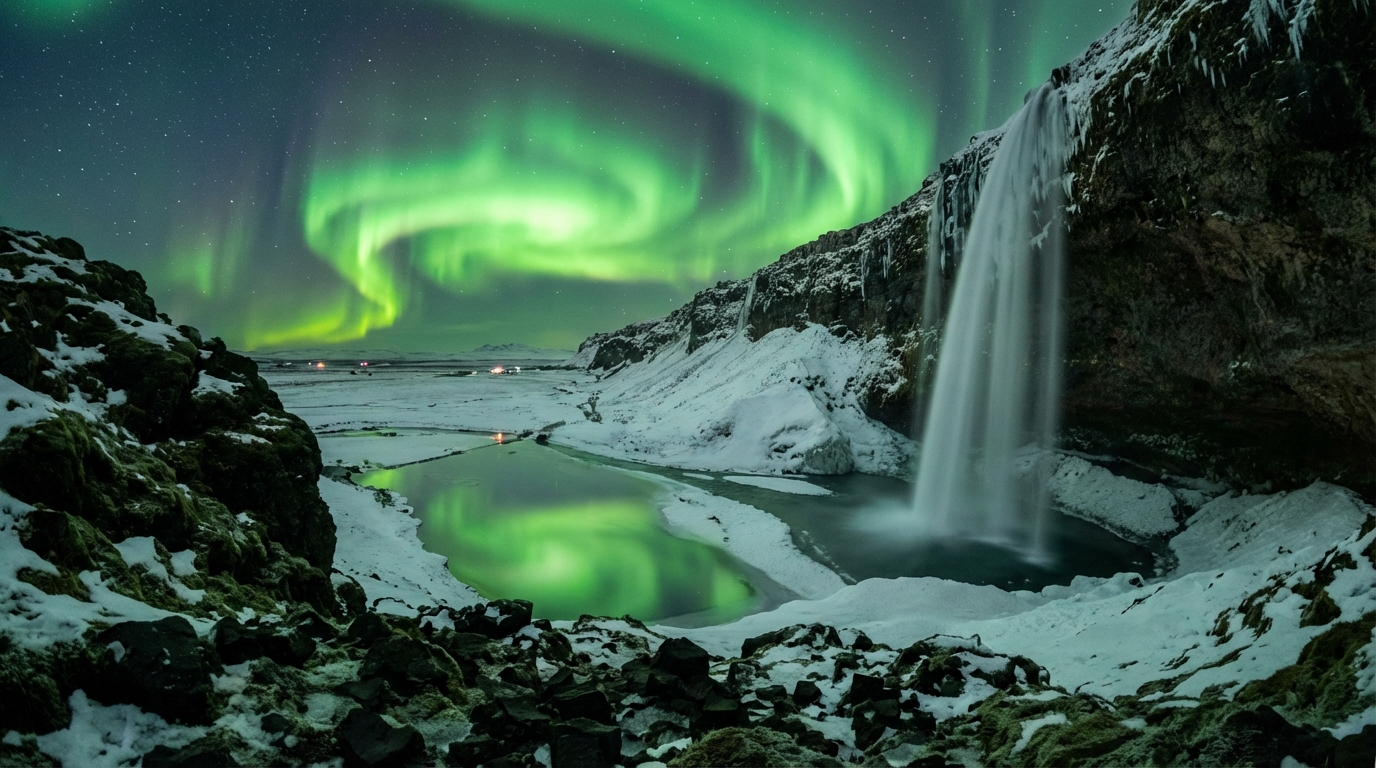
Iceland Northern Lights: The Complete Guide for 2026
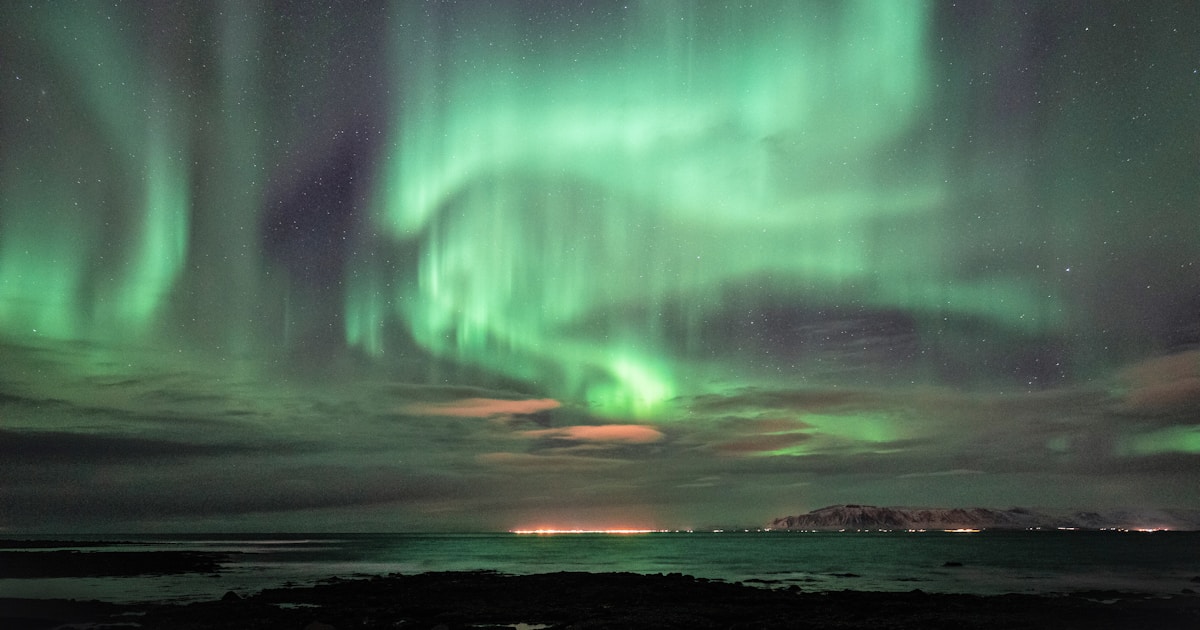
Iceland is the world's most popular northern lights destination — and that makes sense. Flights from London are under 3 hours. No visa needed for most nationalities. The Ring Road puts extraordinary landscapes within easy driving distance. And the aurora, when it appears, frames itself against glaciers, lava fields, volcanic mountains, and black sand beaches in ways that no other destination can match.
But Iceland's weather is genuinely challenging. Cloud cover is frequent and unpredictable. Plenty of visitors leave without a clear-sky night. This guide gives you the complete, honest picture: what Iceland offers, what it doesn't, how to maximise your chances, and how to plan around the weather reality.
Why Iceland for Northern Lights?
The Location
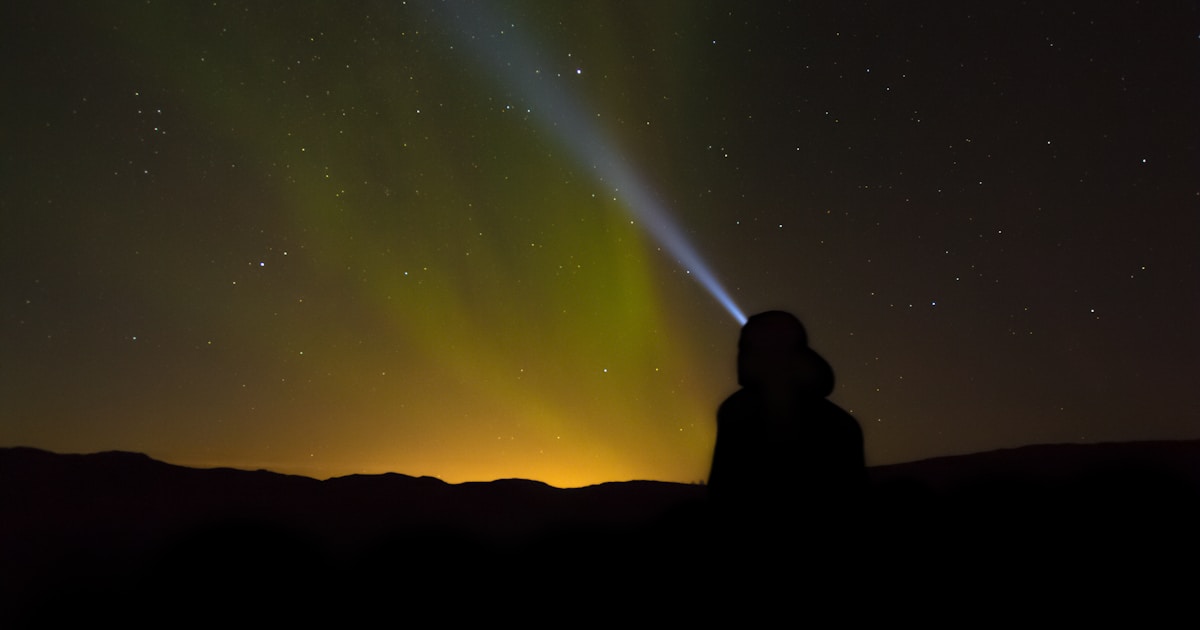
Reykjavik sits at 64°N — just below the Arctic Circle. It's on the edge of the auroral oval, meaning auroras are visible regularly but not as frequently as destinations further north like Tromsø (69.6°N) or Abisko (68.4°N).
The further you travel north and east in Iceland, the better your aurora probability. Akureyri (65.7°N) is marginally better than Reykjavik. The north coast near Húsavík and Mývatn offers both better aurora probability and drier skies than the southwest.
The Solar Cycle Advantage (2026)
Solar Cycle 25 has produced major storms, but its broad phase cannot forecast the aurora for an Iceland trip. Stronger auroras mean displays are visible from further south (Iceland benefits more than usual), are brighter and more colourful, and occur more frequently. 2025–2026 is genuinely the best aurora window in a decade.
The Landscape
This is Iceland's unique selling proposition. Nowhere else can you photograph the northern lights above:
- Black volcanic beaches (Vík)
- Active geothermal areas (Mývatn, Landmannalaugar)
- Glacier lagoons (Jökulsárlón)
- Icelandic turf farmhouses
- Arctic ocean fjords
- Basalt sea stacks
The aurora over Kirkjufell mountain — a distinctive conical peak on the Snæfellsnes Peninsula — is probably the most photographed aurora image in the world.
Accessibility
From the UK: London to Reykjavik from £50 return on Wizz Air Iceland; £80–200 on Icelandair. Direct flights from Edinburgh, Manchester, Bristol, and more.
From USA: Direct from New York, Boston, Washington DC, Chicago, Seattle, and more. Prices typically $400–700 return.
From Canada: Direct from Toronto and Halifax. $500–800 return.
No other aurora destination comes close to Iceland for flight accessibility.
When to Go: Season and Month Guide
The Season
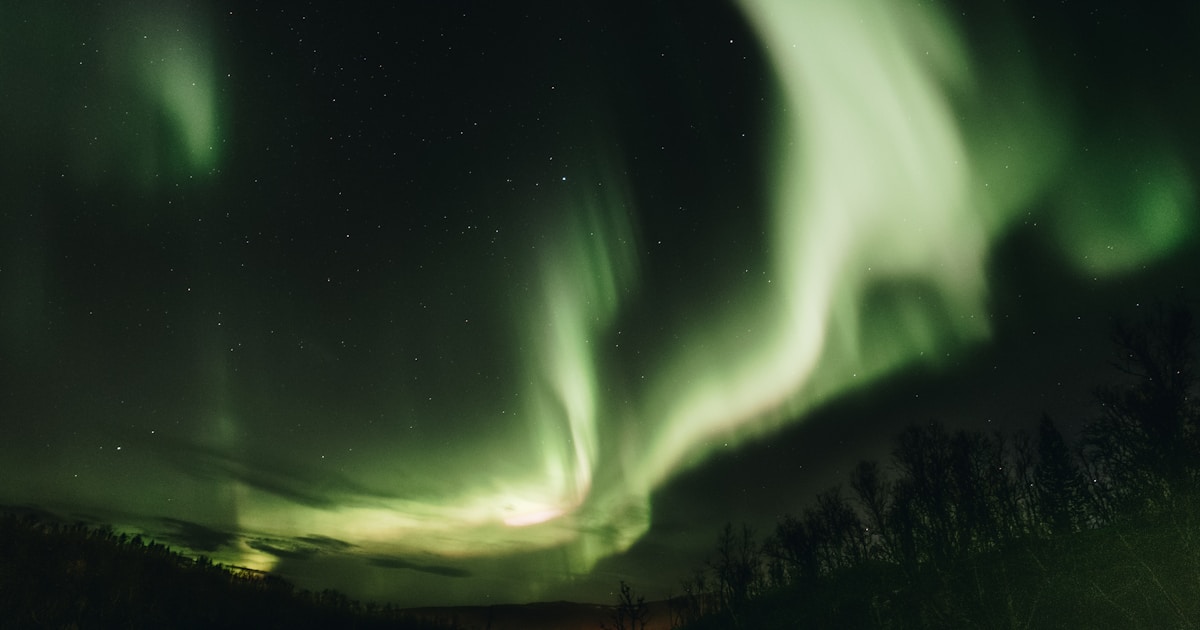
You need darkness to see the aurora. In Iceland:
- Northern lights season: September–April
- Best months: October, February, March
- Avoid: May–August (near-permanent daylight; aurora invisible)
Month-by-Month Breakdown
September
The season begins. Autumn equinox around September 22 boosts geomagnetic activity. Days are still 12+ hours but nights are dark enough for aurora viewing by 9 PM. Weather is relatively mild. Highland roads (F-roads) still accessible. Aurora probability: moderate to high.
October
One of Iceland's best aurora months. Good balance of darkness (nights are properly dark from 8 PM) and manageable weather. Autumn colours in the highlands. Fewer tourists than peak summer. Probability: high.
November
Dark, with 17–18 hours of night. Weather becomes more challenging — storms are frequent, especially in southwest Iceland. The north and east coasts tend to have better sky clarity. Probability: high when clear.
December
Polar night doesn't reach Reykjavik, but days are short (5 hours). Christmas atmosphere is genuinely magical — northern lights over Reykjavik's coloured houses. Very expensive (Christmas premium). Weather: highly variable. Probability: high when clear.
January
Post-Christmas prices drop. Darkest month in terms of total night hours. Cold (averages -1°C in Reykjavik, colder inland). Highland roads closed. Good probability.
February
Often the best combination of factors: dark, good aurora probability, pre-equinox activity building, highland roads still closed but main routes fine. Prices lower than Christmas. Recommended.
March
The spring equinox (around March 20) creates a geomagnetic boost — one of the statistically strongest periods for aurora activity. Days are lengthening but nights still plenty dark until mid-March. Temperatures improving. Excellent month. Recommended. See our March northern lights guide.
April
Late season — aurora viewing window narrowing as midnight twilight returns. Early April still viable, especially in the north. Late April: too bright. Not recommended unless you're specifically interested in the April equinox tail.
The Honest Weather Truth
Iceland is one of the cloudiest aurora destinations. Cloud is the main constraint around Reykjavik, so use the Icelandic Met Office cloud forecast close to travel rather than relying on a seasonal percentage. Even when it's clear, conditions can change in 30 minutes.
This doesn't mean don't go. It means:
- Stay at least 5 nights — more nights = more chances
- Be prepared to drive — cloud cover varies by location; clear sky may be 1–2 hours away
- Check forecasts obsessively — the Icelandic Met Office (vedur.is) is accurate
- Book a guided tour — local guides know where clear sky tends to open up
Cloud cover tips by region:
- Reykjavik: Worst cloud cover — coastal, receives direct Atlantic weather systems
- Snæfellsnes Peninsula: Variable, sometimes benefits from local rain-shadow effects
- South Coast (Vík, Jökulsárlón): Frequently cloudy in winter
- East Iceland (Egilsstaðir): Drier climate, often significantly clearer than the southwest
- North Iceland (Akureyri, Mývatn): Protected by mountains, often clearest skies in Iceland
- Westfjords: Isolated and often cloud-free when southwest Iceland is socked in
Where to Go in Iceland: Best Locations
Reykjavik and Surroundings
Reykjavik itself is too light-polluted for good aurora viewing unless you leave the city centre. Excellent locations within 30–60 minutes:
- Þingvellir National Park (45 min): UNESCO site, dark skies, extraordinary setting between two tectonic plates. One of Iceland's best aurora spots.
- Grindavík / Blue Lagoon area: Open lava fields with good sky views, though Blue Lagoon light pollution is a factor.
- Sólheimajökull glacier (1.5 hours): Glacier tongue accessible year-round, dramatic foreground.
- Öxará River at Þingvellir: Reflections in the river create spectacular foreground compositions.
The Golden Circle
The classic tourist route (Þingvellir → Geysir → Gullfoss) passes through dark countryside with multiple aurora-photography spots. Consider doing the Golden Circle during the day and stopping at viewpoints after dark for aurora watching.
Snæfellsnes Peninsula
Snæfellsnes is 2.5 hours from Reykjavik and offers the most photogenic aurora compositions in Iceland:
- Kirkjufell mountain and Kirkjufellsfoss waterfall: The most photographed aurora location in the world. Arrive early to secure your tripod spot.
- Arnarstapi sea cliffs: Dramatic basalt coastline, aurora over the North Atlantic
- Búðakirkja (Black Church): Tiny black wooden church in a lava field — extraordinary at night
Tip: Snæfellsnes can have its own weather system — drive around the peninsula to find the clear patch.
North Iceland
Akureyri (Iceland's second city, 390km from Reykjavik, or 45 min flight) is a significantly better aurora base than Reykjavik:
- Further north (65.7°N)
- Located in a fjord protected by mountains
- Statistically clearer skies than southwest Iceland
- Good accommodation, restaurants, and services
Mývatn lake area (1 hour from Akureyri) is volcanic and otherworldly. The lava fields, hot springs, and steaming vents make for extraordinary aurora landscapes. Dettifoss waterfall (Europe's most powerful) is 45 minutes away.
Húsavík combines whale watching (best in Europe) with good aurora probability. A base here in February or March offers exceptional wildlife combined with aurora opportunities.
East Iceland
Egilsstaðir sits in the eastern fjords region with significantly drier weather than the southwest. The journey there is spectacular — the Ring Road follows dramatic coastline and mountain passes. For photographers, the eastern fjords offer isolated, crowd-free aurora settings.
Aurora Forecasting for Iceland
Essential Apps and Websites
vedur.is (Icelandic Met Office): The most accurate weather forecast for Iceland. Check the cloud cover map obsessively. The northern lights forecast (app: "Vedur") combines cloud cover with aurora probability — very useful.
en.vedur.is/weather/forecasts/aurora: English-language aurora forecast from the Met Office, including predicted visibility on a scale of 0–9.
SpaceWeatherLive.com: Detailed Kp index data, solar wind speed, and aurora alert system.
My Aurora Forecast app: Simple, location-based probability. Good for quick checks.
NOAA 30-Minute Forecast: The most scientifically accurate short-term aurora prediction. Updates every 30 minutes.
How to Read the Forecast
Kp index (0–9): Geomagnetic activity level. For Iceland:
- Kp 2–3: Aurora visible from north Iceland (Akureyri) with clear skies
- Kp 3–4: Aurora visible from Reykjavik in ideal conditions
- Kp 5+: Strong storm, aurora bright and visible from southwest Iceland, potentially as far as Scotland
Cloud cover: More important than the Kp index. A Kp 8 display behind thick cloud = nothing. A Kp 3 display under perfectly clear sky = spectacular. Always check cloud cover first.
Northern Lights Tours in Iceland
Guided Tours from Reykjavik
Iceland's tour industry is excellent. Guides know where clear sky tends to appear and can drive 1–2 hours to find it.
Typical tour format:
- Minibus or super jeep (4WD, better for winter conditions)
- Departs 9 PM, returns 1–2 AM
- Stops at 1–3 locations based on cloud forecasts
- Cost: €70–€130 per person
- Most operators offer a "free repeat" if you don't see the lights on the first attempt
Super jeep tours (smaller group, larger vehicle, more remote locations): €150–€250 per person. Worth it if you want to get further from Reykjavik light pollution and reach locations regular minibuses can't.
Photography tours: Specialist guides who focus on composition and camera settings. Ideal for serious photographers. €180–€300 per person, smaller groups.
Self-Drive Aurora Hunting
Renting a car and driving independently is Iceland's big advantage over Norway or Finland. The Ring Road (Route 1) is largely kept clear in winter, and you can drive until you find clear sky.
Winter driving tips:
- Rent a 4WD with studded or winter tyres — mandatory in Iceland from November to April
- Never drive on F-roads (mountain tracks) in winter — they're closed
- vedur.is/road shows real-time road conditions, closures, and weather warnings
- Aurora hunting means driving at night — be extra cautious on icy roads
- Recommended winter 4WD rental: Budget €70–€120/day (Toyota RAV4 or similar)
Iceland Northern Lights Accommodation
Aurora Hotels and Guesthouses
Ion Adventure Hotel (Þingvellir area): Located in a lava field, floor-to-ceiling windows for aurora watching from inside. Heated outdoor hot tubs. Mid-range to premium. €250–€450/night.
Fosshotel Glacier Lagoon: 5 minutes from Jökulsárlón glacier lagoon. Excellent aurora location. €200–€350/night.
Northern Lights Inn (Grindavík): Glass-fronted rooms, geothermal hot tubs, and a dedicated aurora alarm service. €250–€400/night.
Guesthouses in Akureyri: Excellent base for north Iceland aurora hunting. Budget-friendly by Icelandic standards: €80–€140/night.
Iceland vs. Norway vs. Finland: Quick Comparison
| Factor | Iceland | Norway (Tromsø) | Finland (Lapland) |
|---|---|---|---|
| Flights (from UK) | £80–200 | £200–400 | £280–500 |
| Aurora probability | Moderate | Very high | High |
| Clear sky reliability | Low-moderate | Moderate | Moderate-high |
| Landscape | Extraordinary | Excellent | Beautiful |
| Activities | Excellent (geology) | Excellent (fjords, whales) | Excellent (winter sports) |
| Cost | Expensive | Very expensive | Moderate-expensive |
| Best for | First-timers with limited budget | Maximum aurora probability | Families, winter activities |
Planning Timeline: 2026 Season
Book 3–6 months ahead for:
- Peak December–January dates (sell out early)
- Specific popular hotels and guesthouses
- Whale watching tours from Húsavík
Book 1–3 months ahead for:
- Most February–March dates
- Aurora tours (many operate with same-week booking, but popular operators fill up)
- Car rental (winter 4WDs book quickly for peak season)
The remaining 2026 season:
- February 17 – April 15, 2026: Still excellent aurora season
- March equinox window (March 15–25): Prime time
Final Tips for Iceland Aurora Success
- Stay at least 5 nights — the single most impactful decision
- Rent a 4WD — freedom to chase clear sky is the key to Iceland success
- Base in Akureyri for one half of your trip — clearer skies than Reykjavik
- Check vedur.is every 2–3 hours — Iceland weather changes fast in your favour as well as against
- Book one guided tour — for the expert sky-chasing and backup heating
- Visit Kirkjufell in Snæfellsnes — the most iconic aurora photo location in the world
- Have a Plan B — if Iceland is clouded out completely, Tromsø flights from Reykjavik exist
- Don't book cruise ship or package tours — you need flexibility to chase weather
Explore our Iceland destination guides for Reykjavik, Akureyri, Mývatn, Húsavík, and Vík.